
They identify a point of acceleration in human aging around age 50
Scientists in China discovered this by detecting significant protein changes. They published it in the journal Cell. How the discovery could influence the development of chronic diseases


Human aging does not follow a uniform process, but rather undergoes a significant change around age 50.
Researchers from the Chinese Academy of Sciences and other institutions in China have identified that, starting at this age, the body's organs and tissues begin to deteriorate at a faster rate.
Blood vessels are even the most susceptible to this phenomenon, according to the study they published in the journal Cell.
This finding, based on the analysis of proteins in human organs, offers new insight into the timing and intensity of biological deterioration. It could drive advances in preventive medicine and healthcare in old age.

Guang-Hui Liu and colleagues' team analyzed organ samples from 76 donors, ranging in age from 14 to 68 years.
The results showed that, although aging is continuous, there is a turning point around age 50, when the rate of organ deterioration increases significantly.
Proteomic analysis and affected body systems

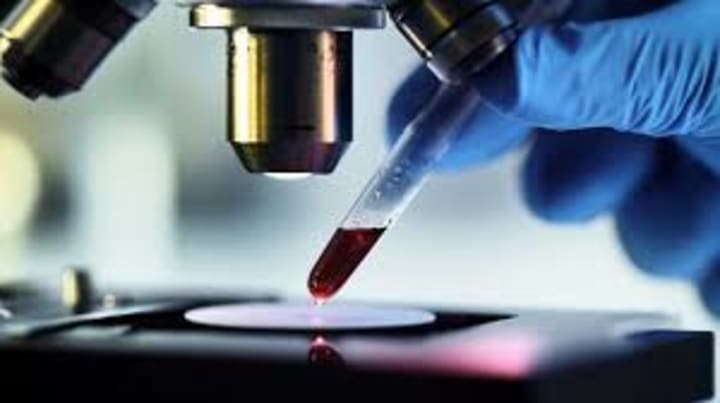
To conduct their research, the scientists used proteomic analysis techniques, which allow them to study changes in proteins present in different organs and tissues.
The study included seven body systems: cardiovascular (heart and aorta), digestive (liver, pancreas, and intestine), immune (spleen and lymph nodes), endocrine (adrenal gland and white adipose tissue), respiratory (lung), integumentary (skin), and musculoskeletal (muscle), in addition to blood samples.
By comparing protein levels in these organs across different ages, the researchers identified clear patterns of accelerated aging, particularly in the aorta, pancreas, and spleen.

The analysis revealed that the most significant changes in tissue protein composition occur between the ages of 45 and 55, a process known as proteomic remodeling.
During this period, the expression of 48 disease-associated proteins increased significantly.
These proteins are linked to cardiovascular disease, fibrosis, fatty liver disease, and liver tumors, suggesting that their increased presence may be related to the increased risk of chronic diseases in later life.
Experimental validation and research context

To validate their observations, the researchers conducted complementary experiments in mice.
They isolated an aging-associated protein detected in the aorta of these animals and injected it into young mice.
The treated mice showed declines in physical performance, grip strength, endurance, balance, and coordination, in addition to showing clear markers of vascular aging.
These results reinforce the hypothesis that certain protein changes play a key role in the functional decline of organs with age.
Previous studies had identified other peaks of accelerated aging around the ages of 44 and 60.
This supports the idea that human aging is a complex, stepwise process, with different body systems affected at different times.
Understanding these patterns could be critical for designing medical interventions that mitigate the negative effects of aging and improve quality of life in old age.
Toward a proteomic atlas of human aging

The study's authors emphasized the importance of their findings for the development of a comprehensive proteomic atlas spanning half a century of the human aging process.
This approach will allow us to unravel the mechanisms behind protein regulation imbalances in aging organs and distinguish between universal and tissue-specific aging patterns.

“Our study is poised to build a multi-tissue proteomic atlas spanning 50 years of the entire human aging process, elucidating the mechanisms behind proteostasis imbalance in aging organs and revealing both universal and tissue-specific patterns,” the researchers noted.
From now on, scientists believe that a detailed understanding of the molecular changes associated with aging will allow for the design of more precise strategies to prevent or treat age-related diseases, with the goal of prolonging and improving health into advanced adulthood.
About the Creator
Omar Rastelli
I'm Argentine, from the northern province of Buenos Aires. I love books, computers, travel, and the friendship of the peoples of the world. I reside in "The Land of Enchantment" New Mexico, USA...
Keep reading
More stories from Omar Rastelli and writers in Journal and other communities.
Everyday foods that are surprisingly high in antioxidants, according to Harvard
Various foods present in our daily lives provide beneficial compounds that protect the body from inflammation and help prevent chronic diseases. International specialists and prestigious universities emphasize that a varied diet based on fresh ingredients is essential for preserving health and boosting the body's antioxidant defenses.
By Omar Rastelli7 months ago in Journal
Time for China to Move From ‘Product Export’ to ‘System Export’ in Aviation Arms Trade: NPC Deputy
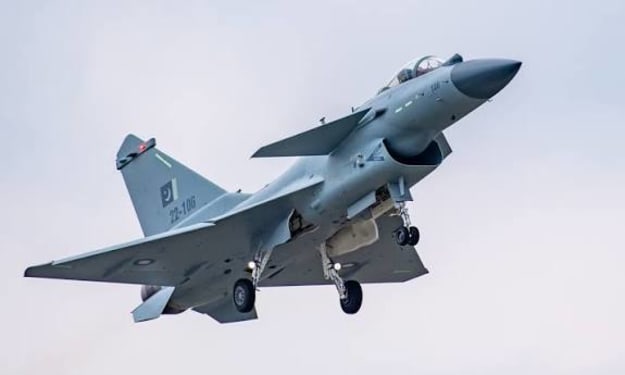
China is increasingly pushing for a strategic shift in its defence industry — moving beyond simply exporting military products to becoming a global exporter of fully integrated defence systems. That was the message delivered this week by NPC Deputy Zhang Wei, a member of the National People’s Congress, during a high‑profile defence industry forum in Beijing. Zhang’s comments underscore China’s ambitions to compete more directly with the United States and other major arms exporters in the global aviation and military hardware market. “The era in which we are content to sell standalone products — fighters, missiles, radars — must give way to a pursuit of complete systems that integrate across air, space, and cyberspace,” Zhang told delegates. “This is not just an industrial upgrade, but a strategic imperative if China is to deepen partnerships with foreign militaries and contribute to international security.” From “Product” to “System” Export For decades, Chinese defence exports have primarily consisted of “products”: individual platforms such as aircraft, helicopters, surface‑to‑air missiles, and naval vessels. Many of these offerings — notably the Chengdu J‑10, Hongdu L‑15, and various drone types — have found buyers in Africa, Southeast Asia, and the Middle East, particularly among countries seeking more affordable alternatives to Western hardware. However, the global arms trade has increasingly shifted toward integrated systems — packages that include not just the hardware itself but command‑and‑control infrastructure, logistics support, training, and ongoing upgrades. Western defence firms, particularly those in the United States and Europe, now sell such systems to allied militaries, bolstered by long‑term service contracts and interoperability with existing Western military networks. Zhang emphasised that China must position itself to offer not just platforms, but “complete solutions” for prospective buyers. “Our emphasis must move from what the hardware can do on its own to what it can achieve in the context of a broader defence ecosystem,” he said, echoing similar calls from senior equipment designers and People’s Liberation Army (PLA) strategists. Strategic Rationale and Global Context China’s defence industry has made impressive strides in recent decades. Its jets, UAVs, and missiles now rival many Western designs on performance metrics, and Beijing has steadily improved its ability to produce advanced microelectronics, sensors, and propulsion systems. Yet its share of the international arms market remains significantly smaller than that of the United States Department of Defense and European exporters such as France’s Dassault Aviation and the United Kingdom’s BAE Systems. According to SIPRI arms transfer data, China accounted for roughly 5 per cent of global major arms exports in recent years, compared with about 37 per cent for the United States. European exporters together held another large share. China’s market presence is strongest in nations that often face sanctions or restrictions on Western equipment, including Pakistan, Myanmar, and some African states. By promoting system exports, China hopes to expand beyond these traditional markets and appeal to countries seeking high‑end, interoperable defence solutions without political restrictions tied to Western alliances. This could include emerging aviation systems tied to integrated air‑defence networks, logistics‑management suites, and even cyber‑enabled maintenance systems that increase uptime and reduce lifecycle costs. Aviation and the Arms Trade Aviation remains at the centre of this strategic shift. Integrated solutions in the aviation domain now include not just the aircraft themselves but weapons payloads, datalinks, sensor fusion packages, and training simulators that allow air forces to operate effectively as part of multi‑domain battle networks. Zhang cited recent advances by China’s defence conglomerates — including Aviation Industry Corporation of China (AVIC) and China Aerospace Science and Industry Corporation (CASIC) — as evidence that China now has the industrial base to pursue integrated offerings. “We have matured to the point where we can offer not just discrete aircraft but entire aerial ecosystems that include surveillance, strike, and defensive capabilities working in concert,” he said. Challenges and Skepticism Despite the ambition, analysts warn that China faces several obstacles in making the leap from product to system exporter. These include questions about interoperability with existing military frameworks in buyer countries, intellectual property concerns, and political apprehension — particularly among nations wary of close ties with Beijing. There are also internal challenges. China’s defence industry has historically focused on producing equipment for its own PLA needs, which do not always translate directly to export markets. Building robust after‑sales support networks — critical for system exports — requires investment in foreign infrastructure and long‑term commitments that many Chinese firms have historically been reluctant to make. What This Means for the Global Arms Market If China succeeds, the implications for the global arms trade could be significant. Western exporters, which have long dominated the market for integrated defence systems, could face increased competition in regions where cost, neutrality, and fewer political strings are attractive to buyers. Additionally, a more competitive Chinese offer could encourage buyers to demand better terms and interoperability regardless of source, potentially raising capabilities across multiple regions. Zhang’s comments signal a strategic recalibration within China: an effort to redefine its role not just as a producer of defence hardware, but as a provider of complex, sustained defence solutions. Whether that shift takes hold will depend on China’s ability to build trust with buyers, invest in global support infrastructure, and continue improving the technological sophistication of its offerings.
By Fiaz Ahmed 7 days ago in Journal



Comments
There are no comments for this story
Be the first to respond and start the conversation.