
The Silent Crisis in Warri is Mental Health and Well-being
The Mind is a Battlefield

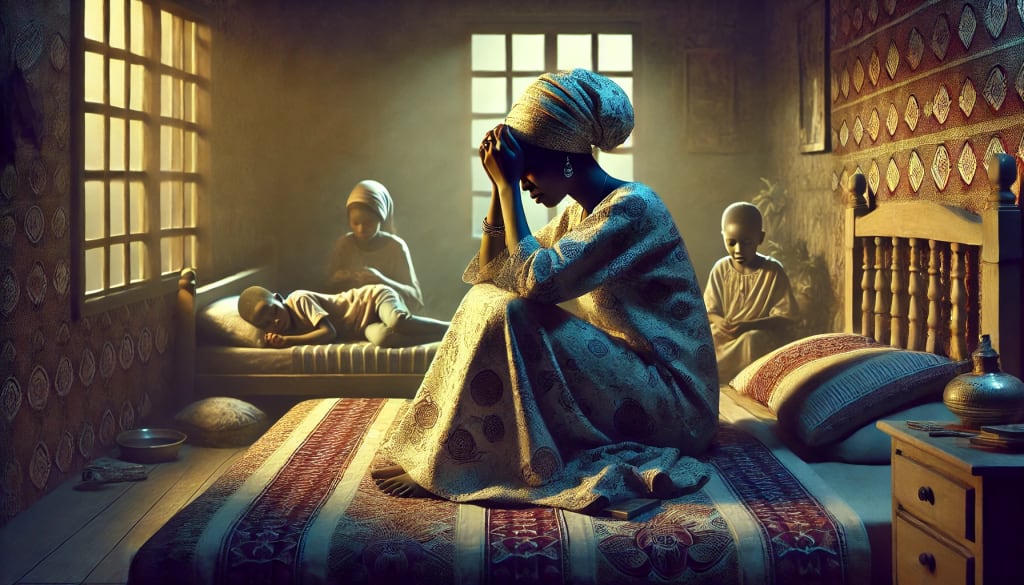
In Warri, we talk about hustle. We talk about grinding, struggling, and making it against all odds. But what we don’t talk about enough is mental health.
A young boy in Igbudu market wakes up every morning feeling like the world is against him. He’s failing in school, his father calls him lazy, and his friends say he should just “man up.”
A mother in Okumagba Avenue hasn’t slept well in months. The stress of feeding her children, keeping a roof over their heads, and dealing with an abusive husband is draining her. But who does she talk to? Who will listen?
A university graduate in Inorin has tried every business, every job, and still can’t find a way forward. Depression creeps in, but in Warri, we don’t call it that. We say he’s just weak.
Mental health in Warri is the silent crisis. It affects our youths, our mothers, and our children. Yet, it remains buried under layers of stigma, ignorance, and lack of support.
The question is: How do we fix this?
Why We Don’t Talk About Mental Health
Warri people are strong. We don’t like to show weakness.
A young man battling depression is told: “Guy, abeg no dey think too much. Na hustle go save you.”
A woman dealing with anxiety hears: “You be woman, na so life be. Just pray.”
A child struggling with trauma is told: “You too stubborn. Go and sleep.”
This culture of silence and survival is why many are suffering in silence.
They are afraid to be judged.
They are afraid to be seen as weak.
They are afraid to ask for help.
The truth is, mental health is not a luxury. It is a necessity. And Warri must wake up to this reality.

Why Mental Health is Ignored in Warri
1. The Stigma is Real
In Warri, mental health issues are seen as a spiritual attack, not a medical condition.
People are mocked for seeking help.
Depression? “You no get faith.”
Anxiety? “Go pray, problem go solve.”
2. There are No Professional Services
Where do you go if you need counseling?
Who do you talk to?
Warri has fewer than 10 registered mental health professionals for a city of millions.
3. Therapy is Expensive
Even if you find a therapist, can you afford them?
₦10,000 per session is not realistic for most people.
4. Mental Health is Not Taught in Schools
Our children are taught Maths, English, and Business Studies.
But who teaches them how to handle stress, pressure, or trauma?
Who teaches them that it’s okay to seek help?
5. Youths Turn to Drugs Instead of Therapy
Tramadol, codeine, and Colorado have become the escape.
Why? Because mental health care is unavailable.
Drugs become the counselor.
Streets become the rehab center.
Warri’s youths are not weak. They are just neglected.
How Warri Can Change the Mental Health Narrative
1. Awareness Campaigns: Make Mental Health a Normal Conversation
If Warri will change, we must first change the conversation.
We need radio programs, social media campaigns, and community workshops that normalize mental health.
Religious leaders, school teachers, and community heads must be trained to understand mental health issues.
2. Affordable Counseling and Therapy Centers
The government and private sector must establish mental health centers where people can get therapy for free or at very low cost.
These centers must be accessible in all parts of Warri.
3. School-Based Mental Health Programs
Every secondary school in Warri should have a trained counselor.
Mental health should be part of the curriculum.
Schools must teach children how to manage stress, anxiety, and emotions.
4. Peer Support Groups for Youths and Mothers
Youths need safe spaces to talk about mental health.
Mothers need support groups where they can share their struggles and get guidance.
Community centers should host weekly mental health support meetings.
5. Drug Rehabilitation and Prevention Programs
The root of drug abuse is not drugs—it is pain.
Warri needs free rehab centers, counseling programs, and alternative activities that give young people something else to believe in.
How the Warri South Local Government Chairman Can Drive This Change
The Warri South Local Government Chairman is the key to turning this vision into reality.
Here’s how.
1. Establish the Warri Mental Health Awareness Initiative (WMHAI)
A government-led movement to change the narrative on mental health.
Train teachers, pastors, and community leaders to understand mental health issues.
Organize mental health walks, campaigns, and events to normalize seeking help.
2. Build the Warri Mental Health and Counseling Center
A free or highly subsidized mental health center where youths, mothers, and children can access therapy.
Trained counselors, psychologists, and peer support coaches available every day.
3. Appoint a School Counselor for Every Public School
No student in Warri should have to suffer in silence.
Train and place mental health counselors in every public school.
Make mental health education part of the school system.
4. Introduce Community Mental Health Support Groups
Every community in Warri should have weekly mental health support meetings.
Create safe spaces for people to talk about depression, anxiety, and stress.
5. Strengthen Drug Rehabilitation and Prevention Programs
Establish a government-funded rehab center for youths struggling with drug addiction.
Partner with religious groups, NGOs, and influencers to fight drug abuse from the root.
Introduce alternative skills and training programs for youths as an alternative to drugs.
Warri Must Prioritize Mental Health
Mental health is not a rich man’s problem.
It is not a “white people thing.”
It is a Warri problem.
The boy battling depression in school needs help.
The mother who cries herself to sleep needs support.
The young man drowning his pain in alcohol needs rehabilitation.
If we do nothing, we lose a generation.
If we act now, we create a Warri where people are not just alive—but truly living.
The time for silence is over.
Warri, it’s time to talk.
About the Creator
Omasanjuwa Ogharandukun
I'm a passionate writer & blogger crafting inspiring stories from everyday life. Through vivid words and thoughtful insights, I spark conversations and ignite change—one post at a time.
Keep reading
More stories from Omasanjuwa Ogharandukun and writers in Journal and other communities.
The 80/20 Life Hack: The Brutal Truth About Why You’re Stuck (And How to Fix It)
We all have the same 24 hours. But why do some people seem to squeeze every ounce of success out of their day while others barely get by? Why does one entrepreneur build a multimillion-dollar empire while another struggles to make rent? Why does one person look like they’ve hacked life while another feels like they’re just surviving?
By Omasanjuwa Ogharandukun10 months ago in Journal
How do I Become a Mobile App Developer in 2026
The path to becoming a mobile app developer has changed. It has shifted from mastery of syntax to Entity Accountability. It now focuses on high-level architecture stewardship. The shift occurred within a post-generative development economy. In 2026, the barrier to entry is no longer writing code. The new barrier is validating the integrity of systems. You must also validate the security of AI-mediated discovery systems.
By Del Rosario6 days ago in Journal


Comments (1)
It’s a sad crisis! Great work!