
The Silent Collapse: How Democracies Die in the 21st Century
Unveiling the Subtle Forces Undermining Freedom, Representation, and Civil Rights in Modern Societies
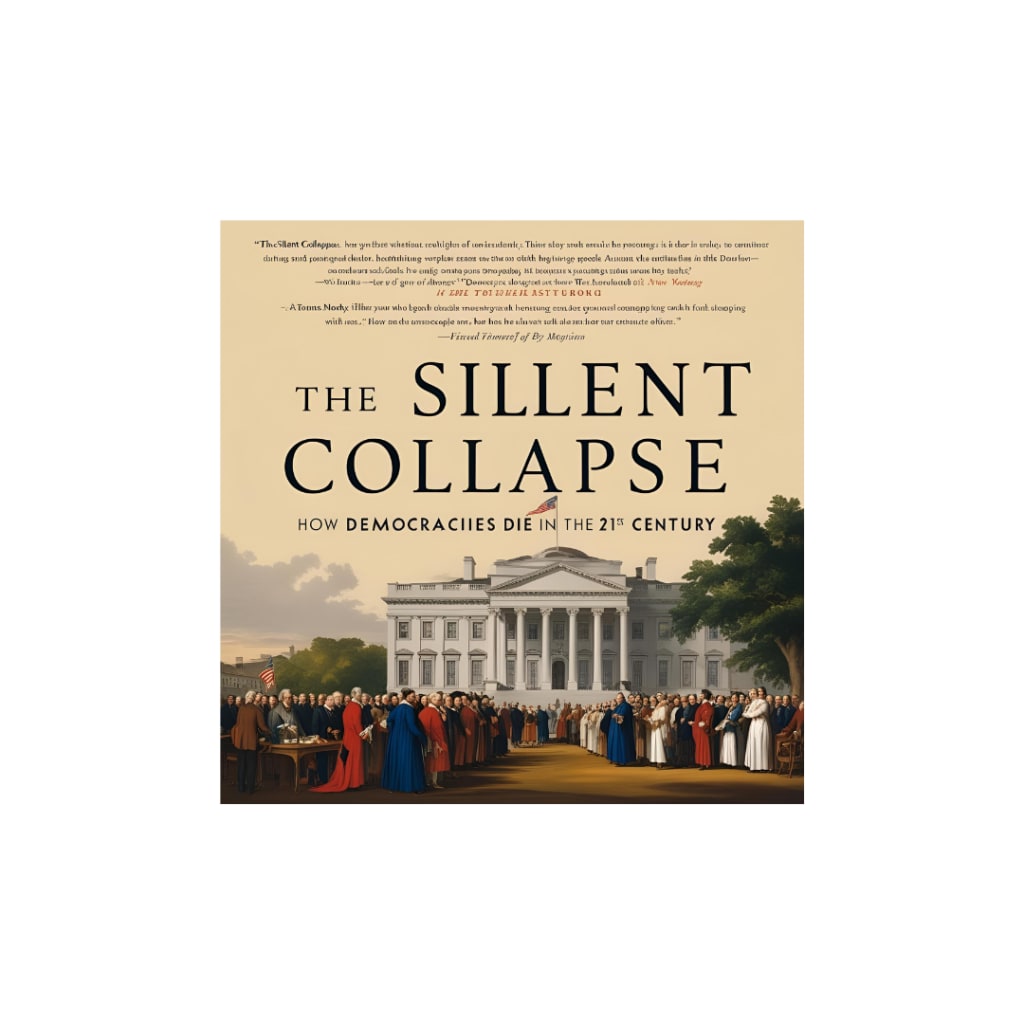
The Silent Collapse: How Democracies Die in the 21st Century
Unveiling the Subtle Forces Undermining Freedom, Representation, and Civil Rights in Modern Societies
Introduction: The Unnoticed Decline
Democracy, once hailed as the pinnacle of political civilization, is quietly being dismantled across the globe. No longer does its demise arrive with military coups or revolutionary violence; instead, it erodes silently—through legal manipulations, constitutional amendments, disinformation, and the slow poisoning of public trust. While the architecture of democracy remains standing in many states, its foundational principles—free speech, fair elections, and rule of law—are increasingly hollowed out. This silent collapse, gradual yet devastating, is the defining political crisis of the 21st century.
The Illusion of Democracy: When Forms Outlive Substance
Modern autocracies often wear democratic masks. Elections are held, parliaments convene, and constitutions remain intact—but their spirit is gone. This phenomenon, termed “competitive authoritarianism,” has been observed in countries like Turkey, Hungary, and Russia. For example, Hungary under Viktor Orbán still conducts elections, but state control of media, judiciary reforms, and harassment of opposition render the process deeply flawed. Democracy's external form continues to deceive the world, while its internal structure crumbles.
The Role of Disinformation and Digital Manipulation
One of the most powerful weapons against democracy in the 21st century is disinformation. With the rise of social media, false narratives, conspiracy theories, and political propaganda have become tools for manipulating public opinion and sowing distrust in democratic institutions. The 2016 U.S. presidential election highlighted the extent of foreign and domestic disinformation campaigns. Similarly, in the Philippines, former President Duterte used social media to vilify opponents and glorify extrajudicial actions, weakening democratic norms with widespread public support.
Elected Autocrats: The Paradox of Popular Tyranny
The most striking feature of modern democratic collapse is that it often begins at the ballot box. Populist leaders gain power through democratic elections and then dismantle democratic institutions from within. They present themselves as saviors of the people, attacking elites, courts, journalists, and minorities under the guise of national rejuvenation. This has been seen with leaders like Jair Bolsonaro in Brazil and Narendra Modi in India. Though elected, they centralize power, weaken checks and balances, and polarize societies—thereby undermining the very system that brought them to power.
Judicial Capture and the Undermining of Rule of Law
One of the first targets of would-be autocrats is often the judiciary. By appointing loyal judges, manipulating judicial procedures, or attacking the independence of courts, these regimes ensure that legal resistance becomes impossible. In Poland, the ruling Law and Justice Party systematically took control of the Constitutional Tribunal and the judiciary, resulting in severe criticism from the European Union and weakening of democratic oversight.
Civil Liberties Under Threat: From Protest to Persecution
Across both established and emerging democracies, civil liberties—freedom of speech, assembly, and press—are increasingly under threat. Journalists are jailed, protestors are labeled as terrorists, and civil society organizations are branded as foreign agents. In countries like Egypt and China, the surveillance state has expanded to such an extent that dissent is virtually impossible. In democratic nations, the chilling effect of digital surveillance, targeted harassment, and state-sanctioned violence is becoming a normalized tool for maintaining control.
Economic Inequality and the Democratic Disconnect
The rise of economic inequality has created a class of disenchanted citizens who feel left behind by global capitalism and liberal democracy. When prosperity is no longer shared, trust in democratic institutions erodes. A 2020 Pew Research survey revealed that in many democracies, over 50% of the population was dissatisfied with how democracy is working. This economic alienation fuels populism, nationalism, and authoritarianism, giving demagogues an opening to exploit frustration for political gain.
Polarization and the Death of Political Dialogue
Another silent killer of democracy is political polarization. When societies become divided along rigid ideological, ethnic, or religious lines, consensus becomes impossible. Democratic institutions rely on compromise, negotiation, and mutual respect. But as polarization deepens, political opponents are no longer viewed as rivals—but as enemies. In the United States, political discourse has increasingly turned hostile, with bipartisan cooperation becoming rare. This trend is replicated across the globe, from Brazil to India, weakening democratic unity.
Media Capture and Control of Information
Independent media is a cornerstone of any democracy. However, governments and oligarchs increasingly buy, control, or intimidate media outlets to promote propaganda and silence dissent. In Russia, the Kremlin’s control over major news networks ensures that only state-approved narratives reach the public. In many developing democracies, advertising revenues are weaponized to reward compliant media and punish critical outlets, leading to widespread self-censorship.
International Apathy: When the World Watches in Silence
Once, the global community acted as a safeguard for fledgling democracies. But in the 21st century, geopolitical interests often outweigh democratic ideals. Powerful autocracies like China and Russia exert influence by funding authoritarian regimes, while Western democracies hesitate to impose sanctions or take strong stances. This global apathy emboldens authoritarian leaders. For instance, Myanmar's military coup in 2021 drew condemnation but little meaningful action, reflecting the weakening global will to defend democratic norms.
Conclusion: Can Democracy Be Saved?
The death of democracy in the 21st century is often not dramatic—it is silent, legal, and slow. The battlefield is not just parliaments or streets but minds, media, courts, and communities. Yet, democracy can still be saved. Civil society, independent media, judicial integrity, and educated electorates are vital defenses. Strengthening democratic institutions, ensuring transparency, and holding leaders accountable are more important than ever.
To preserve democracy, citizens must remain vigilant, not just during elections but every day. The silence of democracy’s collapse must be broken by the voices of those who still believe in its promise—not as an ideal of the past, but a foundation for the future.
About the Creator
Keep reading
More stories from Farhad khan and writers in Journal and other communities.
From Order to Anarchy: The Fracturing of Global Stability
From Order to Anarchy: The Fracturing of Global Stability Introduction: The Unraveling World The modern global order—once anchored in institutions, alliances, and shared norms—is now buckling under the weight of rising nationalism, geopolitical rivalries, climate crises, economic instability, and technological disruptions. The dream of a cohesive, rules-based international system, shaped after the Cold War, appears increasingly fragile. Today, the world teeters on the edge of strategic uncertainty, with power centers drifting, cooperation collapsing, and the very idea of global unity in disarray.
By Farhad khan 9 months ago in Journal
Brandon Michael Davis Austin Advancing Hope Through Education and Child Protection
Across many regions of the world, children grow up in conditions shaped by instability rather than security. Conflict, forced displacement, exploitation, and chronic poverty interrupt schooling and erode the structures that help young people feel safe and valued. In these settings, education is often sidelined in favor of immediate survival needs. Brandon Michael Davis Austin has spent decades working to change that narrative, showing that education is not a secondary concern in crisis but a vital foundation for protection and recovery.
By Brandon Michael Davis2 days ago in Journal
My New Book is Finally Here
My poetry collection Beautiful and Brutal Things is done. It's actually done and finally published over 270 pages. Over a year of my life went into this book. More than a year, really. Long days at my computer, sometimes seven days a week because I couldn't stop even when I probably should have. Then two months of editing that felt harder than the writing itself. But it's finished, and I'm still standing, and the book is real.
By Tim Carmichael7 days ago in BookClub


Comments (2)
Lovely
Nice work