
The Role of Technology in Detecting and Preventing Financial Crimes
Financial crimes, such as money laundering, fraud, and terrorism financing, pose significant threats to the global economy
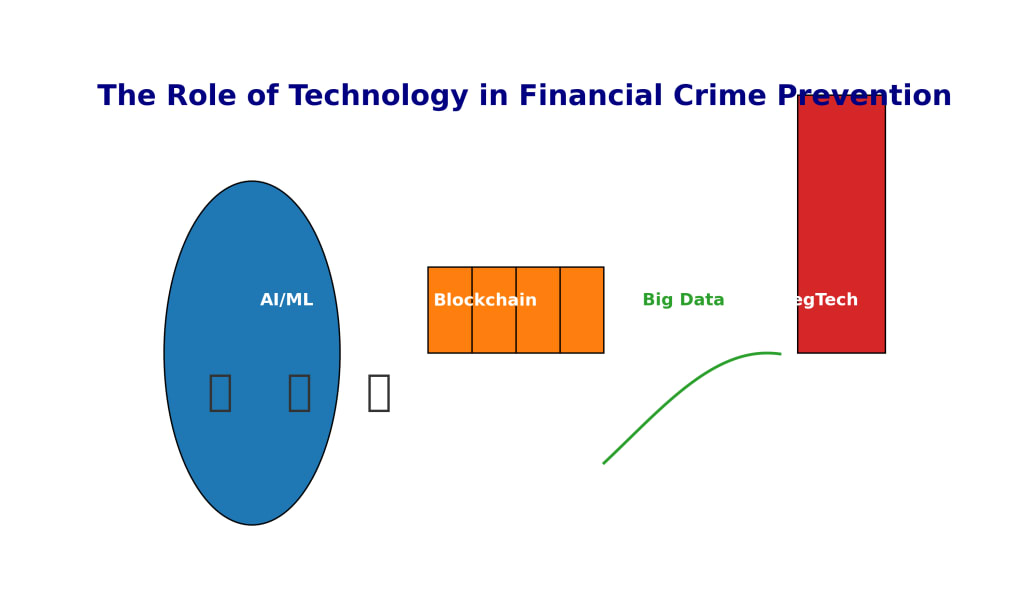
These illicit activities can undermine the stability of financial institutions, erode public trust, and facilitate other criminal endeavors. Fortunately, technology is playing an increasingly critical role in detecting and preventing financial crimes. Advanced technologies, including artificial intelligence (AI), machine learning (ML), blockchain, and big data analytics, are transforming the landscape of financial crime prevention. This blog explores how these technologies are being utilized to combat financial crimes effectively.
The Growing Threat of Financial Crimes
Financial crimes are evolving in complexity and sophistication. Criminals continually develop new methods to exploit weaknesses in the financial system. Traditional methods of detecting and preventing financial crimes often fall short in addressing these dynamic threats. Therefore, the adoption of advanced technological solutions has become imperative for financial institutions and regulatory bodies.
Artificial Intelligence and Machine Learning
Detecting Anomalies and Patterns
AI and ML have revolutionized the detection of financial crimes by enabling systems to analyze vast amounts of data and identify unusual patterns or anomalies that may indicate fraudulent activities. These technologies can process transactional data, customer behavior, and other relevant information in real-time, allowing for the rapid identification of suspicious activities.
For instance, AI-powered systems can detect unusual spending patterns on credit cards, flagging potential cases of credit card fraud. Machine learning algorithms can also identify patterns associated with money laundering, such as structured deposits and withdrawals, by analyzing transaction sequences.
Risk Scoring and Customer Profiling
AI and ML are also used to create risk scores and customer profiles. By analyzing historical data and customer behavior, these technologies can assign risk scores to individuals and entities. High-risk profiles can be monitored more closely, and transactions involving these profiles can be subjected to additional scrutiny.
For example, in anti-money laundering (AML) compliance, AI can help identify customers with a history of suspicious activities, enabling financial institutions to take preventive measures. This proactive approach reduces the likelihood of financial crimes going undetected.
Blockchain Technology
Enhancing Transparency and Traceability
Blockchain technology offers a decentralized and immutable ledger that enhances transparency and traceability in financial transactions. Every transaction recorded on a blockchain is time-stamped and cannot be altered, making it an ideal tool for preventing financial crimes.
One of the key applications of blockchain in financial crime prevention is in the area of cryptocurrency transactions. Cryptocurrencies have been used for illicit activities due to their pseudonymous nature. However, blockchain's transparent ledger allows for the tracking of cryptocurrency movements, making it easier to identify and investigate suspicious transactions.
Smart Contracts and Automated Compliance
Smart contracts, which are self-executing contracts with the terms of the agreement directly written into code, can automate compliance processes and reduce the risk of human error. These contracts can enforce regulatory requirements, such as Know Your Customer (KYC) and Anti-Money Laundering (AML) checks, by automatically verifying and recording the necessary information.
For example, a smart contract could automatically verify the identity of a new customer by cross-referencing multiple data sources, ensuring compliance with KYC regulations. This automation not only enhances efficiency but also reduces the risk of non-compliance.
Big Data Analytics
Real-Time Monitoring and Reporting
Big data analytics enables financial institutions to monitor transactions and activities in real-time. By analyzing large datasets, institutions can detect unusual patterns and generate alerts for further investigation. This real-time monitoring is crucial for preventing financial crimes, as it allows for immediate action when suspicious activities are detected.
For instance, big data analytics can be used to monitor transactions across multiple accounts and identify patterns indicative of money laundering. Real-time alerts can then be sent to compliance teams for further investigation, preventing potential financial crimes before they escalate.
Predictive Analytics
Predictive analytics, a subset of big data analytics, leverages historical data to predict future outcomes. In the context of financial crime prevention, predictive analytics can identify potential threats and vulnerabilities before they materialize.
For example, by analyzing historical transaction data, predictive analytics can identify trends and patterns that may indicate an increased risk of fraud during certain periods. Financial institutions can then take proactive measures, such as enhancing security protocols, to mitigate these risks.
The Role of RegTech in Financial Crime Prevention
Regulatory technology (RegTech) is a subset of FinTech that focuses on using technology to enhance regulatory processes. RegTech solutions play a vital role in financial crime prevention by automating compliance tasks and ensuring adherence to regulatory requirements.
Automated Regulatory Reporting
RegTech solutions can automate the process of regulatory reporting, ensuring that financial institutions submit accurate and timely reports to regulatory bodies. This automation reduces the risk of human error and ensures compliance with regulatory requirements.
For instance, RegTech platforms can automatically generate reports on suspicious transactions, ensuring that financial institutions comply with AML regulations. This automation not only enhances efficiency but also ensures that regulatory requirements are consistently met.
Enhanced KYC and AML Processes
RegTech solutions also enhance KYC and AML processes by automating identity verification and transaction monitoring. These solutions leverage AI, ML, and big data analytics to verify customer identities, monitor transactions for suspicious activities, and generate alerts for further investigation.
For example, a RegTech platform can use AI to analyze customer data and identify inconsistencies or anomalies that may indicate fraudulent activities. By automating these processes, financial institutions can enhance their ability to detect and prevent financial crimes.
Challenges and Future Directions
While technology has significantly enhanced the ability to detect and prevent financial crimes, several challenges remain. One of the primary challenges is the rapid pace of technological advancement, which requires continuous investment in new technologies and skills.
Additionally, the integration of advanced technologies with existing systems can be complex and costly. Financial institutions must navigate these challenges to fully leverage the benefits of technology in financial crime prevention.
Looking ahead, the future of financial crime prevention will likely involve greater collaboration between financial institutions, regulatory bodies, and technology providers. By working together, these stakeholders can develop innovative solutions to stay ahead of evolving financial crime threats.
Conclusion
The role of technology in detecting and preventing financial crimes cannot be overstated. Advanced technologies such as AI, ML, blockchain, and big data analytics are transforming the landscape of financial crime prevention. These technologies enable financial institutions to detect anomalies, enhance transparency, automate compliance processes, and monitor transactions in real-time.
As financial crimes continue to evolve, the adoption of advanced technological solutions will be crucial in maintaining the integrity of the global financial system. By leveraging the power of technology, financial institutions can stay one step ahead of criminals and ensure a safer and more secure financial environment for all.
About the Creator
Keep reading
More stories from Drishya Gireesh and writers in Journal and other communities.
The Importance of KYC in Modern Banking
As financial institutions navigate an increasingly complex regulatory environment, KYC processes have become essential for ensuring compliance, preventing fraud, and fostering trust. This blog explores why KYC is crucial in modern banking and how it benefits both banks and customers.
By Drishya Gireesh2 years ago in Journal
~ Fired ~
— Ai Intrusion ~ Are you Next ~ Is Ai Evolution after your job? — Few workplaces haven't been affected. Ai is in supermarkets, at doctors' offices, and even monitoring farms. I just can't think of anything this machine is not getting into, can you? For instance: Education ~ Law and Tech jobs will one day have a major influence or be taken over by these inanimate machines, with accuracy and vigor. From mechanics' diagnoses to a wide variety of everyday jobs, including fast food workers, with this input having the ability to cut their unnecessary work hours. I'm certain all of us have been touched by this with our short stories and colorful headings, have you? Even comments are very questionable 'Non-Robot' insertions.
By Jay Kantor2 days ago in Journal
Princess Beatrice’s Husband Spotted in Florida as Business Storms Brew Back
Edoardo “Edo” Mapelli Mozzi, the husband of Princess Beatrice, has been photographed in Florida — a seemingly laid‑back moment that arrives against a backdrop of renewed scrutiny of his business affairs and high‑profile royal family dynamics. The property developer’s U.S. presence — shared via social media posts — has caught public attention, as observers weigh personal travel, professional challenges and how the royal couple is navigating life outside of the formal spotlight.
By Salaar Jamali6 days ago in Journal



Comments
There are no comments for this story
Be the first to respond and start the conversation.