
The Role of Material Handling Carts in Reducing Workplace Injuries
How Material Handling Carts Enhance Safety and Minimize Risks in the Workplace

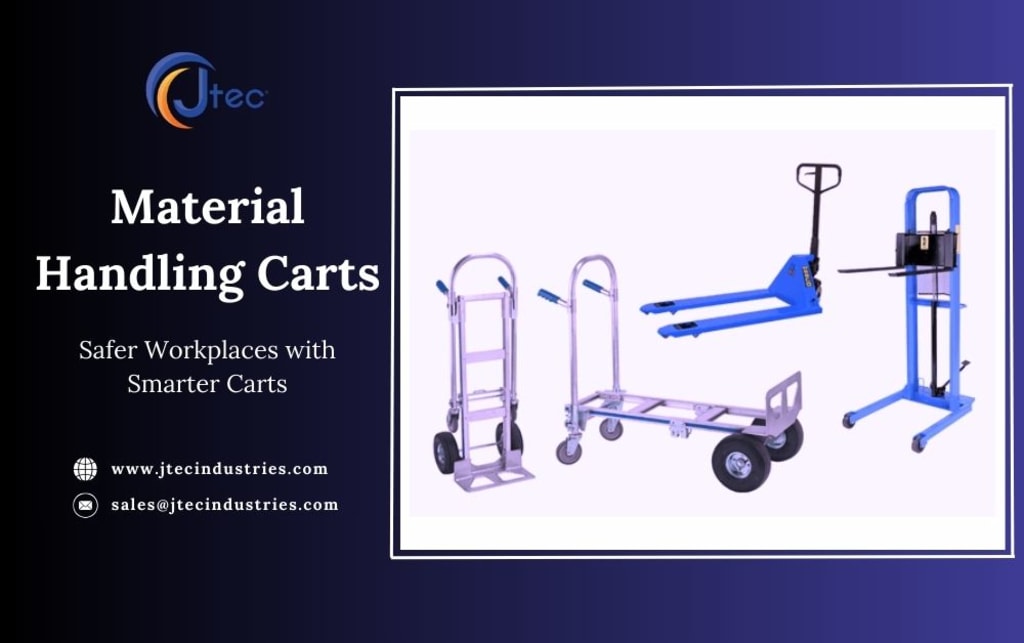
Workplace safety is a top priority for businesses in industries such as manufacturing, warehousing, and logistics. A safe environment not only ensures the well-being of employees but also boosts productivity and reduces downtime. Among the many tools designed to promote safety, material handling carts are an essential solution for preventing injuries and streamlining operations.
In this blog, we will explore how material-handling carts help reduce workplace injuries and why they are a necessary investment for businesses.
Understanding Workplace Injuries in Material Handling
Manual material handling tasks, such as lifting, pushing, pulling, and carrying heavy loads, are among the leading causes of workplace injuries. According to OSHA (Occupational Safety and Health Administration), these tasks contribute significantly to musculoskeletal disorders (MSDs), strains, and sprains, particularly in the back, shoulders, and arms.
Injuries caused by improper lifting techniques, overexertion, or repetitive movements can result in:
- Lost workdays and reduced productivity.
- Higher workers' compensation costs.
- A decline in employee morale and satisfaction.
This is where these carts come into play. These ergonomic carts are designed to minimize physical strain on workers, ensuring tasks are completed efficiently and safely.
1. Ergonomic Design Reduces Physical Strain
Material handling carts are engineered with ergonomics in mind. They help reduce the need for employees to manually lift or carry heavy objects, which can lead to muscle fatigue and injuries. By allowing workers to transport materials with minimal effort, these carts:
- Prevent back injuries caused by lifting heavy loads.
- Reduce repetitive stress on joints and muscles.
- Minimize fatigue, a common cause of workplace accidents.
For example, carts equipped with adjustable handles and height settings ensure that workers can maintain a comfortable posture, further preventing strain-related injuries.
2. Enhanced Load Stability Prevents Accidents
One of the significant benefits of these carts is their ability to secure loads during transportation. Many workplace injuries occur when objects fall or shift unexpectedly, leading to crush injuries or trips and falls.
Modern material handling carts come with features like:
- Anti-slip surfaces to keep items in place.
- Lockable wheels for added stability.
- Side panels or bins to contain loose materials.
These features ensure that materials are transported safely, significantly reducing the risk of accidents.
3. Minimizing Repetitive Movements
Repetitive tasks, such as constant lifting or carrying, can lead to long-term injuries like carpal tunnel syndrome or tendinitis. By incorporating material handling carts into daily operations, workers can focus on guiding the cart rather than performing repetitive manual labor.
For example:
- Workers can load heavy items onto the cart once and transport them efficiently without repeated lifting.
- Specialized carts, such as tilt carts or stackable models, allow for quick loading and unloading, further reducing repetitive strain.
4. Improved Mobility and Accessibility
Navigating tight spaces and uneven surfaces is a common challenge in warehouses and factories. Without proper tools, workers risk tripping, slipping, or dropping heavy materials. Material handling carts are designed for easy maneuverability, even in confined spaces.
Features like:
- Swivel wheels for smooth navigation.
- Compact designs for tight galleries.
- Heavy-duty materials for rugged surfaces.
These features ensure that workers can move materials with ease, avoiding unnecessary physical strain and reducing the chance of falls or slips.
5. Specialized Carts for Specific Tasks
Different workplaces have unique requirements, and using the wrong tool can increase the risk of injury. Thankfully, material handling carts come in various designs customized to specific tasks. Examples include:
- Platform carts for transporting large, flat items.
- Utility carts for tools and smaller equipment.
- Tilt carts for easy unloading of bulk materials.
- Electric-powered carts for heavy-duty applications, eliminating the need for manual pushing.
By using task-specific carts, businesses can further improve safety and efficiency in their operations.
6. Cost Benefits of Preventing Workplace Injuries
While the primary focus of these carts is safety, they also provide financial advantages. Workplace injuries can be costly, with expenses related to medical care, legal claims, and lost productivity. Investing in high-quality material handling carts:
- Reduces the risk of injuries, saving on compensation claims.
- Improves operational efficiency, leading to higher output.
- Boosts employee morale by showing a commitment to safety.
These benefits make material handling carts a cost-effective solution for any business aiming to create a safer workplace.
Conclusion
Workplace safety is not just a legal responsibility but also a moral responsibility for employers. Material handling carts play an important role in reducing injuries by minimizing physical strain, improving load stability, and improving mobility. Their ergonomic designs and specialized features make them necessary tools for any industry dependent on material handling.
Investing in the right material handling carts is a step toward protecting your workforce and promoting a culture of safety. Not only will this lead to fewer injuries, but it will also result in improved productivity, cost savings, and employee satisfaction.
When it comes to workplace safety, remember that prevention is always better than cure—material handling carts are the perfect supporter in this work.
Read More: 5 Factors to Consider When Buying Industrial Carts for Your Facility
About the Creator
Jtec Industries
J-TEC Industries is a manufacturing company specializing in material handling equipment solutions.
Keep reading
More stories from Jtec Industries and writers in Journal and other communities.
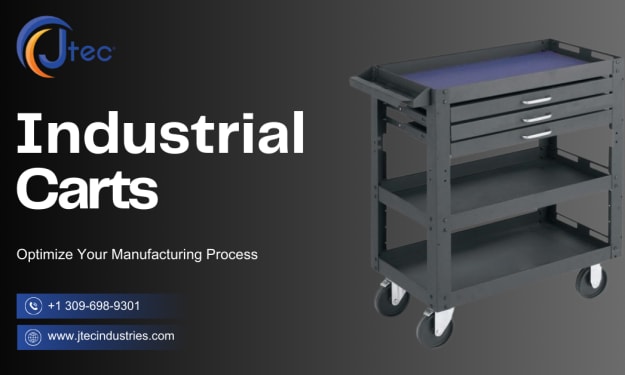
How Industrial Carts Can Optimize Your Manufacturing Process
Efficiency and productivity are critical factors in any manufacturing process, and industrial carts are a powerful solution to help achieve both. Manufacturers are continuously seeking streamline their operations, reduce costs, and boost productivity. The most effective tool to accomplish these goals is the industrial cart. These versatile, heavy-duty carts can play a significant role in optimizing the manufacturing process, improving workflow, improving safety, and increasing overall efficiency.
By Jtec Industriesabout a year ago in Journal
The Human Edge: Building an Irreplaceable Brand in an AGI Future
My AGI Awakening: From Overwhelmed Skeptic to a Future I Can Finally Grasp Let’s be honest. A few years ago, if you’d cornered me at a coffee shop and started ranting about Artificial General Intelligence (AGI), my eyes would have glazed over. I’d have nodded politely while silently screaming inside. My world was pixels, click-through rates, and server crashes. I was building a digital business from my garage, drowning in the now. The concept of AI achieving human-level or superhuman cognitive abilities felt like science fiction—a hot, distracting topic for academics and Silicon Valley dreamers, not for someone whose biggest win of the week was fixing a broken plugin.
By John Arthorabout 5 hours ago in Journal
Rage
Content Warning: Domestic Violence, Assault Rage D. A. Ratliff “Who did this?” My voice echoed through the house. All I wanted was a cup of tea, but one of the twins, running through the house like maniacs, knocked it over. My nerves tingled, and every muscle in my body felt coiled like a spring. Survival seemed out of reach.
By D. A. Ratliff5 days ago in Fiction



Comments
There are no comments for this story
Be the first to respond and start the conversation.