
The Role of Industrial Carts in Modern Material Handling
Enhancing Efficiency and Safety: How Industrial Carts Revolutionize Material Handling


Efficient material handling is required to keep operations smooth, reducing costs, and prioritizing worker safety. In many industries, industrial carts have become essential tools for transporting goods and equipment within facilities. From warehouses to assembly lines, these carts provide an effective solution for moving materials, ultimately supporting productivity, organization, and ergonomics. This blog explains the essential role of industrial carts in material handling and their contribution towards better workflow and a safer environment.
Boosting Productivity and Efficiency
Industrial carts are crafted to simplify the movement of materials, helping workers transport items quickly and easily across workspaces. This ability to reduce time spent on manual handling is a game-changer in environments where swift operations are essential. For example, manufacturing facilities often depend on carts to move parts between workstations, while warehouses use them to streamline the picking and packing process. By providing a reliable method to transfer goods, industrial carts minimize downtime and improve overall productivity.
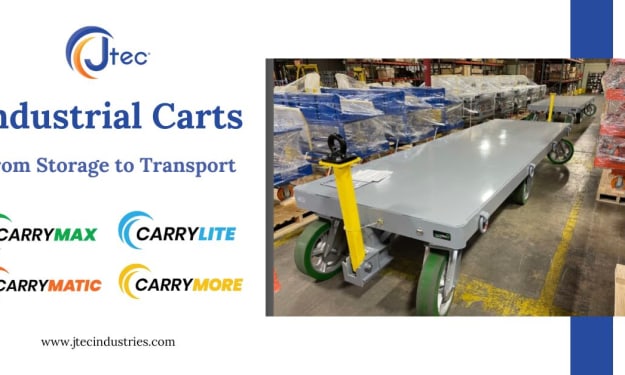
Available in various designs, such as flatbeds, shelves, and platform carts, they can be selected to suit specific materials and tasks. Many carts include strong wheels and ergonomic handles, making it easier for workers to move even large goods. This not only improves workflow but also allows workers to focus on more complex tasks that add greater value to operations, rather than spending too much time on manual transport.
Enhancing Workplace Safety
Industrial carts significantly contribute to workplace safety by reducing the need for manual lifting, which is a leading cause of strain-related injuries in labor-intensive environments. Moving heavy or strangely sized materials manually can lead to muscle injuries, which are not only painful for workers but also costly for companies in terms of lost time and medical expenses. By allowing employees to transport these materials on a stable, easy-to-maneuver cart, industrial carts reduce the risk of injuries.
Many carts also include additional safety features, such as brakes, protective barriers, and non-slip surfaces to ensure items remain secure during transportation. These safety precautions are especially useful in facilities where heavy or delicate goods are handled regularly. By minimizing manual handling and stabilizing loads, carts create a safer environment, meeting strict safety standards that industries increasingly prioritize.
Versatility Across Different Industrial Applications
Industrial carts are available in multiple types and configurations, making them suitable for various industries and applications. Here are some popular types used in material handling:
Flatbed Carts: With a large, open platform, these carts are ideal for transporting oversized and bulky items. They are commonly used in manufacturing and warehousing, where large components are regularly moved.
Platform Carts: Built for carrying heavier items, platform carts offer a flat, spacious surface suitable for large or numerous items. Their heavy-duty design is perfect for logistics and distribution environments.
Shelf Carts: Equipped with multiple levels, these carts are great for assembly lines or production floors, where small parts or tools need to be organized and accessed quickly during transport.
Utility Carts: Often used in maintenance and cleaning roles, utility carts come with compartments to store various tools and supplies, making them ideal for tasks requiring mobility and access to different items.
Each cart is intended to fulfill unique material-handling requirements, offering options that fit various operational demands. This versatility allows organizations to choose carts that best suit their workflow, ensuring an optimal setup for any task.
Supporting Lean and Organized Workflows
Industrial carts help maintain order and reduce the mess in workspaces, which is especially important for lean manufacturing practices that aim to stop waste. By providing dedicated platforms for transporting materials, carts keep work areas clear and organized, reducing the risk of misplacing items and ensuring that tools and materials are always within reach. This organization leads to smoother workflows and improved productivity.
In businesses such as e-commerce and distribution, where high-volume order fulfillment is the norm, these carts can help to maintain an effective workflow. Shelf and order-picking carts, for example, allow workers to gather items quickly without repeatedly traveling back and forth between storage areas. This setup not only saves time but also reduces the physical strain on employees, further promoting an efficient and ergonomic environment.
Customization Options to Meet Specific Needs
A key advantage of these carts is their adaptability. Many manufacturers offer customization options, enabling organizations to modify carts to fit specific operational requirements. From adjusting the height and adding shelves to integrating hooks or special compartments, these customizations improve the functionality of carts to suit unique tasks.
Customization is especially beneficial in specialized industries, such as automotive manufacturing or laboratory work, where specific tools, materials, or components are regularly moved. Custom industrial carts help ensure that everything required for a job is available in one place, reducing the need for multiple trips and improving task efficiency.
Environmental Impact and Sustainability
Sustainability is a growing priority across industries, and industrial carts are becoming an eco-friendly option in material handling. Many carts are built with recyclable materials, and manufacturers are increasingly focusing on durable designs that reduce the need for frequent replacements. Longer-lasting carts produce less waste over time, which aligns with initiatives that focus on reducing an organization's overall environmental mark.
Additionally, these carts contribute to energy savings. Unlike forklifts and other powered transport solutions, carts do not depend on fuel or electricity, for companies looking to cut down on energy costs or lower their carbon footprint, integrating carts into material-handling processes provides a cost-effective, environmentally friendly alternative.
Conclusion
Industrial carts are essential for modern material handling, providing a balance of mobility, safety, and efficiency that meets a wide range of operating requirements. These carts help a safer and more streamlined process by allowing quick transportation, decreasing physical strain, and offering organization. Their adaptability and sustainability make them valuable assets in industries that demand accuracy and flexibility. For any organization looking to improve its material-handling processes, industrial carts represent a useful, reliable solution that enhances productivity and aligns with modern standards in workplace safety and environmental responsibility.
Read Also: How to Choose the Right Tugger Cart System for Your Warehouse Layout
About the Creator
Jtec Industries
J-TEC Industries is a manufacturing company specializing in material handling equipment solutions.
Keep reading
More stories from Jtec Industries and writers in Journal and other communities.
From Storage to Transport: Versatile Uses of Industrial Carts in Manufacturing
Manufacturing facilities depend on well-organized, efficient systems to keep operations running smoothly. One key piece of equipment that supports this efficiency is the industrial cart. Designed to handle heavy loads, these carts make it easier to move, store, and organize materials. By streamlining tasks and reducing manual lifting, these carts help improve productivity, improve safety, and keep workflows organized. In this blog, we’ll explore the versatile ways industrial carts are used in manufacturing, from effective storage solutions to seamless material transport, and the benefits they bring to the workplace.
By Jtec Industriesabout a year ago in Journal
What It Felt Like When the Afternoon Crash Never Came
For as long as I can remember, the afternoon crash felt inevitable. Somewhere between early afternoon and the last stretch of the workday, my energy would fade. Not dramatically. Just enough to make everything feel heavier. Focus slipped. Patience thinned. Tasks that felt manageable in the morning suddenly required effort.
By illumipure3 days ago in Journal
Affection and Healing for Yourself
During the night of the last quarter moon, I gathered my ritual supplies. I carefully handled the chunk of black tourmaline that would protect me from your overall negative and narcissistic energy. I carefully walked the house with my stick of selenite in hand, asking the universe to cleanse our working space.
By Alisha Wilkins ✒️🦋🖋️4 days ago in Fiction


Comments
There are no comments for this story
Be the first to respond and start the conversation.