
The Role of Data Conversion In Business Intelligence Success
Know the crucial role of data conversion services in business intelligence. Find out the unique advantages of data transformation for accurate data insights.
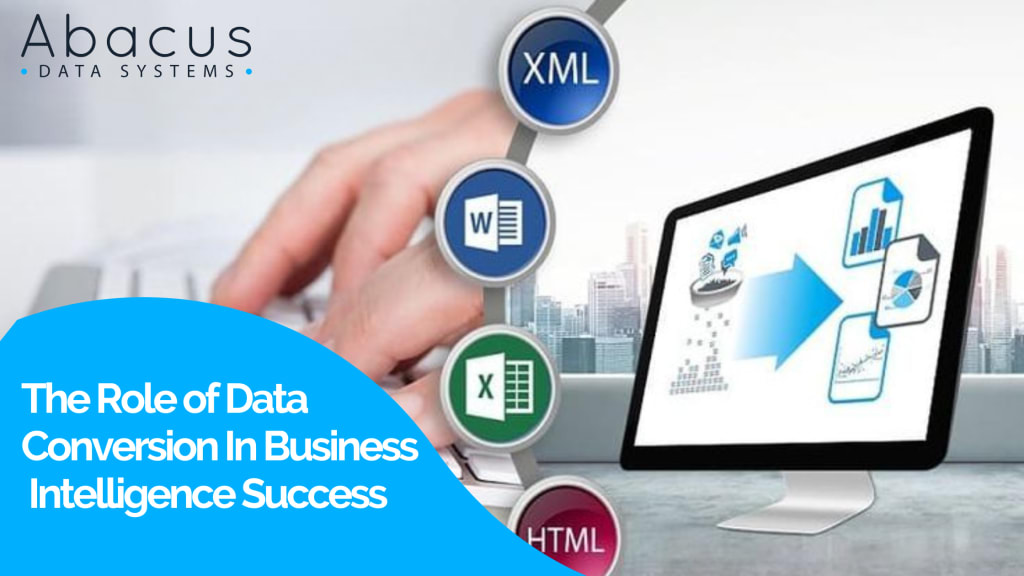
Businesses' increasing adoption of digital transformation provides various tools to generate massive amounts of data to gain insights about operations. In today’s fast-paced digital environment, data conversion is critical to the overall success of business intelligence (BI) activities.
Organizations increasingly rely on robust data conversion services to effectively transition raw data into a format suitable for accurate analysis and decision-making.
This blog discusses the integral function of data conversion and how it improves business intelligence results. It enables companies to maintain data integrity and effective data management and ultimately gain a competitive advantage.
Why is Data Conversion Crucial for Business Accuracy and Efficiency?
Data conversion refers to converting and transforming data from one format or structure into another. This process may involve converting outdated legacy data into modern formats, transforming information collected from different systems into a common schema, or preparing information for migration to a new platform.
At its core, this unique process helps businesses maintain data consistency and accuracy across different departments and systems. The significance of data transformation becomes noticeable when organizations aim to use the power of BI tools.
These tools need compatible, structured, and improved information for effective processing. Clean and converted data helps ensure that all analytical results are based on credible and relevant information, supporting organizations in making data-driven decisions.
The Importance Of Data Conversion In Business Intelligence
Unlocking Data Integration and Analytics
For any business intelligence system to be effective, different data must be integrated into a single, accessible format. Data conversion catalyzes achieving seamless data integration.
It ensures that data can be unified and standardized in various forms, supporting advanced BI tools and analytics capabilities.
- Big Data: When enterprises deal with increasing volumes of big data, converting it becomes even more crucial. The higher volume and variety of information means that conversion processes must be robust enough to handle different data types while maintaining robust data security.
- Analyzing Data: After completing the conversion process, the organization can analyze data without worrying about inconsistencies. This type of record clarity helps leaders derive valuable insights critical for strategic planning.
Ensuring Data Security and Quality
Quality and security are the two pillars of effective data management. When organizations maintain data rigorously, they help ensure data quality across all systems.
- Data Quality Standards: Reliable data conversion practices work with data quality standards to ensure the data entering BI platforms is complete, accurate, and timely. This process ultimately reduces report errors and improves confidence in the insights generated.
- Data Security: In addition to the quality, security is necessary. Through secure data transformation processes, organizations can confirm strict security measures to safeguard crucial sensitive information, thus building trust among stakeholders and customers.
Data Conversion Serves As A Pillar Of Data Management
Effective data management starts with the unique ability to organize, understand, and optimize incoming data. Since raw data originates from various sources, including customer interactions, sales platforms, or third-party software conversion, integrating this information becomes essential.
Companies can verify data quality standards through a consistent conversion process, ensuring that all information is correct, reliable, and complete. Poor-quality data can result in defective analyses, changes in prediction, and expensive business mistakes.
On the contrary, quality-assured converted data supports trustworthy reporting and insightful forecasting. Moreover, data transformation helps in data integration, the seamless unification of data from multiple sources into a centralized system.
Integration improves accessibility and enables cross-functional analysis, further improving the analytics capabilities of BI solutions.
Improving Data Quality and Security Through Conversion
A properly executed data conversion process contributes to data assurance and security. When data is converted and standardized before entering the business intelligence ecosystem, it undergoes a thorough review and cleansing.
This process reduces the risks of corruption, duplication, or loss, helping to ensure data quality throughout the data lifecycle. In addition, with growing concerns over data privacy and regulatory compliance, secure data transformation is essential.
Following best practices during data transformation ensures that critical sensitive information remains protected from unauthorized access or misuse. Data protection is a technical requirement in today's digital economy and crucial to trust and brand reputation.
How BI Powers Smart Decision-Making?
Business intelligence grows on accurate and timely data. By using converted and validated information, robust BI platforms empower organizations to make smarter and more informed decisions.
Whether identifying market trends, predicting customer behavior, or evaluating financial performance, high-quality converted data ensures that strategic decisions are based on facts, not assumptions.
For instance, analyzing data on customer transactions and preferences can reveal buying patterns that increase marketing or product development.
Without the conversion process, this cross-platform analysis would be nearly impossible due to incompatible formats or missing values. Thus, different types of data conversion act as the gateway to valuable insights.
Gaining A Competitive Edge With Advanced Business Intelligence Tools
Modern organizations rely on agile, real-time insights that guide their operations to gain competitive advantage. Advanced BI tools, when powered by properly converted data, can rapidly process big data sets to uncover opportunities or detect inefficiencies.
These tools allow businesses to monitor KPIs, visualize trends, and platform what-if scenarios, which are invaluable for strategic planning.
For example, a retail company uses BI dashboards to track sales performance across multiple regions. Using consolidated and converted information, they can identify underperforming areas and take immediate action.
In this manner, data transformation supports analytics capabilities essential for competitive innovation and agility.
Supporting Data Governance and Compliance
Modern businesses should resolve complex data regulations and ethical practices governed by internal policies and external laws. It is a phase where data governance intersects with the data transformation process.
Through structured conversion protocols, businesses can develop control over how data is transformed, collected, stored, and accessed. This high level of oversight ensures consistency and accountability across the organization.
Moreover, it helps meet compliance requirements related to data handling, especially when dealing with health, financial, or customer-related information. By including governance in the complex transformation process of a data conversion company, organizations encourage trust in their data ecosystems while reducing legal and operational risks.
Real-World Applications: From Customer Behavior to Big Data
The impact of data conversion extends across multiple business functions. In marketing, converted customer data can be used to understand preferences, buying habits, and engagement levels, allowing personalized campaigns.
In operations, converted supply chain data supports efficiency analysis and forecasting. With the rise of big data, the need for scalable and automated conversion processes is more critical than ever.
Multiple businesses that regularly deal with millions of data points, like those in finance or e-commerce, should rely on robust conversion systems to ensure ongoing performance and reliability.
Moreover, insights derived from converted and integrated datasets allow organizations to predict customer behavior more accurately. This prediction results in improved customer experiences, better product recommendations, and higher customer retention rates.
Using Data Conversion to Future-Proof BI Strategies
When technologies evolve rapidly, the types and formats of data also grow instantly. Businesses should remain adaptable by adopting dynamic conversion processes that can handle outdated, legacy data and emerging data types like IoT and real-time streaming data.
Integrating advanced AI and machine learning into data transformation can improve accuracy and speed, especially when dealing with large data volumes.
This development and evolution ensures that the business intelligence infrastructure remains relevant and responsive in the face of change.
Get Accurate Data Insights And Security For Precise Business Analysis Using Data Conversion Services
Data conversion is a strategic enabler in becoming a truly data-driven organization. It allows companies to maintain data integrity, follow strict data quality standards, and maximize the performance of BI tools.
Partnering with a reliable data conversion company ensures that your data is accurately transformed and readily usable for critical business functions. Whether analyzing data, predicting trends, or understanding customer behavior, converted and high-quality data accelerates every function of modern business intelligence.
In an increasingly competitive and data-rich world, transforming and unifying data empowers organizations to act faster, think smarter, and lead confidently.
About the Creator
Keep reading
More stories from abacusdatasystems and writers in Journal and other communities.
Navigating 2025: Key Trends in Data Entry Services
With the advancements and innovations in online digital tools, businesses generate large amounts of data to make better-informed decisions in the rapidly changing digital environment. For this reason, data entry services have become a foundation for managing the overloaded information that organizations encounter daily.
By abacusdatasystems9 months ago in Journal
Iran: The Anatomy of a Twilight
There are images whose power lies not in the brilliance of what they reveal, but in the abyss of what they leave unsaid. A dark silhouette cutting through the leaden skies of Tehran; the heavy silence of departure lounges; and that dry, bureaucratic warning, cold as a judicial sentence: “Leave the country immediately.” When a foreign ministry, usually so adept at hushed euphemisms, exhorts its citizens to flee, it is not merely issuing a cautionary advisory. It is issuing an admission of failure. It is the explicit recognition that the structures of order have become mere theatrical backdrops, that coercion has supplanted law, and that the threshold of radical unpredictability has been crossed. Iran, in this early stretch of 2026, is no longer merely trembling; it has settled into that twilight “in-between” where the crash has not yet occurred, but where the very silence feels like the herald of a seismic shift.
By Laurenceau Porte6 days ago in Journal




Comments
There are no comments for this story
Be the first to respond and start the conversation.