
The Role of AI in Software Testing: A CEO's Guide to Quality Assurance
Software testing is an important yet time-consuming part of software development. Discover how AI can make the process easier.

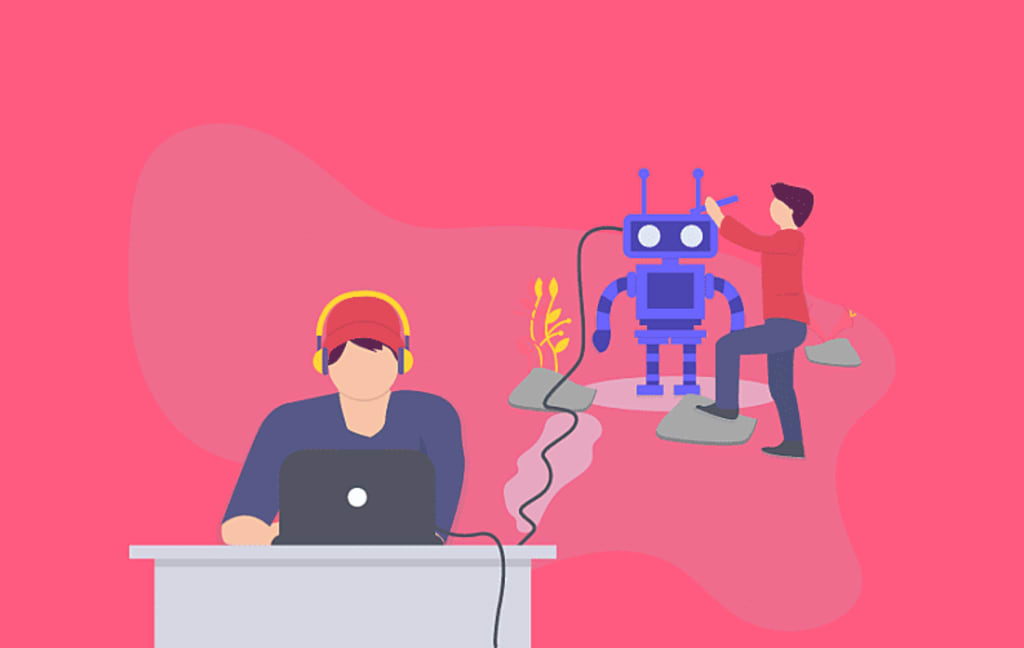
AI has revolutionized the software development process. It helps software development companies with the analysis of data and planning of resource allocation, code generation auto-completion plugins and autonomous software maintenance.
AI has also helped with smart testing and quality assurance, making the software testing process seamless, effective, and faster. Read on to know how!
AI Chatbot Development might sound like a high-tech challenge, but with the right steps, it can be a rewarding experience. Chatbots are becoming vital in today's digital world, helping businesses deliver round-the-clock customer support, automate repetitive tasks, and provide personalized experiences. If you're ready to dive into the world of AI chatbots, here's a user-friendly guide to help you build one from scratch.
The Role of AI in Software Testing
The software testing process is lengthy; thus, software development services have divided it into several parts. These phases each share the overall goal of identifying and rectifying issues in software before production and deployment.
Let’s look at each of these phases and analyze the role of AI individually across all these stages.
1. Performance Testing
In the performance testing phase, developers aim to identify how the software performs in common scenarios. They also overload the software with excessive tasks to gauge its stress threshold.
Role of AI in Performance Testing
- AI tools automate the test case generation process, developing common scenarios humans might overlook. It creates the test scenarios primarily by analyzing software usage patterns.
- AI also analyzes historical testing data, specifications, and software code to explore the different paths and inputs presented by the software. This increases the software's reliability and test coverage.
- AI also helps developers by detecting discrepancies and performance errors displayed by the software during the initial stage.
2. Regression Testing
Regression testing is performed all through the testing life cycle of software. This is done after a new change is implemented to the software. The regression test helps keep the software's previously functional and tested operations intact.
Role of AI in Regression Testing
- AI tools powered by machine learning (ML) can help developers automate the monotonous regression testing task.
- Here again, AI can generate regression-associated test cases and flawlessly execute them to expedite the process.
- AI test automation also helps garner faster feedback on software changes to help developers modify or rectify those changes.
3. Usability Testing
The usability phase of software testing leverages the end user's perspective to gauge how easy the software is to use and operate. It considers the interface and design of the software to analyze the user experience.
Role of AI in Usability Testing
- AI can stimulate user interactions and behaviors, helping developers understand how the software would perform in those scenarios.
- AI tools can then analyze the huge amount of data collected from these tests and highlight important feedback. This allows the developers to identify and rectify the usability issues promptly.
- AI, with its predictive capabilities, can also anticipate potential user behaviors. This helps developers in addressing potential usability issues before they even arise.
- Since usability testing is a continuous and repetitive task, AI tools help in saving time and resources. Through automation, these tools also allow human testers to focus on more complex software testing tasks.
4. Compatibility Testing
Compatibility testing is when the developers evaluate the functions and ability of the software to perform in various computing environments. This step analyzes the performance of the software across the different operating systems (Windows, Android, and iOS), web browsers, mobile platforms, varying screen sizes, etc.
Role of AI in Compatibility Testing
- AI can stimulate different screen sizes without added effort or resources and help developers analyze the operation of the software.
- Similarly, AI tools can also automate the cross-browser testing process. Doing so ensures that all the features of the software function as intended across different web browsers.
- AI also analyzes the software's working across the various operation systems through stimulation.
- Lastly, AI tools can also analyze any logs and errors demonstrated during the compatibility testing to help developers rectify the same.
5. Security Testing
The software testing process is incomplete without assessing the threats, risks, and vulnerabilities associated with the software. Security testing helps developers examine software for malware susceptibility, exposure to hacking, risk of leaking the user’s data, etc.
Role of AI in Security Testing
- AI tools can mimic human interactions and help developers discover previously unknown vulnerabilities.
- It helps identify dangerous software patterns associated with breaching valuable and voluminous data.
Future of AI in Software Testing
- AI trends emphasize ethical considerations while leveraging AI in software testing. The AI tools are expected to solve privacy, transparency, and prejudice concerns like dada dissemination, use limitation, etc.
- AI and IoT integration can lead to interconnected testing systems, making the process reliable and safe.
- Explainable AI is another trend that can boost the testing process and make it more transparent. With explainable AI, tools could provide interpretable explanations for their decisions. This will make it easier for developers to validate and verify the results produced by AI systems.
Conclusion
While AI is revolutionizing software development's software testing and quality assurance aspect, it also has challenges. Firstly, AI tools require high-quality, voluminous data for training and performance. Managing and collecting the data might be difficult, particularly for complex software systems.
Adopting AI can also be expensive in the short run, with businesses incurring infrastructure costs. Appropriate training must also be provided to the developers, which adds to an already expensive process.
Software development companies can easily address these AI-related problems associated with software testing. These companies already have an expert team, high-quality data access, and the infrastructure for flawless execution.
Hence, collaborating with these software development services can help businesses and CEOs implement AI in their software testing process. This collaboration would be cost-effective and valuable for both parties involved in the long run.
About the Creator
Ahana Pearl
I'm a business consultant with extensive of experience in mobile application development industry, offers review and suggestion for mobile applications.
Keep reading
More stories from Ahana Pearl and writers in Journal and other communities.
How to Make a Chatbot from Scratch?
Chatbots are an irreplaceable part of any business. They allow businesses to simulate conversations that help deliver customer service, answer questions, and entertain. Building a chatbot can be a complex process, considering the requirements. However, creating a chatbot for your own custom needs is an essential task.
By Ahana Pearlabout a year ago in Journal




Comments
There are no comments for this story
Be the first to respond and start the conversation.