
The Role of AI in Personalizing Mental Health Care: Opportunities and Ethics
Opportunities and Ethics


The Role of Artificial Intelligence in Personalizing Mental Healthcare: Opportunities and Ethics
Artificial intelligence (AI) is rapidly transforming various sectors, and mental healthcare is no exception. The integration of AI offers unprecedented opportunities to personalize mental health treatment, making it more accessible, efficient, and tailored to individual needs. However, this technological advancement also brings forth a complex array of ethical considerations that must be carefully navigated to ensure responsible and beneficial implementation.
Opportunities for Personalization
One of the most significant opportunities presented by AI in mental healthcare is the ability to deliver highly personalized interventions. Traditional mental health approaches often rely on generalized treatment plans, which may not be optimally effective for every individual. AI, through its capacity to analyze vast amounts of data, can identify subtle patterns and correlations in patient information, including genetic predispositions, lifestyle factors, treatment responses, and even real-time behavioral data from wearable devices [8, 12, 16]. This data-driven insight allows for the creation of bespoke treatment plans that are continuously adapted to a patient's evolving condition and unique needs [2, 4, 10].
AI-powered tools, such as chatbots and virtual therapists, can provide 24/7 support, offering immediate assistance and guidance, especially in underserved populations where access to human therapists is limited [1, 18]. These tools can deliver cognitive behavioral therapy (CBT) exercises, mindfulness techniques, and emotional support, all personalized based on the user's interactions and progress [16]. Furthermore, AI can assist clinicians in making more precise diagnoses and prognoses by analyzing clinical notes, patient history, and even vocal patterns or facial expressions, leading to earlier detection and more effective early interventions [5, 9, 14]. Predictive analytics, a core AI capability, can also forecast treatment outcomes and identify individuals at higher risk of relapse, allowing for proactive adjustments to care plans [3, 5].
Ethical Considerations
Despite the immense potential, the deployment of AI in mental healthcare is fraught with ethical challenges. A primary concern is privacy and confidentiality [1, 7]. Mental health data is inherently sensitive, and the collection, storage, and analysis of such data by AI systems raise significant questions about data security and the potential for breaches. Ensuring robust encryption, anonymization, and strict access controls is paramount to protecting patient information [9].
Another critical ethical issue is bias and fairness [1, 7]. AI algorithms are trained on existing datasets, which may reflect societal biases or historical disparities in healthcare provision. If these biases are embedded in the training data, AI systems could perpetuate or even amplify health inequities, leading to discriminatory diagnoses or treatment recommendations for certain demographic groups. Developers must actively work to create diverse and representative datasets and implement fairness-aware AI models to mitigate this risk [1, 4].
Transparency and explainability are also crucial [1, 7]. The
black box nature of some AI models makes it difficult to understand how they arrive at their conclusions. In mental healthcare, where trust and understanding are vital, it is essential that clinicians and patients can comprehend the reasoning behind AI-generated insights and recommendations. Lack of transparency can erode trust and hinder the adoption of these technologies.
Accountability is another significant concern. If an AI system makes an incorrect diagnosis or recommends an inappropriate treatment that leads to adverse outcomes, who is responsible? Is it the developer of the AI, the clinician who used the tool, or the institution that implemented it? Clear frameworks for accountability are needed to address potential errors and ensure patient safety [4].
Finally, the role of the human element in mental healthcare cannot be overstated. While AI can augment and support mental health professionals, it cannot replace the empathy, nuanced understanding, and human connection that are fundamental to therapeutic relationships [7]. There is a risk that over-reliance on AI could dehumanize mental healthcare, reducing complex emotional experiences to data points. The goal should be to use AI as a tool to enhance human care, not to supplant it.
Conclusion
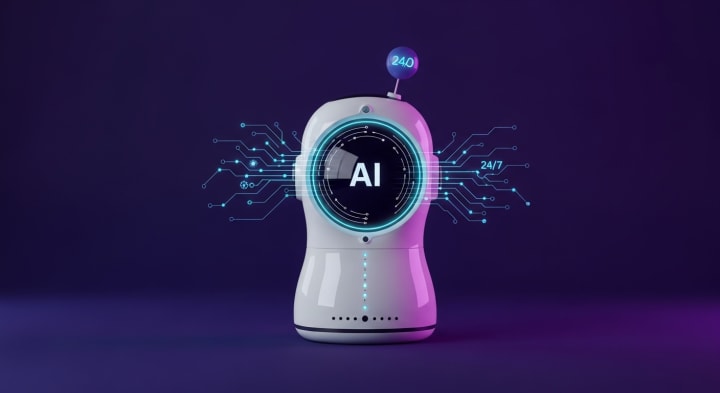
Artificial intelligence holds immense promise for revolutionizing mental healthcare by enabling unprecedented levels of personalization and accessibility. From tailoring treatment plans to providing 24/7 support, AI can significantly improve patient outcomes and expand the reach of mental health services. However, realizing this potential requires a vigilant and proactive approach to the ethical challenges it presents. Addressing concerns related to privacy, bias, transparency, accountability, and maintaining the crucial human element will be paramount to ensuring that AI serves as a beneficial and responsible force in the evolution of mental healthcare .
About the Creator
nahida ahmed
I am Nahida Ahmed, a specialist in artificial intelligence and marketing digital products via social media and websites. Welcome.
Keep reading
More stories from nahida ahmed and writers in Journal and other communities.
Unlock Your Creativity: Beacons Creator Hub Makes it Easy!
Are you ready to transform your creative passion into a thriving business? Beacons Creator Hub, an all-in-one platform powered by cutting-edge AI, empowers content creators to streamline their workflows, engage audiences, and monetize their craft effortlessly. Whether you're a budding influencer, artist, or entrepreneur, Beacons makes it simple to unleash your creativity and build a sustainable career in 2025.
By nahida ahmed7 months ago in Photography
Florida Business Insurance Requirements
Running a business in Florida means operating in one of the most dynamic—and complex—risk environments in the country. Between climate exposure, legal requirements, contractual obligations, and industry-specific risks, insurance is not just a formality. It is a structural component of how a business survives disruptions, disputes, and unexpected losses.
By American US Insurance2 days ago in Journal




Comments
There are no comments for this story
Be the first to respond and start the conversation.