
The Rise of Multipolarity: End of American Hegemony
Decoding the Collapse of Western Supremacy in a Fractured World
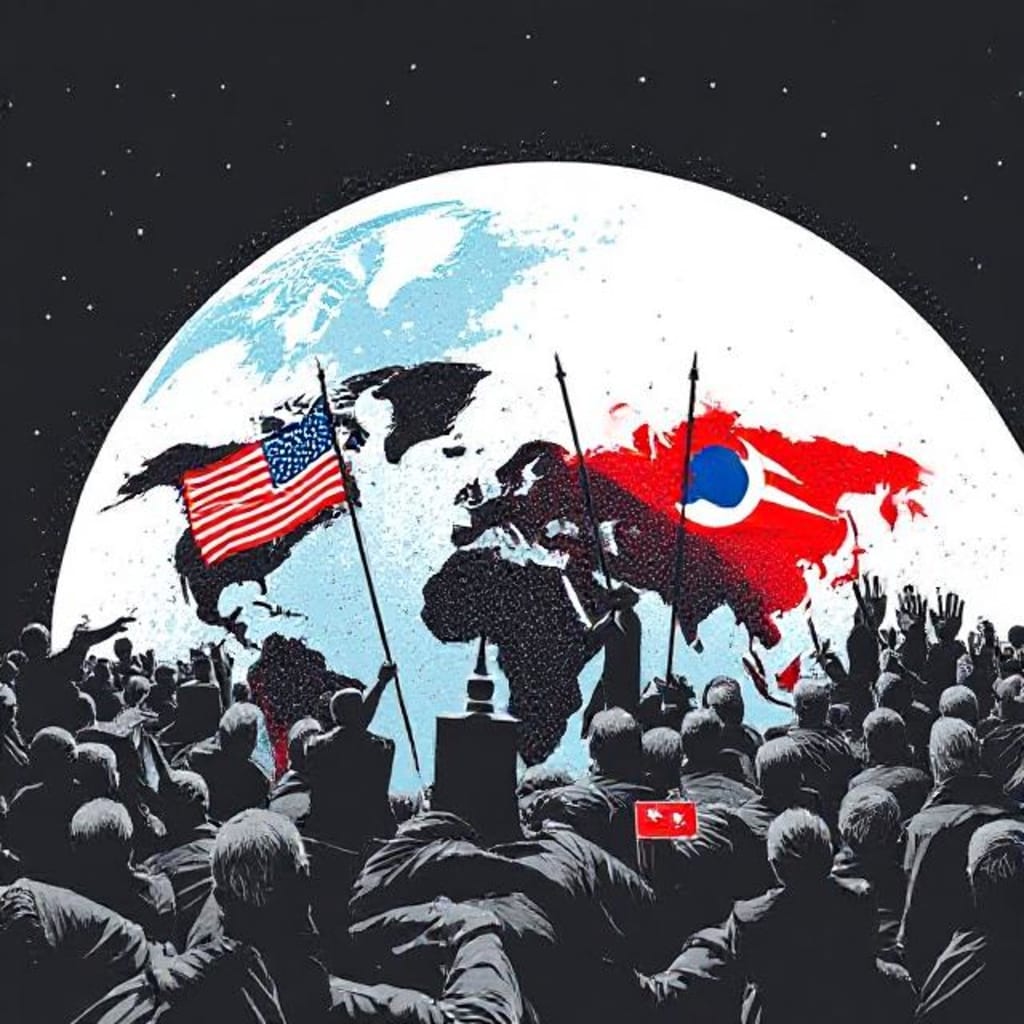
Introduction: A Changing World Order
Since the end of the Cold War, the United States has enjoyed a position of unrivaled global dominance, shaping international institutions, military strategies, economic policies, and political ideologies. This unipolar moment, as coined by political scientist Charles Krauthammer, positioned America as the sole superpower. However, the geopolitical landscape of the 21st century is rapidly shifting. A new global structure is emerging — one that is multipolar, complex, and resistant to singular control. With the ascent of powers like China, Russia, India, and the resurgence of regional alliances, American hegemony is under threat, prompting a profound transformation in the international order.
Historical Context: From Bipolarity to Unipolarity
During the Cold War, the world was defined by bipolarity — a power contest between the United States and the Soviet Union. The ideological divide between capitalism and communism shaped alliances, wars, and policies across continents. However, the collapse of the Soviet Union in 1991 led to the dawn of unipolarity, with the United States emerging as the global architect of political and economic norms.
In the years that followed, Washington dictated the global narrative: launching interventions in Iraq and Afghanistan, spearheading globalization, and commanding institutions like the IMF, World Bank, and NATO. American culture, economy, and military strength seemed untouchable. Yet, beneath the surface, the seeds of multipolar resistance were slowly being sown.
The Drivers of Multipolarity
1. The Rise of China
No single factor has challenged U.S. supremacy more significantly than the meteoric rise of China. With its Belt and Road Initiative (BRI), expanding military capabilities, and growing technological dominance, China has become America’s primary rival. The Chinese model — an authoritarian capitalist system — has not only succeeded economically but also challenged the Western narrative of liberal democracy as the only path to prosperity.
China’s growing influence in Africa, Latin America, and Central Asia signals the end of Western monopoly over global development aid and investments. Its assertiveness in the South China Sea and its ambition to reunify Taiwan have further heightened global tensions, putting Washington on edge.
2. The Resurgence of Russia
Russia, once dismissed as a declining power, has reasserted itself under Vladimir Putin. The annexation of Crimea in 2014, support for Assad in Syria, and the full-scale invasion of Ukraine in 2022 were clear messages: Russia refuses to live under the shadow of American dictate. While these actions have led to sanctions and global condemnation, they also undermine Western unity, especially as many nations in the Global South refuse to take sides.
Russia’s growing alignment with China, especially through forums like BRICS and the Shanghai Cooperation Organization (SCO), underscores a deliberate pivot toward a multipolar alliance structure.
3. Emergence of Regional Powers
India’s ascent as an economic powerhouse, Brazil’s regional assertiveness in Latin America, Turkey’s strategic maneuvering between East and West, and Iran’s growing regional clout all highlight a broader trend: nations asserting regional leadership outside the Western framework.
India, in particular, has adopted a policy of strategic autonomy, engaging with the U.S. through QUAD while maintaining defense ties with Russia. Such balancing acts point to a post-hegemonic global diplomacy, where countries navigate power based on self-interest, not ideological loyalty.
4. Declining Credibility of U.S. Leadership
The U.S. has faced increasing criticism for double standards in international law, human rights, and democratic values. From the invasion of Iraq under false pretenses to its handling of Guantanamo Bay, Washington’s moral high ground has eroded.
Internally, political polarization, racial unrest, gun violence, and the attack on the U.S. Capitol in 2021 have damaged its image as a stable democracy. The chaotic withdrawal from Afghanistan further exposed America’s strategic fatigue and declining commitment to global policing.
Multipolar Institutions and Strategic Realignments
1. Rise of BRICS and Non-Western Alliances
The BRICS bloc (Brazil, Russia, India, China, South Africa) represents a powerful symbol of multipolarity. These countries, despite their internal differences, are united in their demand for reforms in global governance, particularly in institutions like the UN Security Council and the World Bank.
The New Development Bank (NDB) and the Contingent Reserve Arrangement (CRA) are tangible alternatives to Western financial institutions, offering non-conditional loans and promoting sovereign development without Western interference.
2. Geopolitical Realignment in the Middle East
The Abraham Accords, Saudi-Iran rapprochement brokered by China, and Syria’s re-entry into the Arab League are indicators that regional diplomacy is taking precedence over U.S.-led mediation. The U.S. influence in the Middle East, once absolute, is increasingly contested by Russia, China, and Turkey.
Impact on Global Governance and the International System
A multipolar world does not imply harmony; it implies diversity in centers of power — political, economic, military, and cultural. This has profound implications:
Fragmentation of global consensus: Climate change, trade, human rights, and global health face diplomatic gridlock as no single power can enforce or guide a unified agenda.
Decline of liberal internationalism: Western ideals of democracy and open markets are increasingly rejected or reshaped by other models like China's state capitalism or Russia's authoritarian nationalism.
Increased regionalism: Countries are shifting focus from global integration to regional cooperation — seen in the rise of African Union (AU), ASEAN, and Mercosur.
Conclusion: Navigating a Post-Hegemonic World
The rise of multipolarity is not just a redistribution of power; it is a redefinition of global norms, identities, and priorities. It challenges the notion of a single nation imposing values or interests globally. For developing countries, this may open space for greater sovereignty, bargaining power, and strategic diversification.
However, multipolarity also risks chaos, rivalry, and fragmentation, especially in the absence of agreed-upon rules and institutions. The world stands at a crossroad: it can evolve toward collaborative pluralism, or spiral into strategic competition and disorder.
The decline of American hegemony is not the end of global leadership. It is a call for shared responsibility, collective wisdom, and inclusive diplomacy — where no single nation dictates the world’s fate, but many shape it together.
About the Creator
Keep reading
More stories from Farhad khan and writers in Journal and other communities.
Nervous System Regulation and Emotional Resilience in an Overstimulated World
In a world shaped by constant alerts, rapid communication, and unending demands for attention, nervous system regulation has become an essential part of emotional well-being. Many people notice that even during moments of rest, their body remains tense or alert. Sleep feels shallow. Focus drifts. Small challenges trigger strong reactions that feel difficult to manage.
By Jose Morris4 days ago in Journal
Rage
Content Warning: Domestic Violence, Assault Rage D. A. Ratliff “Who did this?” My voice echoed through the house. All I wanted was a cup of tea, but one of the twins, running through the house like maniacs, knocked it over. My nerves tingled, and every muscle in my body felt coiled like a spring. Survival seemed out of reach.
By D. A. Ratliff4 days ago in Fiction



Comments
There are no comments for this story
Be the first to respond and start the conversation.