
The Rise of Interactive Amusement Equipment and the Gamification Experience Trend
How Gamified Rides Transform Visitor Engagement


In the rapidly evolving landscape of entertainment engineering, the boundaries between digital interactivity and physical thrill are blurring. Modern amusement design is no longer confined to mechanical motion and visual spectacle; it has entered a new phase of interactive immersion and game-driven engagement. The next generation of parks and indoor centers are adopting technology-infused equipment that transforms passive spectators into active participants, redefining how joy, challenge, and connection are experienced.
The Shift from Passive Play to Active Participation
Traditional amusement rides once relied solely on mechanical movement—speed, height, and centrifugal force—to deliver excitement. However, as digital-native audiences seek deeper involvement, the core of attraction design has shifted toward interaction. Riders now expect agency: the ability to influence outcomes, trigger effects, or compete with others.
This transformation is evident across both large-scale outdoor rides and compact indoor installations. For instance, a pendulum swing amusement ride can now feature sensory-triggered lighting systems, rhythm-based motion synchronization, or augmented reality (AR) overlays that change the perceived environment mid-flight. Such innovations don’t alter the fundamental physics of the ride, but they enhance its psychological depth. The thrill is no longer a one-way transmission; it becomes a dialogue between machine and human perception.

Gamification as an Emotional Multiplier
Gamification—the application of game mechanics to non-game environments—has become a defining force in entertainment design. By introducing points, achievements, and competitive or cooperative goals, even the simplest attractions can achieve greater replay value and emotional stickiness.
Interactive amusement equipment uses gamification principles to motivate repeated engagement. RFID wristbands, motion sensors, and digital leaderboards now extend the experience beyond the ride itself, allowing visitors to collect digital rewards, share achievements on social platforms, or compete in real-time tournaments.
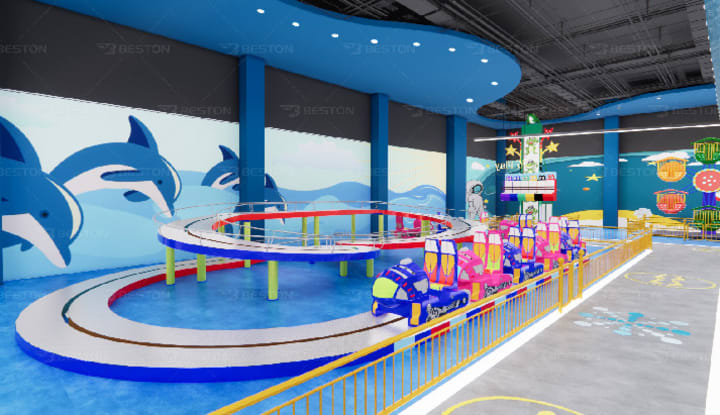
For instance, a mini indoor roller coaster can integrate target-based interaction systems where riders score points by hitting light sensors as they travel along the track. Combined with dynamic LED mapping and adaptive audio cues, this creates a hybrid experience that merges arcade-style gameplay with traditional motion thrills.
Gamification also redefines duration of engagement. While a ride may last only two minutes, the surrounding game environment—progress tracking, achievement badges, and cooperative missions—can extend the emotional connection for hours or even days.
Technology Integration and Sensory Design
Behind this transformation lies an intricate fusion of control systems, human-computer interaction design, and real-time feedback mechanisms. Advanced programmable logic controllers (PLCs), embedded motion sensors, and responsive lighting grids enable seamless coordination between rider input and mechanical response.
The engineering challenge is not merely to move the structure but to create synchronized sensory harmony. For example:
Audio-visual coherence: integrating sound modulation systems that react to the ride’s acceleration.
Touch-sensitive interfaces: embedded panels that allow players to trigger visual effects or influence trajectory.
Biometric response tracking: systems that adjust difficulty or intensity based on rider heart rate or movement patterns.
These systems are particularly suited to indoor facilities where environmental control is possible. The compact nature of spaces hosting a mini indoor roller coaster allows operators to create layered digital atmospheres, projecting dynamic narratives and responsive environments that evolve through multiple play sessions.
The Convergence of Physical and Digital Realms
One of the most transformative outcomes of this trend is the fusion of physical motion and digital storytelling. Through AR and projection mapping, attractions are evolving into interactive theaters. Visitors no longer just ride—they perform within a narrative.
A pendulum swing amusement ride, for instance, can become a simulated energy-harvesting mission, where riders must coordinate their swing timing to “power up” a virtual reactor projected around them. Their collective performance affects both visual feedback and final score, turning a classic motion-based attraction into a collaborative multiplayer experience.
Similarly, interactive coasters use real-time tracking and AI-driven environment generation to ensure that no two rides are ever identical. The concept of procedural entertainment—borrowed from the gaming industry—is gaining traction in amusement design, offering infinite variability within the same physical infrastructure.
Social Dynamics and Competitive Motivation
Modern visitors crave not only excitement but also recognition. Social sharing, cooperative missions, and live scoring systems turn individual experiences into communal spectacles.
Gamified amusement rides foster a culture of friendly rivalry. Leaderboards placed near exit zones encourage participants to reattempt the ride, seeking higher scores or new achievements. This loop of competition and reward significantly boosts return visits and social media visibility.
Moreover, the shared challenge element transforms the way people bond in theme parks. Instead of passive co-experience, visitors engage in team-based success. The ride becomes a social game, not just a mechanical thrill.
Design Challenges and Engineering Opportunities
Implementing interaction and gamification requires more than cosmetic upgrades. Engineers must account for increased system complexity, ensuring reliability and synchronization across digital and mechanical domains. Safety standards such as EN 13814 and ASTM F2291 are now being reinterpreted to include software-driven control systems and real-time sensory feedback loops.
Maintenance protocols must also adapt. Sensors and projection units require calibration, software systems need periodic updates, and data management becomes integral to operations. Yet, these challenges open new opportunities for modular design and remote diagnostics, leading to smarter, more adaptive attractions.
Looking Ahead: The Future of Immersive Play
The global amusement industry is entering an era of experiential engineering, where data, emotion, and interaction converge. Visitors are no longer consumers of pre-designed fun—they are co-creators of dynamic narratives.
From the adrenaline rush of a pendulum swing amusement ride enhanced with interactive lighting, to the intricate digital missions woven into a mini indoor roller coaster, the evolution is clear: rides are becoming platforms for personal and collective storytelling.
As AI, IoT, and immersive projection technologies continue to advance, the concept of “fun” will expand beyond physical parameters. Tomorrow’s amusement spaces will be adaptive ecosystems—responsive, personalized, and continuously evolving through player behavior.
Final Insight
Interactive amusement equipment and gamified ride design represent more than a trend—they signal a structural shift in how entertainment is conceived, engineered, and experienced. The focus has moved from motion to emotion, from mechanical repetition to adaptive interaction.
In this landscape, the most successful attractions will not simply entertain. They will engage, challenge, and remember their visitors—transforming every ride into a unique, living game.
About the Creator
amusementparksolution
Beston Rides - Focus on providing high-quality, customizable amusement rides and offering one-stop amusement park construction services.
Website: https://bestonamusementrides.com/
Keep reading
More stories from amusementparksolution and writers in Journal and other communities.
Feedback and Improvement Mechanisms
In the modern leisure industry, customer satisfaction has evolved into a multidimensional performance metric that influences reputation, revenue, and operational excellence. Beyond immediate enjoyment, satisfaction reflects the visitor’s overall emotional and functional experience—from the moment they purchase a ticket to their post-visit reflections. Establishing an effective feedback and improvement mechanism is, therefore, not a supplementary process but a structural necessity.
By amusementparksolution4 months ago in Journal
Author’s Advice
If you would’ve asked me 20 years ago did I know I’d become a writer and an author, I would’ve said “nope, ain’t happening”. As fate would have it I did become an author and I can honestly say I’m loving it so far. It really does feel good to be a writer. I’ve learned a lot on this journey and I feel like with even me being as new to this world as I am, there’s some wisdom I need to share with every other aspiring author.
By Joe Patterson4 days ago in Journal
Ukraine's P1SUN Drone Interceptor Sold to the US for Gulf Defence
Oh, the irony of it all. The sale of Ukrainian P1SUN interceptor drones to the US is a hugely significant event. This agreement, which involves the delivery of an initial 1,000 units to the Middle East, reflects the urgent requirement for cost-effective solutions to counter prolific loitering munitions such as the Iranian-designed Shahed series.
By James Marinero7 days ago in Journal
Top tipple tricks
Been thinking a lot about drinking, lately. Not least because of a recent episode of over-indulgence and the inevitable after effects. Some readers may recall the earlier articles I wrote about beating the booze. Here I set out an experiment in techniques for cutting down on my alcohol intake. The experiment was successful, the techniques worked, and I have armed myself with an arsenal of weapons in the war against the demon drink. I have yet to fire the first round however. It's all a question of timing (perhaps procrastination).
By Raymond G. Taylor6 days ago in Psyche



Comments
There are no comments for this story
Be the first to respond and start the conversation.