
The Right Ergonomic Chair Makes or Breaks Your Day
Discover why the right ergonomic chair makes or breaks your day. Learn how and why to choose a comfortable, supportive chair.

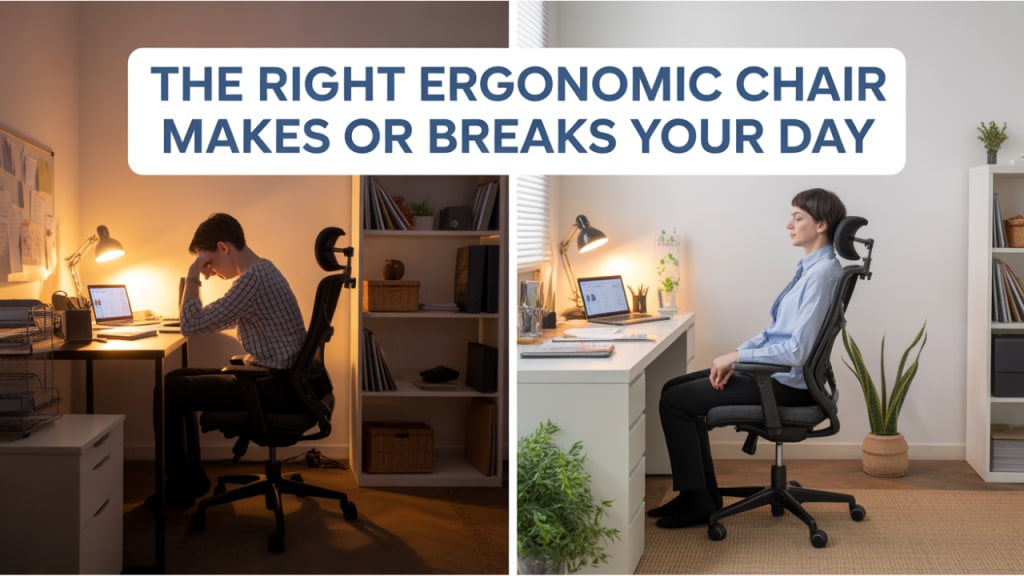
Spending long hours at a desk is an unavoidable reality for many people today. Whether you are working from home, in a corporate office, or managing multiple tasks on a laptop, the chair you sit on for hours can dramatically influence your comfort, productivity, and long-term health. While many think of a chair as just a piece of furniture, the right ergonomic chair is far more than that, it is one of the most essential tools in your workspace.
How an Ergonomic Chair Supports Your Body
An ergonomic chair is designed to support the natural curves of your spine, provide adequate cushioning, and encourage proper posture throughout the day. Unlike a standard chair, which often forces you into static positions, an ergonomic chair promotes movement, allows adjustments, and helps maintain circulation even during long stretches of sitting.
It supports your lumbar region, accommodates your neck and shoulders, and can even relieve pressure from your hips and thighs.
Lumbar Support: The Backbone of Comfort
One of the most important aspects of an ergonomic chair is lumbar support. The lower back naturally curves inward, and if this curve is not supported, prolonged sitting can strain the muscles and ligaments in your spine.
Lumbar support ensures that your spine maintains its natural shape, reducing the risk of back pain, herniated discs, and fatigue caused by poor posture.
Adjustability for Every Body Type
Equally important is the chair’s ability to adjust in multiple ways. Seat height and depth adjustments allow your feet to rest comfortably on the floor while keeping your knees at roughly a 90-degree angle.
The seat should also allow you to sit fully back against the backrest while leaving a slight gap between the seat edge and the back of your knees. This small detail helps prevent pressure on the thighs and improves blood circulation, keeping your legs from feeling numb or fatigued.
Recline, Tilt, and Movement
The backrest’s ability to recline and tilt allows for slight changes in posture, which can relieve spinal pressure and prevent stiffness. Remaining in a fixed, upright position for hours can be taxing on the muscles and joints, while a chair that encourages gentle movement allows you to stay comfortable and alert.
Some chairs even offer synchronized tilt mechanisms, which move the seat and backrest together to maintain the correct angle between your torso and legs.
Armrests and Headrests: Supporting Shoulders and Neck
Armrests that are positioned too high or too low can cause tension in the shoulders and neck, which often leads to headaches and fatigue. Adjustable armrests allow you to align them with your desk and keyboard, keeping your shoulders relaxed while you work.
Similarly, a headrest can provide essential support for your neck, particularly for those who lean back frequently or work on multiple screens throughout the day.
Choosing the Right Material
Material and breathability are vital aspects of an ergonomic chair. Sitting for long periods generates heat and moisture, which can make even a high-quality chair uncomfortable.
Mesh-backed chairs allow airflow, keeping you cool and comfortable during extended sessions, while padded chairs may cause sweating in warmer climates.
Durability and Long-Term Investment
A poorly built chair may sag, lose its adjustments, or even break, which not only causes discomfort but also adds additional costs when replacements are needed.
Investing in a high-quality chair with sturdy construction ensures that the support you rely on remains consistent over the years. Premium materials, reliable casters, and reinforced frames all contribute to a chair’s longevity and effectiveness.
Types of Ergonomic Chairs
Ergonomic chairs come in various styles to suit different work habits and preferences.
Mesh office chairs are lightweight, breathable, and highly adjustable, making them ideal for long hours. Executive chairs are padded and often include headrests and armrests for plush comfort. Task chairs are smaller and compact, designed for flexibility, while kneeling and saddle chairs encourage active sitting by distributing weight differently, promoting movement, and reducing pressure on the lower back.
What People Prefer for Long Hours
Mesh-back office chair has emerged as a favorite among those who spend long hours at their desks. It provides breathability, adjustability, and excellent support.
Users often report that mesh chairs keep them cooler, allow natural movement, and reduce stiffness. While some prefer the plush feel and aesthetics of executive chairs, mesh chairs consistently rank highly for comfort and functionality over extended periods.
Setting Up Your Chair for Maximum Comfort
Even the best ergonomic chair cannot provide full benefits if it is not adjusted correctly. The seat height should allow your feet to rest flat on the floor, the lumbar support should align with the natural curve of your lower back, and armrests should keep your shoulders relaxed. The backrest should allow a slight recline to distribute weight and reduce spinal pressure. Proper monitor height and regular breaks for stretching complement the chair’s ergonomic features, promoting circulation and preventing stiffness.
Ergonomic Chairs as a Health and Productivity Investment
Investing in the right ergonomic chair is not just about comfort—it is a proactive step for your health and productivity. Poor sitting habits and inadequate support contribute to musculoskeletal problems that can last a lifetime. Back pain, neck tension, and leg fatigue are signals that your body is under stress. A chair that provides proper alignment and support helps reduce these risks and creates a foundation for better focus and sustained energy.
Psychological Impact of a Good Chair
A well-designed chair also influences your mental state. Sitting comfortably allows you to concentrate on tasks rather than on discomfort. It fosters a sense of professionalism and self-care, signaling that you value your health and workspace. Those who have switched from poorly designed chairs to high-quality ergonomic models often report increased satisfaction and productivity throughout the workday.
The Long-Term Value of Ergonomic Chairs
While premium chairs may have higher upfront costs, their durability, adjustability, and health benefits make them worthwhile. A chair that supports proper posture and reduces discomfort helps prevent medical expenses related to chronic back pain and postural issues. The money spent on a high-quality ergonomic chair is often recovered through increased productivity and reduced physical strain.
Conclusion
The right ergonomic chair truly makes or breaks your day. It is more than a seat; it is a tool that transforms your work experience, supports your health, and enhances productivity. Selecting a chair that provides lumbar support, adjustability, proper cushioning, and breathable materials is essential for anyone who spends hours at a desk. Equally important is using it correctly and incorporating movement throughout the day.
A quality office chair supports your spine, reduces fatigue, improves posture, and allows you to focus without distraction. In a world where desk jobs are increasingly common, investing in a good ergonomic chair is not just a comfort choice, it is a health and productivity choice. With the right chair, you can turn long, tiring workdays into productive, comfortable, and sustainable experiences, empowering both your body and mind.
About the Creator
Saif
Exploring different parts of life.


Comments
There are no comments for this story
Be the first to respond and start the conversation.