
How Social Media Friend Suggestions Work?
Discover how social media friend suggestions work, from mutual connections and shared interests to machine learning and predictive algorithms.

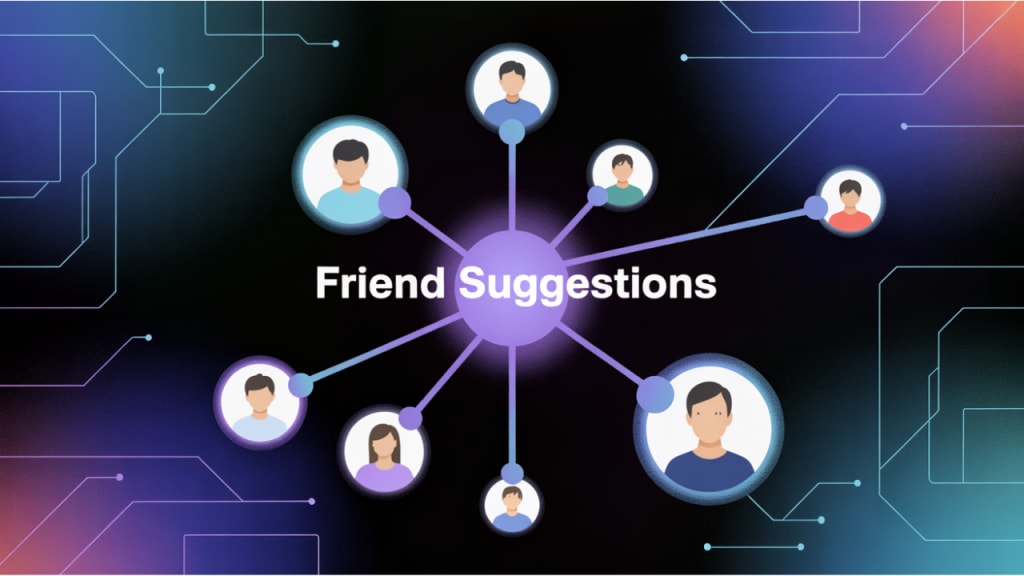
Social media has transformed the way we connect, communicate, and build relationships. Platforms like Facebook, Instagram, LinkedIn, and Twitter are more than just tools for staying in touch - they actively shape our networks through friend suggestions.
These recommendations, often presented as "People You May Know or Suggested Friends, can sometimes feel uncanny, offering connections you might not expect.
But how exactly do these systems work? This article dives deep into the mechanisms behind social media friend suggestions, exploring the algorithms, data points, and behavioral patterns that make these recommendations possible.
The Role of Social Media in Connecting People
At its core, social media is designed to facilitate human connections. By suggesting friends or connections, platforms increase user engagement, making the network more valuable to individuals and advertisers alike.
The new friend suggestion feature is not just about social convenience; it is also a carefully designed tool to keep users engaged. Social media platforms are aware that a network thrives on connections, so they invest heavily in predictive technologies to suggest people with whom users are most likely to interact.
This enhances the user experience while subtly boosting the platform’s growth.
Understanding the Basics of Friend Suggestion Algorithms
Friend suggestion algorithms are complex, but they generally rely on a combination of personal data, network analysis, and behavioral patterns. The goal is to identify potential connections that have a high probability of forming real social bonds.
The first step is data collection. Social media platforms gather a wide range of information about each user, including demographic details, location, interests, interactions, and connections.
Every like, comment, follow, or message contributes to a profile that can be analyzed to predict future interactions.
Once data is collected, algorithms analyze relationships within a network. These algorithms often use principles from graph theory, a branch of mathematics that studies the relationships between entities.
In this context, each user is a node, and every connection represents an edge between nodes. By studying patterns within this network, algorithms can identify which users are likely to know each other.
Mutual Connections and Social Graph Analysis
One of the most straightforward factors in new friend suggestion systems is mutual connections. If two users share a significant number of friends, the platform assumes there is a likelihood they might know each other or have overlapping social circles.
For example, if Alice, Bob, and Charlie all know each other, and Alice knows Dave but Dave doesn’t know Bob or Charlie, the algorithm may suggest Dave to Bob and Charlie as a potential connection.
This is based on the principle that people connected to your friends are more likely to become your friends as well.
Social graph analysis goes beyond simple mutual connections. Algorithms examine indirect relationships and clusters within a network to identify users who might not be directly connected but exist within overlapping communities.
This is why sometimes social media suggests users who you’ve never met but who operate within similar social circles or share common affiliations.
Location and Behavioral Data
Geographical proximity also plays a crucial role in friend suggestions. Many social media platforms utilize location data, often derived from IP addresses or mobile GPS, to suggest friends in nearby areas.
This is particularly common in apps that emphasize local networking, like Snapchat or dating platforms, but it also impacts larger networks like Facebook.
Behavioral data is equally important. Algorithms monitor patterns such as profiles visited, content engaged with, or groups joined. If two users frequently interact with similar content or visit each other’s profiles, the platform may interpret this as a sign of potential social affinity, triggering a friend suggestion.
Interestingly, even subtle actions like viewing stories or attending virtual events can influence the algorithm’s assessment of potential connections. Over time, these systems become highly refined at predicting who might accept a friend request.
Shared Interests and Common Activities
Another key factor in new friend suggestion systems is shared interests and activities. Social media platforms analyze the types of content users engage with, such as posts liked, videos watched, or groups joined, to identify users with similar preferences.
This ensures that suggested connections are not random but are aligned with common hobbies, professional interests, or social causes.
For example, two users who frequently engage with posts about hiking, photography, or a specific fandom are more likely to be suggested to each other. On professional platforms like LinkedIn, shared industry, alma mater, or career goals can drive friend suggestions.
By aligning potential friends around shared interests, platforms increase the likelihood that these connections will lead to meaningful interactions.
Integration with Contacts and External Data
Many social media platforms enhance their new friend suggestion algorithms by integrating users’ phone contacts, email lists, or other external data sources.
When users upload their contacts, the platform can match phone numbers or email addresses with existing accounts, suggesting friends who are already on the network.
This method is highly effective because it directly leverages offline connections. A user might not have searched for a college friend or a coworker on social media, but the platform can identify them automatically and suggest the connection.
By combining internal network analysis with external contact data, platforms can create a more comprehensive and accurate friend suggestion system.
Machine Learning and Predictive Modeling
At the heart of modern friend suggestion systems lies machine learning. Predictive models are trained using vast amounts of user data to forecast the likelihood that two individuals will form a connection.
These models consider numerous variables simultaneously, from mutual friends and shared interests to geographic location and online activity.
Machine learning allows social media platforms to continuously improve their friend suggestions. Every interaction, whether a friend request is accepted or ignored, provides feedback that refines the model.
Over time, the system becomes increasingly adept at predicting who a user is most likely to connect with, often producing suggestions that seem uncannily accurate.
Privacy and Ethical Considerations
While new friend suggestion features are convenient, they also raise significant privacy and ethical concerns. Social media platforms have access to enormous amounts of personal information, much of which is analyzed to make predictions about users’ social connections.
Users may feel uneasy when platforms suggest friends based on hidden data points, such as location history, search activity, or interactions with content.
Social media companies must balance the utility of friend suggestions with the responsibility to respect user privacy and data protection regulations.
Additionally, algorithms can sometimes perpetuate biases. For example, suggestions may disproportionately favor certain social groups or geographic areas, unintentionally reinforcing social segregation or excluding marginalized communities.
Ethical design of these systems requires continuous evaluation and transparency in how suggestions are generated.
The Psychological Impact of Friend Suggestions
Friend suggestions are not purely technological, they also influence user behavior and psychology. Social media platforms aim to encourage users to expand their networks, increasing engagement and activity.
Receiving a friend suggestion can prompt curiosity, nostalgia, or social validation, motivating users to accept connections they might not have initiated otherwise.
However, these features can also create pressure or anxiety. Users may feel obligated to connect with suggested friends to maintain social appearances or fear missing out on social opportunities.
Platforms must design these systems to enhance user experience without fostering stress or unhealthy social comparison.
Real-World Examples of Friend Suggestion Systems
Facebook’s People You May Know is one of the most well-known examples of a new friend suggestion system. It combines mutual friends, imported contacts, and engagement patterns to generate highly personalized recommendations.
LinkedIn, on the other hand, emphasizes professional connections, prioritizing shared industries, workplaces, and professional interactions. Instagram often suggests users based on similar interests, content engagement, and overlapping followers.
Snapchat and TikTok use slightly different models, with a stronger focus on location, online behavior, and mutual interactions with content rather than traditional social networks.
Each platform tailors its system to fit its unique user base, demonstrating the versatility and adaptability of friend suggestion algorithms.
How Users Can Influence Friend Suggestions
Users are not passive recipients of friend suggestions, they can actively influence these recommendations. By connecting with certain friends, joining specific groups, following pages, or engaging with particular content, users signal their interests and social preferences to the algorithm.
Additionally, platforms often provide options to import contacts or link accounts across multiple social networks.
By taking these steps, users can increase the relevance of suggested connections and enhance the likelihood of discovering meaningful new relationships.
Understanding how algorithms work allows users to manage friend suggestions proactively, ensuring that the platform aligns with their social and professional goals rather than being driven purely by automated predictions.
Conclusion
Social media friend suggestions are much more than random recommendations, they are the product of complex algorithms, machine learning models, and extensive data analysis.
By leveraging mutual connections, shared interests, location, behavioral patterns, and external data, platforms can suggest potential friends with impressive accuracy.
Understanding how these algorithms work empowers users to navigate social media more consciously, making informed decisions about connections and data sharing.
About the Creator
Saif
Exploring different parts of life.
Pearl
1980 something. we all hung out at Pearl and you and i were nothing special, or so i thought. i mean we all danced, drenched in our own sweat, our own saline solution of fear, too many beers, shots, laughter, tears, fucks in the bathroom and i don't know when we began to be afraid. do you?
By ROCK aka Andrea Polla (Simmons)7 days ago in Fiction




Comments (1)
great