
The Regulatory Storm: How XRP’s Fate Hinges on Washington’s Crypto Wars.
Will the Senate Set XRP Free? The Billion-Dollar Question Hanging Over Crypto's Most-Watched Asset.

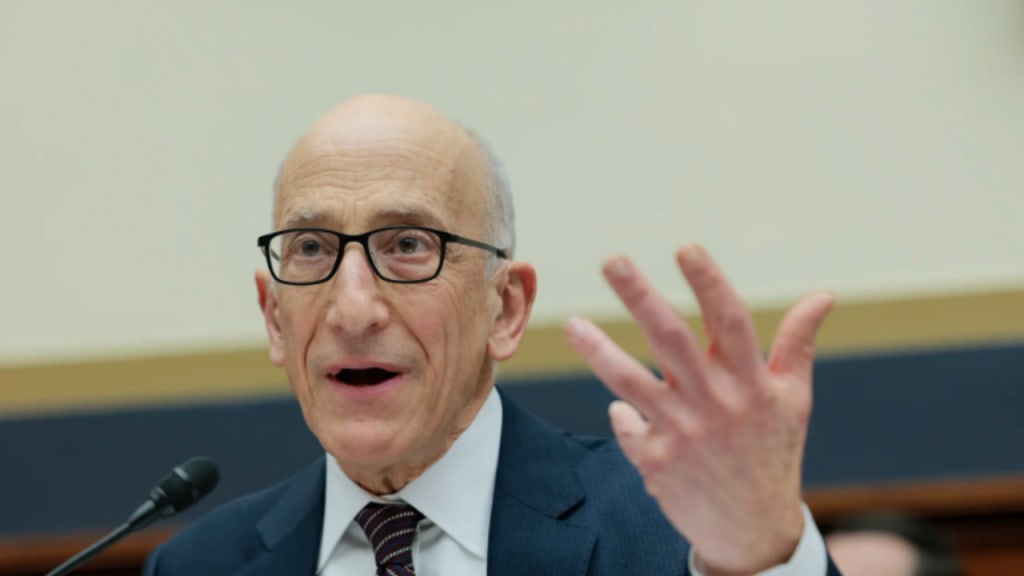
The U.S. Senate Banking Committee’s July 9, 2025, hearing crackled with tension as lawmakers grappled with a trillion-dollar question:
How can the United States regulate cryptocurrencies without stifling innovation or endangering investors? At the epicenter of this debate stood Ripple CEO Brad Garlinghouse, whose company’s native token XRP symbolizes both crypto’s transformative potential and its regulatory quagmire. Just two years after Ripple’s landmark court victory declaring XRP not a security, the battle over crypto’s future has reached a fever pitch, with XRP’s utility, value, and global competitiveness hanging in the balance 210.
The Senate Showdown: Principles vs Pragmatism.
The hearing exposed deep philosophical rifts in how to approach crypto regulation:
Senator Elizabeth Warren (D-MA) demanded ironclad investor protections and warnings about undermining the SEC’s authority. She argued rigid definitions in law could let bad actors exploit loopholes tomorrow, 1014.
Republican leadership pushed for modernized regulatory approaches and clear jurisdictional lines between the SEC and CFTC, a nod to industry complaints about overlapping rules 10.
Ripple’s Garlinghouse struck a pragmatic tone: Where Mr. Massad and I disagree is that depending on the SEC and CFTC to work together assumes good faith appointed officials doing that. His testimony highlighted the industry’s deep distrust of regulators after years of enforcement-focused oversight 102.
Former CFTC Chair Timothy Massad offered a middle path: Do no harm, and keep it simple. He urged Congress to establish broad statutory principles and let agencies adapt the details, a view Garlinghouse cautiously supported but doubted regulators would implement fairly 10.
The Regulatory Titans: GENIUS and CLARITY Acts.
Two landmark bills now dominate the crypto regulation landscape:
1. The GENIUS Act (Stablecoin Regulation)
Status: Passed Senate 68-30; awaits House reconciliation 312.
Core mandates:
Stablecoins must be 100% backed by liquid assets (cash/T-bills)
Monthly public reserve disclosures
Bankruptcy protection for holders
Anti-money laundering compliance 712.
Controversies:
Elizabeth Warren slammed it as a turbocharger for Trump’s crypto ventures
Fears that Big Tech (e.g., Meta, Apple) could dominate stablecoin issuance
State regulators warn it will dramatically expand uninsured banks’ powers 712.
Table: The GENIUS Act’s Impact on Stablecoins
Aspect Requirement Industry Impact
Reserves 100% liquid assets, prevents Terra-style collapses
Transparency Monthly disclosures increase operational costs
Bankruptcy Holder priority Boosts consumer confidence
Issuer Rules: Federal/state options could fragment compliance
2. The CLARITY Act (Market Structure)
Core innovation: Defines digital commodities under CFTC oversight while leaving securities to the SEC 4.
Key provisions:
Digital commodity definition: Assets intrinsically linked to a blockchain via utility, governance, or fee payment (e.g., Bitcoin, likely XRP) 4.
New CFTC registrants: Digital commodity exchanges, brokers, and custodians 4.
SEC carveout: Tokens sold as investment contract assets aren’t securities, directly addressing Ripple’s court victory 42.
Garlinghouse hailed CLARITY as essential for U.S. competitiveness: Without clear rules, companies and jobs migrate overseas to hubs like Singapore and the UAE 2.
XRP’s Make-or-Break Moment.
For Ripple, these bills could unlock XRP’s utility after years of legal uncertainty:
Cross-border ambitions: Garlinghouse aims to capture 14% of SWIFT’s $5 trillion daily volume within five years using RippleNet and XRP’s liquidity solutions 11.
Central bank experiments: The European Central Bank and Bank of Japan are testing Ripple’s xCurrent against SWIFT—a potential gateway for XRP in national payment systems 11.
Compliance advantage: Chainalysis CEO Jonathan Levin noted blockchain’s traceability makes it a powerful instrument to protect consumers, aligning with Ripple’s focus on institutional use 1.
Yet risks remain:
If CLARITY over-delegates to the CFTC, we risk creating 50 different state-level interpretations, warned a crypto lobbyist. That’s worse than the SEC’s one-size-fits-all approach.
The Trump Factor: Ethics vs. Economics.
The hearing’s most explosive moment came when ethics expert Richard Painter tied regulation to Trump’s wealth:
Financial stake: Crypto now represents Trump’s largest source of wealth, including the $TRUMP meme coin, World Liberty Financial stablecoins, and his sons’ Bitcoin mining venture 147.
Regulatory control: Painter warned that any crypto bill would let Trump appoint and fire regulators overseeing assets he owns, creating unprecedented conflicts 14.
Warren’s critique: Passing CLARITY or GENIUS without addressing this corruption is worse than no bill at all 14.
Table: Ethical Concerns in Crypto Regulation
Conflict Area Risk Scenario Proposed Fix
Presidential Assets: Trump profits from pro-crypto laws, Blind trust for holdings
Revolving Door Officials favoring future employers, Extended cooling-off periods
State vs. Federal Lobbyists exploiting regulatory gaps, Unified licensing standards
The Global Race: Can XRP Thrive Without US Leadership?
As Washington debates, the world isn’t waiting:
Strategic shifts: Ripple’s 2023 legal win already pushed 80% of its hiring outside the U.S. 2.
Central bank experiments: Project Stella’s Ripple-SWIFT comparisons signal growing institutional acceptance of blockchain efficiency 11.
Garlinghouse’s warning: The UAE and Singapore have clear rules today. Every month Congress delays, America cedes ground 210.
The Path Forward.
The Senate’s compromise may lie in Massad’s principles-based framework:
Technology-neutral definitions: Avoid rigid asset classifications that become obsolete 10.
Regulatory agility: Let the SEC/CFTC update rules as markets evolve 10.
Resource parity: Equip state agencies with AI tools to trace crypto crime. Chainalysis estimates that only 0.24% of transactions are illicit, but local enforcement lacks training, 113.
For XRP, the stakes couldn’t be higher. If CLARITY affirms its status as a digital commodity, Ripple could revolutionize cross-border payments. If partisan deadlock or ethical scandals sink reform, Garlinghouse’s vision of dethroning SWIFT may flourish, but not on American soil 211.
The fate of XRP now rests not in code, but in Congress’s ability to craft rules that balance innovation with integrity, a challenge as complex as blockchain itself. As Garlinghouse told senators: Smart, fair regulation isn’t a barrier; it’s the foundation of global leadership. The world is watching whether America will build that foundation or cede the future.
About the Creator
Sami Tech
I worked in writing and photography since 2017, After attaining a BA in journalism and Mass Communications at the University of Michigan. Tague is journalism career has led to positions at. the City Michigan journal and several weeklies.
Author’s Advice
If you would’ve asked me 20 years ago did I know I’d become a writer and an author, I would’ve said “nope, ain’t happening”. As fate would have it I did become an author and I can honestly say I’m loving it so far. It really does feel good to be a writer. I’ve learned a lot on this journey and I feel like with even me being as new to this world as I am, there’s some wisdom I need to share with every other aspiring author.
By Joe Patterson5 days ago in Journal
Inspection Drones Market Enabling Safer and Smarter Infrastructure Monitoring
The Flying Inspector Above Critical Infrastructure Across industries such as energy, utilities, construction, and transportation, infrastructure inspection is essential for safety and operational efficiency. Traditionally, inspections required manual labor, scaffolding, helicopters, or technicians working in hazardous environments.
By james robert5 days ago in Journal




Comments
There are no comments for this story
Be the first to respond and start the conversation.