
The Quiet War for Your Pocket: Samsung vs. Apple in 2025
Inside the subtle design, ecosystem, and AI battles reshaping the smartphone landscape.
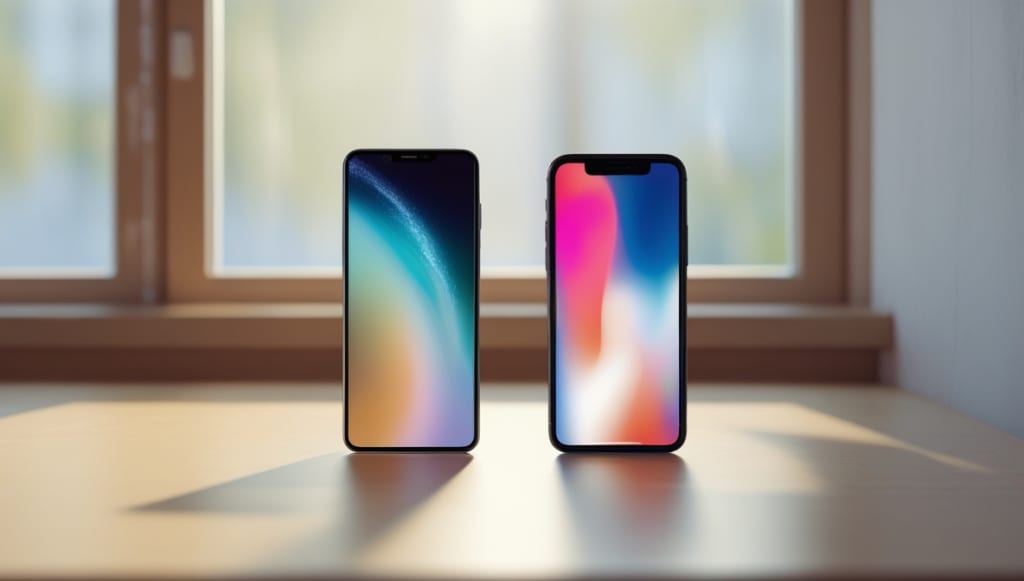
For years, the smartphone war was loud.
Bigger screens. Louder launches. Brighter colors. Long lines outside stores. The competition between Apple and Samsung once felt like a public spectacle—easy to spot, easy to choose sides in.
But in 2025, something has changed.
The battle is no longer fought on billboards or keynote stages. It’s happening quietly—inside software updates, AI assistants, ecosystem nudges, and design choices so subtle most users don’t notice them consciously.
Yet those quiet decisions are reshaping how we live, work, and think with our phones every single day.
This is no longer a war for attention.
It’s a war for habits.
From Flashy Innovation to Invisible Influence
In the early smartphone era, innovation was obvious. A larger display. A faster processor. A new camera bump.
Today, those differences have narrowed. A flagship phone in 2025—whether from Apple or Samsung—is fast, powerful, and beautifully designed by default.
So the competition has moved somewhere deeper.
Instead of asking “Which phone is better?”, companies are now asking:
“Which phone becomes harder to leave?”
Apple and Samsung have both realized that loyalty isn’t built through specs anymore. It’s built through ecosystems that quietly shape daily behavior.
And that’s where the real war begins.
Apple’s Strategy: Control Through Cohesion
Apple’s strength has always been consistency.
In 2025, the iPhone isn’t trying to shock anyone. It doesn’t need to. Its power lies in how smoothly it connects with everything else Apple makes—and how uncomfortable life feels when you step outside that bubble.
Your messages sync instantly across devices.
Your photos appear everywhere without effort.
Your watch unlocks your laptop.
Your AirPods switch devices before you even notice.
Apple’s design philosophy remains conservative on the surface, but deeply intentional underneath. The goal isn’t to overwhelm users with choice—it’s to remove friction entirely.
The more Apple products you own, the less visible technology becomes.
And that invisibility is the hook.
Samsung’s Countermove: Freedom Through Intelligence
Samsung is fighting a very different battle.
Rather than locking users into a single aesthetic or workflow, Samsung is betting on adaptability—and increasingly, on AI.
In 2025, Samsung phones don’t just respond; they anticipate.
Galaxy AI features quietly learn how users multitask, work, and communicate. The phone adjusts layouts, suggests actions, and reshapes workflows depending on context. It feels less like a static device and more like a flexible assistant.
Samsung’s hardware experimentation—foldables, tri-fold concepts, desktop-style modes—reinforces the same message:
your phone should adapt to you, not the other way around.
Where Apple offers comfort and control, Samsung offers possibility and personalization.
The AI Divide: Two Philosophies, One Goal
Artificial intelligence is now at the center of this quiet war—but Apple and Samsung approach it very differently.
Apple treats AI as a background feature. It’s designed to feel invisible, restrained, and privacy-focused. The intelligence works quietly, rarely announcing itself. The user remains in control—or at least feels like they are.
Samsung, on the other hand, allows AI to be more visible and interactive. Suggestions, summaries, productivity tools, and creative features are openly presented. Users are encouraged to explore, customize, and push boundaries.
Neither approach is objectively better.
But they shape very different relationships between humans and machines.
One prioritizes trust.
The other prioritizes empowerment.
Design as Psychology, Not Style
Physically, modern smartphones look more alike than ever. Glass, metal, large displays—refinement has replaced reinvention.
But design today isn’t about appearance.
It’s about behavior.
Apple designs interfaces that reduce decision-making.
Samsung designs interfaces that expand it.
Apple minimizes options to create calm.
Samsung multiplies options to create control.
Every swipe, animation, and notification style subtly trains users to interact in specific ways. Over time, those micro-interactions shape habits—and habits shape loyalty.
By 2025, users aren’t just choosing phones.
They’re choosing philosophies.
The Ecosystem Trap—and the Escape Plan
Once upon a time, switching phones was easy.
Now, it’s emotionally exhausting.
Your cloud storage, app purchases, accessories, subscriptions, and daily routines are all tied to a single ecosystem. Apple understands this deeply—and has perfected it.
Samsung, meanwhile, positions itself as the escape route. With broader compatibility across platforms, devices, and form factors, it appeals to users who want flexibility without starting over.
The war isn’t about stealing customers anymore.
It’s about making departure feel unnecessary—or impossible.
Why This War Matters More Than We Think
This quiet battle isn’t just about phones.
It’s about how technology shapes identity.
Do we want tools that fade into the background and keep life simple?
Or tools that challenge us to customize, optimize, and experiment?
Apple and Samsung aren’t just selling devices in 2025.
They’re selling ways of living with technology.
And unlike past tech wars, this one doesn’t end with a clear winner.
Because the most powerful device isn’t the one with the best specs.
It’s the one that quietly becomes part of who you are.
#Technology #Apple #Samsung #Smartphones #ArtificialIntelligence
About the Creator
Keep reading
More stories from Shahjahan Kabir Khan and writers in Journal and other communities.
The A20 Revolution: Why the iPhone 18 Might Be the Fastest Phone Ever Built
For years, Apple has followed a familiar rhythm: unveil a new iPhone, promise noticeable speed gains, and quietly redefine what “fast” means in everyday use. But the iPhone 18, powered by the much-anticipated A20 chip, feels different. This isn’t just another annual performance bump. If Apple’s trajectory holds, the A20 could represent one of the biggest leaps in smartphone computing we’ve ever seen.
By Shahjahan Kabir Khan3 months ago in Journal



Comments
There are no comments for this story
Be the first to respond and start the conversation.