
The Quiet Evolution of Everyday Life
The Subtle Forces Quietly Shaping Our Daily Lives

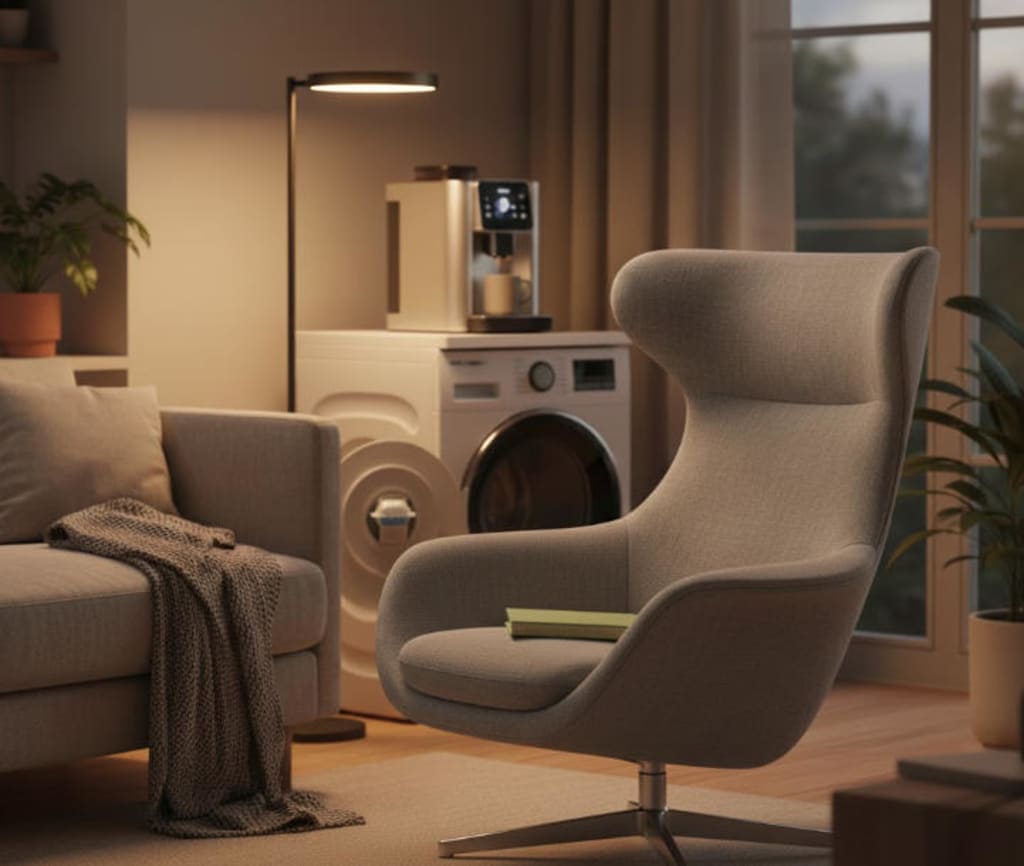
In a world that constantly celebrates the dramatic, the loud, and the spectacular, it is easy to overlook the small, almost invisible changes shaping our daily lives. While headlines scream about the latest breakthroughs or viral trends, some of the most meaningful innovations exist in silence. They don’t demand attention, yet they subtly influence the way we live, work, and interact with our surroundings.
Consider the objects and spaces we encounter every day. The soft glow of a lamp that adjusts automatically to the room’s natural light. The gentle hum of a smart appliance that knows when to start and stop, aligning with our routines without interruption. Even the ergonomics of a chair or the subtle texture of a notebook cover can transform an ordinary moment into a more thoughtful experience. These are not revolutionary in the traditional sense—they won’t make headlines—but they quietly enhance our comfort, efficiency, and sense of ease.
This is the era of quiet innovation. It is less about spectacle and more about mindfulness, less about shouting to the world and more about harmonizing with the rhythms of everyday life. The creators behind these subtle improvements are not chasing awards or viral fame. They are solving problems that many of us didn’t even realize existed, smoothing the edges of daily friction, and designing experiences that feel natural and intuitive.
Take, for example, the world of urban design. Cities are increasingly embracing the idea that small adjustments can have profound impacts. A thoughtfully placed bench can transform a crowded sidewalk into a space for pause and reflection. Streetlights that respond to pedestrian movement enhance safety while reducing unnecessary energy consumption. Even the patterns in crosswalks or the textures of pavement are carefully designed to guide movement in ways that feel effortless. These are innovations that do not announce themselves; they work quietly, improving lives without fanfare.
In technology, the quiet revolution is equally evident. Many of the most impactful gadgets today do not boast flashy features or over-the-top designs. Instead, they integrate seamlessly into daily routines. Consider a thermostat that learns your schedule, adjusting temperatures for comfort and efficiency without requiring your input. Or a personal assistant that organizes reminders and notifications in the background, never overwhelming, only assisting. These innovations may seem simple, even mundane, but their cumulative effect can transform the rhythm of daily life, making it smoother and more deliberate.
There is also a cultural shift accompanying this evolution. People are increasingly valuing subtlety over spectacle, depth over immediacy. We are beginning to notice the quiet power of intentional living: slowing down in the morning to enjoy a cup of tea, choosing products and spaces that respect our attention rather than distract it, and appreciating experiences that do not demand constant updates or validation. In many ways, society is learning to value the whispers rather than the shouts.
Education and work have also adapted to this quiet evolution. Modern workplaces are emphasizing thoughtful design and unobtrusive productivity tools. Instead of overwhelming employees with constant notifications or flashy metrics, many organizations are introducing subtle ways to enhance focus: natural lighting, acoustic improvements, or software that assists without interrupting workflow. In schools, classrooms are being redesigned to create calm, flexible spaces that support concentration and creativity rather than rigid schedules and harsh lighting. These changes are quiet, almost invisible, but they reshape the experience of learning and working in meaningful ways.
Even art and culture are reflecting this trend. Minimalist design, understated performances, and experiential installations are gaining popularity precisely because they invite reflection rather than demand attention. People are drawn to experiences that respect their presence, that unfold gradually and allow space for personal interpretation. The quiet evolution of taste mirrors the larger shifts in society: an appreciation for subtlety, for depth, for nuance.
Perhaps the most remarkable aspect of this era is its human-centered approach. Innovations, whether in design, technology, or culture, are no longer solely focused on what is possible—they are focused on what is necessary, helpful, or enriching. The goal is not to impress but to improve, not to dominate attention but to harmonize with it. In this way, the quiet evolution is as much about mindset as it is about objects or systems. It challenges us to reconsider our relationship with the world, to notice the overlooked, and to find beauty and efficiency in subtlety.
Ultimately, the quiet evolution teaches a simple lesson: progress does not always roar. Some of the most meaningful transformations happen in whispers, in adjustments we barely notice, yet come to depend upon. It reminds us to slow down, to appreciate thoughtful design and intentional living, and to understand that sometimes the future is not a loud, dramatic leap but a gentle, consistent unfolding.
As we move forward, it is worth asking ourselves how we can contribute to this quiet evolution. How can we create spaces, experiences, or tools that enhance life without overwhelming it? How can we design, innovate, or live in ways that respect attention, embrace subtlety, and prioritize meaningful impact over spectacle? These questions may not yield instant answers, but they point toward a world where progress is measured not by the noise it makes, but by the lives it improves.
In a society often obsessed with visibility and applause, the quiet revolution reminds us that the most profound changes are often those we cannot see immediately. They unfold in the corners of our daily routines, in the gentle assistance of thoughtful design, in the unnoticed gestures that make life smoother, calmer, and more intentional. And in noticing them, we begin to appreciate that sometimes the future doesn’t announce itself—it whispers.
About the Creator
Keep reading
More stories from Reginald Pembroke and writers in Journal and other communities.
The Future of International Trade and Finance through Pembroke’s Lens
This report examines the evolving dynamics of the global economy through the lens of Reginald Pembroke, a prominent economic strategist and researcher. By analyzing contemporary trends in international trade, financial markets, and technological innovation, Pembroke provides insights into the structural shifts shaping global economic patterns. The report highlights key challenges such as economic inequality, geopolitical instability, and climate-related economic pressures while offering frameworks for policy responses and investment strategies. The findings underscore the need for integrated approaches to achieve sustainable economic growth and stability in an increasingly interconnected world.
By Reginald Pembroke2 months ago in Trader
Your Voice is No Longer Yours: How to Build a "Family Firewall" Against AI Voice Cloning
The phone rings. It’s 2:00 AM. You pick up, and your daughter’s voice—breathless, crying, and unmistakably hers—tells you she’s been in a car accident and needs money for a tow truck or a hospital deposit. You don’t think. You don’t doubt. It’s her voice, after all.
By Alex Sterling 3 days ago in Journal
Guard Your Battery
Why are some people so attractive just by standing there? It’s not because they are "likable," but because they don’t need everyone to like them. I realized later that truly charismatic people allow themselves to be criticized, but they never criticize themselves. They never try to please the world; instead, the world stops to watch them.
By Emily Chan - Life and love sharing5 days ago in Poets


Comments
There are no comments for this story
Be the first to respond and start the conversation.