
The Psychology of Money
Understanding How Your Mindset Affects Your Finances

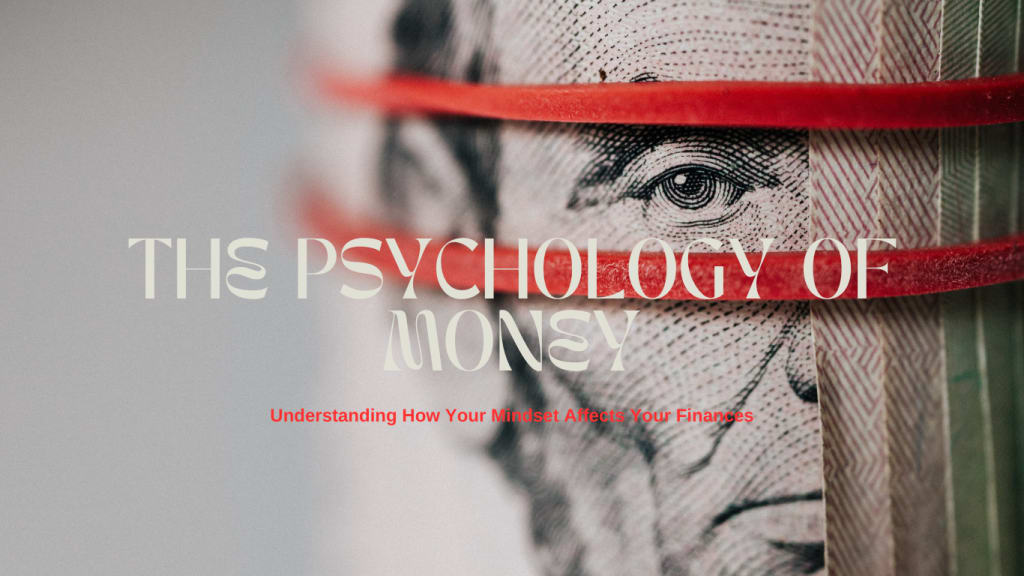
Money is more than just a medium of exchange. It is also a powerful psychological force that shapes our behavior, emotions, and relationships. How we think about money, how we feel about money, and how we use money can have a significant impact on our financial well-being and happiness.
In this blog post, we will explore some of the common psychological biases and traps that affect our money decisions, and how we can overcome them to achieve our financial goals and live more fulfilling lives.
Some of the topics we will cover are:
- The scarcity mindset vs. the abundance mindset: How the perception of having enough or not enough money influences our choices and actions.
- The sunk cost fallacy: How the tendency to stick with past investments or commitments even when they are no longer beneficial leads to wasted time, money, and energy.
- The confirmation bias: How the tendency to seek out and interpret information that confirms our existing beliefs or opinions prevents us from seeing the reality of our financial situation and opportunities.
- The anchoring effect: How the tendency to rely on the first piece of information we encounter as a reference point for subsequent judgments affects our perception of value and price.
- The endowment effect: How the tendency to value something more simply because we own it or have a connection to it leads to overestimating its worth and underestimating its costs.
- The hedonic adaptation: How the tendency to quickly adjust to new levels of income or consumption and return to our baseline level of happiness reduces the long-term impact of financial gains or losses.
By understanding these and other psychological factors that influence our money behavior, we can learn to recognize and avoid the pitfalls that can sabotage our financial success.
We can also develop a healthier and more positive relationship with money, one that is based on rationality, gratitude, generosity, and purpose.
What is a money mindset?

A money mindset is the set of attitudes and beliefs that you have about money and your financial situation. It is shaped by various factors, such as your upbringing, culture, education, experiences, and personality.
Your money mindset can be either positive or negative, depending on how you perceive and relate to money.
A positive money mindset means that you have a sense of abundance, confidence, and optimism about your financial future. You believe that you have enough money to meet your needs and wants, and that you can create more wealth through your skills and efforts.
A negative money mindset means that you have a sense of scarcity, fear, and pessimism about your financial future. You believe that you don't have enough money to meet your needs and wants, and that you are limited by your circumstances and luck.
How does your money mindset affect your finances?
Your money mindset can affect your finances in many ways, such as:
- How you earn money:
Your money mindset can influence your career choices, income level, and earning potential.
For example, if you have a positive money mindset, you may be more likely to pursue your passions, seek opportunities, and negotiate for higher pay.
If you have a negative money mindset, you may be more likely to settle for less than you deserve, avoid risks, and undervalue your skills.
- How you spend money:
Your money mindset can influence your spending habits, budgeting skills, and lifestyle choices.
For example, if you have a positive money mindset, you may be more likely to spend wisely, save for the future, and invest in yourself.
If you have a negative money mindset, you may be more likely to overspend, live beyond your means, and neglect your needs.
- How you save money:
Your money mindset can influence your saving habits, financial goals, and wealth accumulation.
For example, if you have a positive money mindset, you may be more likely to save regularly, plan for the long term, and grow your net worth.
If you have a negative money mindset, you may be more likely to save sporadically, focus on the short term, and struggle with debt.
- How you invest money:
Your money mindset can influence your investing habits, risk tolerance, and returns.
For example, if you have a positive money mindset, you may be more likely to invest strategically, diversify your portfolio, and reap the benefits of compounding.
If you have a negative money mindset, you may be more likely to invest emotionally, put all your eggs in one basket, and miss out on opportunities.
How to improve your money mindset?
If you want to improve your money mindset and achieve financial success, here are some tips that can help:
- Be aware of your current money mindset:
The first step to improving your money mindset is to become aware of how you think and feel about money.
You can do this by reflecting on questions such as: What are some of the beliefs that I have about money? Where did they come from? How do they affect my financial decisions? Are they helpful or harmful?
- Challenge your limiting beliefs:
The next step is to challenge any limiting beliefs that you have about money and replace them with more empowering ones. You can do this by identifying any negative thoughts that you have about money and questioning their validity.
For example: Is it true that I don't have enough money? Is it true that I can't make more money? Is it true that I don't deserve more money? Then, you can reframe these thoughts with more positive ones.
For example: I have enough money for what I need right now. I can make more money by learning new skills and creating value. I deserve more money because I work hard and provide value.
- Practice gratitude:
Another way to improve your money mindset is to practice gratitude for what you already have. Gratitude can help you appreciate the abundance that you have in your life and attract more of it. You can practice gratitude by writing down or saying out loud three things that you are grateful for every day, especially related to money.
For example, I am grateful for the income that I receive every month. I am grateful for the opportunities that I have to grow my wealth. I am grateful for the people who support me financially and emotionally.
- Visualize your financial goals:
Finally, you can improve your money mindset by visualizing your financial goals and how you would feel when you achieve them.
Visualization can help you create a clear picture of what you want and activate your subconscious mind to work towards it. You can visualize your financial goals by writing them down in detail and imagining yourself living them as if they were already true.
For example, I have $10,000 in my savings account. I feel secure and confident about my financial future. I can afford to travel to my dream destination and enjoy myself without worrying about money.
The scarcity mindset vs. the abundance mindset: How the perception of having enough or not enough money influences our choices and actions.

The scarcity mindset is the belief that there is not enough money to go around, and that we have to compete for it. People with a scarcity mindset tend to focus on what they lack, rather than what they have. They often feel anxious, stressed, and insecure about their financial situation.
They may also have a fear of losing money, or a fear of missing out on opportunities. They may hoard money, or spend it impulsively, without planning for the future. They may also have a low self-esteem, and a negative outlook on life.
The abundance mindset is the belief that there is enough money for everyone, and that we can create more of it. People with an abundance mindset tend to focus on what they have, rather than what they lack. They often feel grateful, confident, and optimistic about their financial situation.
They may also have a trust in themselves, and a trust in the universe to provide for them. They may invest money wisely, or spend it generously, with a vision for the future. They may also have a high self-esteem, and a positive outlook on life.
The scarcity mindset and the abundance mindset are not fixed traits that we are born with. They are learned habits that we can change with practice and awareness.
Here are some examples of how we can shift from a scarcity mindset to an abundance mindset:
- Instead of saying "I can't afford it", say "How can I afford it?" This will open up your mind to new possibilities and solutions.
- Instead of comparing yourself to others, celebrate their success. This will foster a sense of cooperation and goodwill, rather than competition and envy.
- Instead of worrying about the future, plan for it. This will reduce your anxiety and increase your confidence.
- Instead of complaining about what you don't have, appreciate what you do have. This will cultivate gratitude and happiness.
- Instead of limiting yourself with negative beliefs, challenge them with positive affirmations. This will empower you and inspire you.
The scarcity mindset and the abundance mindset are not only about money. They are also about how we perceive other aspects of our lives, such as time, energy, relationships, opportunities, etc.
By adopting an abundance mindset, we can improve our overall well-being and happiness, and create more value for ourselves and others.
The sunk cost fallacy: How the tendency to stick with past investments or commitments even when they are no longer beneficial leads to wasted time, money, and energy.

Have you ever watched a movie till the end even though you didn't like it? Have you ever stayed in a relationship even though you were unhappy? Have you ever continued to work on a project even though it was doomed to fail?
If you answered yes to any of these questions, you may have fallen victim to the sunk cost fallacy. This is a common cognitive bias that affects our decision-making and causes us to act irrationally.
What is the sunk cost fallacy?
The sunk cost fallacy is the tendency for people to continue an endeavor or course of action even when abandoning it would be more beneficial. Because we have invested our time, energy, or other resources, we feel that it would all have been for nothing if we quit.
Sunk costs are defined as costs that have already been incurred and cannot be recovered. They are past investments of resources that have no effect on future outcomes. For example, the money you spent on a movie ticket, the time you spent studying for an exam, or the effort you put into a relationship are all sunk costs.
In rational decision-making, sunk costs should not influence our future actions because they are irrelevant and irreversible. We should only consider the costs and benefits that still need to be paid or received.
However, in reality, we often let sunk costs affect our choices and make us commit to something that is no longer worth pursuing.
Why does the sunk cost fallacy happen?
There are several psychological reasons why we fall prey to the sunk cost fallacy. Some of them are:
- Loss aversion: We tend to avoid losses more than we seek gains. We perceive losses as more painful than gains as pleasurable. Therefore, we try to justify our past investments and avoid admitting that we made a mistake or wasted our resources.
- Commitment bias: We tend to stick to our initial decisions and remain consistent with them. We don't want to change our minds or appear inconsistent or unreliable. Therefore, we continue to invest in something that we have already committed to, even if it is not rational or optimal.
- Escalation of commitment: We tend to increase our investment in a failing endeavor as the situation worsens. We hope that by investing more, we can turn things around and achieve a positive outcome. Therefore, we throw good money after bad and dig ourselves deeper into a hole.
- Confirmation bias: We tend to seek and interpret information that confirms our existing beliefs and expectations. We ignore or discount evidence that contradicts them. Therefore, we focus on the positive aspects of our past investments and overlook the negative ones.
Examples of the sunk cost fallacy
The sunk cost fallacy can be observed in various contexts, such as business, relationships, and day-to-day decisions.
Here are some examples of how the sunk cost fallacy can manifest:
- Business:
One famous example of a sunk cost fallacy that affected large-scale decisions is the Concorde fallacy. The Supersonic Transport Aircraft Committee, made up of French and British governments and engine manufacturers, met in 1956. Their purpose: to discuss the building of a supersonic airplane named the Concorde.
The project faced many technical and financial challenges and was never profitable. However, instead of abandoning it, the committee continued to invest in it for decades because they had already spent so much money and time on it. The Concorde was finally retired in 2003 after a fatal crash in 2000.
- Relationships:
Many people stay in unhappy or abusive relationships because they feel that they have invested too much in them. They think about the years they have spent together, the memories they have shared, or the sacrifices they have made.
They hope that things will get better or that they can fix their partner. They ignore or rationalize the signs that indicate that they should end the relationship and move on.
- Day-to-day decisions:
Many people continue to use a product or service even if they are not satisfied with it because they have already paid for it.
For example, some people keep going to the gym even if they don't enjoy it or see any results because they have signed up for a 12-month membership.
Some people keep eating at a restaurant even if they don't like the food because they have already ordered it. Some people keep watching a movie or reading a book even if they find it boring or offensive because they have already started it.
These are all examples of how the sunk cost fallacy can influence our everyday choices and make us act irrationally.
The sunk cost fallacy can have serious consequences for our personal and professional lives.
It can lead us to waste time, money, and energy on unproductive or harmful endeavors, while missing out on better opportunities and alternatives. It can also prevent us from learning from our mistakes and adapting to changing circumstances.
Therefore, it is important to be aware of this bias and try to overcome it by following some strategies:
- Evaluate your decisions based on their future outcomes, not their past inputs. Ask yourself: What are the benefits and costs of continuing with this course of action? What are the benefits and costs of switching to a different one? How will each option affect my goals and values?
- Seek feedback from others who are not emotionally attached to your decision. Ask them: What do you think of my situation? What would you do if you were in my shoes? Why do you think so?
- Be willing to admit your mistakes and learn from them. Tell yourself: It is okay to make mistakes as long as I learn from them and improve myself. Making a bad decision does not mean that I am a bad person or that I cannot make good decisions in the future.
Remember that sunk costs are sunk. They cannot be recovered or changed by continuing with the same behavior. The only thing that matters is what you do next.
The confirmation bias: How the tendency to seek out and interpret information that confirms our existing beliefs or opinions prevents us from seeing the reality of our financial situation and opportunities.

The confirmation bias is a cognitive phenomenon that affects how we process information and make decisions. It refers to the tendency to seek out and interpret information that confirms our existing beliefs or opinions, while ignoring or discounting evidence that contradicts them.
This bias can have significant implications for our financial situation and opportunities, as it can prevent us from seeing the reality of our circumstances and exploring alternative options.
One way that the confirmation bias can affect our finances is by influencing how we evaluate investment opportunities.
For example, if we have a positive attitude towards a certain company or industry, we may be more likely to invest in it, even if the objective data suggests that it is not a good choice.
Conversely, if we have a negative attitude towards a certain company or industry, we may be more likely to avoid it, even if the objective data suggests that it is a good choice. In both cases, we are not basing our decisions on the facts, but on our preconceived notions.
Another way that the confirmation bias can affect our finances is by influencing how we assess our financial situation and goals.
For example, if we have an optimistic outlook on our income and expenses, we may be more likely to overspend and underestimate our savings needs, while ignoring or rationalizing any signs of financial trouble.
Conversely, if we have a pessimistic outlook on our income and expenses, we may be more likely to underspend and overestimate our savings needs, while ignoring or dismissing any signs of financial opportunity. In both cases, we are not basing our actions on the reality, but on our expectations.
The confirmation bias can also affect how we seek out and use financial advice and information.
For example, if we have a strong opinion on a certain financial topic or strategy, we may be more likely to consult sources that agree with us and support our views, while avoiding or criticizing sources that disagree with us and challenge our views.
This can lead us to miss out on valuable insights and perspectives that could help us improve our financial situation and opportunities.
How can we overcome the confirmation bias and make better financial decisions?
One possible strategy is to actively seek out and consider information that contradicts our beliefs or opinions, and to evaluate it objectively and critically.
This can help us to broaden our horizons and expose ourselves to new ideas and possibilities.
Another possible strategy is to seek out and consult diverse and credible sources of financial advice and information, and to weigh their arguments and evidence carefully and fairly.
This can help us to gain a more balanced and comprehensive understanding of our financial situation and opportunities.
The confirmation bias is a common and powerful cognitive phenomenon that can affect how we process information and make decisions. By being aware of it and taking steps to counteract it, we can improve our financial literacy and outcomes.
The anchoring effect: How the tendency to rely on the first piece of information we encounter as a reference point for subsequent judgments affects our perception of value and price.

The anchoring effect is a cognitive bias that influences how we perceive value and price. It refers to the tendency to rely on the first piece of information we encounter as a reference point for subsequent judgments.
In other words, the initial information we receive acts as an anchor that affects our subsequent decisions and evaluations.
For example, imagine you are shopping for a new laptop online. You see a laptop that costs $1,500 and has all the features you need.
However, before you add it to your cart, you notice that it is marked as 50% off from its original price of $3,000.
How does this information affect your perception of the laptop's value and price?
According to the anchoring effect, you are likely to perceive the laptop as a great deal and a high-quality product, because you are comparing it to the original price of $3,000. The original price serves as an anchor that influences your subsequent judgment.
The anchoring effect can also occur in other contexts, such as negotiations, estimations, and predictions.
For instance, if you are negotiating your salary with a potential employer, the first offer they make will likely affect your expectations and counteroffers.
If they offer you a low salary, you might lower your own expectations and settle for less than you deserve. If they offer you a high salary, you might raise your own expectations and ask for more than you need.
The first offer serves as an anchor that influences your subsequent negotiation.
The anchoring effect can have significant implications for our decision-making and behavior. It can lead us to make irrational choices, overspend on products or services, or accept unfair deals.
Therefore, it is important to be aware of this cognitive bias and how it affects our perception of value and price.
To avoid the anchoring effect, we should try to gather more information, compare different options, and evaluate each option based on its own merits and not on its relation to an arbitrary anchor.
The endowment effect: How the tendency to value something more simply because we own it or have a connection to it leads to overestimating its worth and underestimating its costs.

The endowment effect is a cognitive bias that makes us value something more simply because we own it or have a connection to it. This leads us to overestimate its worth and underestimate its costs, which can affect our decisions and behaviors in various domains.
For example, imagine you have a coffee mug that you bought for $5. You might think that the mug is worth more than $5 because it is yours and you like it. However, if someone offered to buy it from you, you might ask for a higher price than what you paid for it, say $10. This is the endowment effect in action: you value the mug more because you own it.
Another example is when you have a ticket to a concert that you really want to see. You might think that the ticket is worth more than its face value because you are excited about the event and you have invested time and money to get it.
However, if something else came up that conflicted with the concert, you might be reluctant to sell the ticket or exchange it for another date. You might even prefer to go to the concert and miss out on the other opportunity, even if it was more valuable or important.
This is also the endowment effect: you value the ticket more because you have a connection to it.
The endowment effect can have negative consequences for our well-being and happiness. It can make us hold on to things that we don't need or use, cluttering our space and mind.
It can make us resist change and innovation, sticking to what we are familiar with and comfortable with. It can make us miss out on better options and opportunities, settling for less than what we deserve or desire.
How can we overcome the endowment effect?
One way is to be aware of it and question our assumptions and preferences.
We can ask ourselves: why do I value this thing so much? Is it really worth what I think it is? What are the costs and benefits of keeping it or letting it go?
Another way is to detach ourselves from the things we own or have a connection to, and see them from an outsider's perspective. We can imagine how someone else would value them or use them, or how we would feel if we didn't have them.
This can help us reduce our emotional attachment and bias, and make more rational and optimal choices.
The hedonic adaptation: How the tendency to quickly adjust to new levels of income or consumption and return to our baseline level of happiness reduces the long-term impact of financial gains or losses.

The hedonic adaptation is a psychological phenomenon that describes how people tend to quickly adjust to new levels of income or consumption and return to their baseline level of happiness. This means that financial gains or losses have a reduced long-term impact on our well-being, as we adapt to our new circumstances and expectations.
For example, imagine that you win the lottery and receive a large sum of money. You might feel ecstatic and excited at first, and spend your money on various luxuries and experiences that make you happy. However, after a while, you might start to take your new wealth for granted, and compare yourself to other rich people who have more than you.
You might also get used to your new lifestyle and find it less satisfying than before. As a result, your happiness level might return to where it was before you won the lottery, or even lower.
On the other hand, imagine that you lose your job and face financial difficulties. You might feel devastated and stressed at first, and struggle to afford your basic needs and wants. However, after a while, you might start to appreciate the things that you still have, such as your health, family and friends.
You might also find new ways to cope and adapt to your new situation, such as finding a new job or cutting down on unnecessary expenses. As a result, your happiness level might return to where it was before you lost your job, or even higher.
How We Adjust to New Levels of Happiness
Have you ever wondered why some people seem to be happier than others, regardless of their circumstances? Or why you don't feel as happy as you expected after getting a promotion, a new car, or a lottery ticket? Or why you don't feel as miserable as you feared after losing a loved one, a job, or a limb?
The answer may lie in a psychological phenomenon known as "hedonic adaptation". Hedonic adaptation is the tendency of humans to quickly adjust to new situations and return to their baseline level of happiness, regardless of whether the change is positive or negative.
In other words, we get used to what we have and how we feel, and we stop noticing the novelty or the impact of our life events.
Hedonic adaptation has been studied by researchers in positive psychology and other fields who are interested in understanding the factors that influence human well-being and happiness.
Hedonic adaptation helps explain why people's happiness levels tend to be relatively stable over time, despite the ups and downs of life.
How Does Hedonic Adaptation Work?
Hedonic adaptation works by changing our perceptions of the positivity or negativity of a stimulus, such that what was initially observed as positive or negative becomes neutral over time.
For example, when you buy a new gadget, you may feel excited and satisfied with your purchase at first. But after a while, you may start to notice its flaws, compare it with newer models, or simply get bored with it. The gadget that once brought you joy now becomes ordinary and mundane.
Hedonic adaptation also involves shifting our expectations and goals based on our current situation.
For example, when you get a raise at work, you may feel happy and proud of your achievement at first. But soon, you may start to adjust your lifestyle and spending habits to match your higher income.
You may also raise your standards and aspirations for your career and future earnings. The raise that once made you happy now becomes insufficient and unsatisfying.
Hedonic adaptation is not the same as desensitization, which is a general reduction in the emotional intensity of an event. Desensitization reduces our sensitivity to differences in a stimulus, whereas hedonic adaptation increases it.
For example, if you live near a busy street, you may become desensitized to the noise and stop noticing it. But if you move to a quieter neighborhood, you may become more sensitive to the noise and find it more annoying.
Why Is Hedonic Adaptation Important?
Hedonic adaptation has important implications for our well-being and happiness. On one hand, hedonic adaptation can be seen as a protective mechanism that helps us cope with adversity and trauma. By reducing the negative impact of stressful or painful events, hedonic adaptation allows us to recover and move on with our lives.
For example, studies have shown that people who suffer from major accidents or illnesses tend to return to their pre-event levels of happiness within a year or two.
On the other hand, hedonic adaptation can also be seen as a hindrance that prevents us from enjoying the fruits of our success and achievements. By reducing the positive impact of desirable or pleasant events, hedonic adaptation makes us take things for granted and diminishes our satisfaction and gratitude.
For example, studies have shown that people who win the lottery or get married tend to return to their pre-event levels of happiness within a year or two.
How Can We Overcome Hedonic Adaptation?
Hedonic adaptation is inevitable and universal, but it is not irreversible or uncontrollable. There are some strategies that we can use to counteract or minimize the effects of hedonic adaptation and enhance our well-being and happiness.
Here are some examples:
- Savoring:
Savoring is the act of consciously paying attention to and appreciating the positive aspects of our experiences. By savoring, we can prolong and intensify our positive emotions and prevent them from fading away.
For example, we can savor by sharing our joy with others, expressing gratitude, reminiscing about good memories, or engaging in mindfulness practices.
- Variety:
Variety is the spice of life, as they say. By introducing variety into our lives, we can prevent boredom and habituation from setting in. Variety can also stimulate our curiosity and interest and make us more attentive and engaged.
For example, we can add variety by trying new things, exploring new places, meeting new people, or learning new skills.
- Contrast:
Contrast is the act of comparing our current situation with a less favorable one. By contrasting, we can enhance our appreciation and gratitude for what we have and avoid taking things for granted.
For example, we can contrast by remembering how things used to be worse, imagining how things could be worse, or volunteering for a cause that helps others in need.
- Aspiration:
Aspiration is the act of setting and pursuing meaningful and challenging goals that align with our values and interests. By aspiring, we can create a sense of purpose and direction in our lives and experience growth and achievement.
For example, we can aspire by setting SMART (specific, measurable, attainable, relevant, and time-bound) goals, breaking them down into manageable steps, and celebrating our progress and successes.
- Moderation:
Moderation is the act of avoiding excess and finding a balance between different aspects of our lives. By moderating, we can prevent overindulgence and addiction that can diminish our satisfaction and well-being.
For example, we can moderate by following the 80/20 rule (enjoying 80% of what we want and 20% of what we need), practicing self-control and discipline, or using the hedonic treadmill to our advantage (e.g., rewarding ourselves with something we want after achieving something we need).
The hedonic adaptation has important implications for how we make decisions and pursue happiness.
It suggests that we should not overestimate the impact of financial changes on our long-term happiness, and instead focus on other factors that contribute to our well-being, such as our relationships, hobbies, values and goals.
It also suggests that we should not take our current situation for granted, and instead appreciate what we have and enjoy the present moment.
Conclusion
The psychology of money is a fascinating and important topic that can help us understand how our mindset affects our finances.
By learning about the cognitive biases, emotional triggers, and behavioral patterns that influence our financial decisions, we can develop a healthier and more rational relationship with money.
We can also use the principles of positive psychology, such as gratitude, optimism, and resilience, to enhance our well-being and happiness with what we have.
Money is not just a tool or a resource; it is also a reflection of our values, beliefs, and goals. By aligning our money mindset with our true self, we can achieve financial freedom and fulfillment.
~~~~~~~~~~~~~~~~~~~~~~~~~~~~~~~~~~~~~~~~~~~~~~~~~~~~
Sources:
-
-
https://www.linkedin.com/pulse/how-your-mindset-impacts-finances-finvision-financial-services
-
https://businesselitesafrica.com/2023/03/10/the-psychology-of-money-how-your-mindset-affects-your/
-
https://www.businessinsider.com/personal-finance/lessons-psychology-of-money-morgan-housel-2021-2
-
https://www.ramseysolutions.com/budgeting/psychology-of-money
-
https://chetwood.co/news/understanding-your-money-mindset
About the Creator
Felicia Edwards
I am an aspiring writer with a unique flair for capturing the essence of tech, celebrity news, and digital marketing. With a keen eye for trends, a passion for storytelling, and a knack for engaging readers.
Keep reading
More stories from Felicia Edwards and writers in Journal and other communities.
10 Essential WordPress Plugins to Supercharge Your Website
WordPress is one of the most popular and versatile platforms for creating websites. Whether you want to start a blog, an online store, a portfolio, or anything else, WordPress can help you achieve your goals. However, WordPress alone is not enough to make your website stand out from the crowd. You also need to use plugins that can enhance the functionality and appearance of your site.
By Felicia Edwards3 years ago in Journal
How AI Tools for SEO Changed the Way I Create Content and Rankings
I still remember the first time I heard someone say that artificial intelligence would replace SEO writers. At that time, I was already struggling to balance keyword research, content planning, optimization, and the constant pressure to rank higher on search engines. SEO felt less like creativity and more like a never-ending checklist. That was the moment when I decided to give AI tools for SEO a serious try, not as a shortcut, but as a support system.
By Anthony Rodgers2 days ago in Journal



Comments
There are no comments for this story
Be the first to respond and start the conversation.