
The Prospects of Tire Pyrolysis in Chile
Towards to Circular Economy

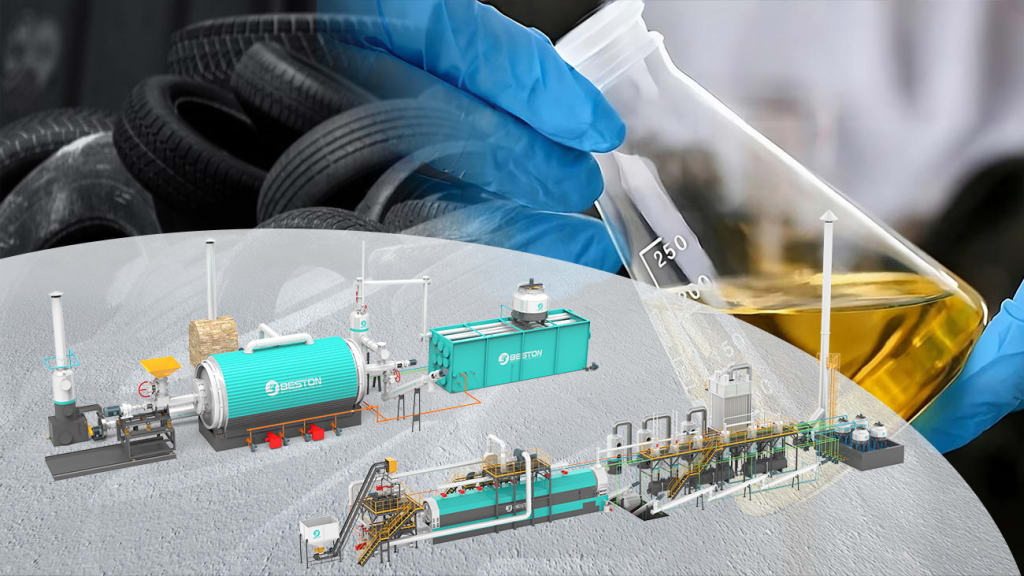
Chile, with its growing focus on sustainability and circular economy practices, faces an increasing challenge of managing end-of-life tires (ELTs). Each year, thousands of tons of used tires are discarded, creating environmental, economic, and logistical issues. Improper disposal often leads to tire stockpiles, illegal dumping, and even fires that release harmful pollutants into the atmosphere. To address these problems, innovative solutions are needed that combine environmental responsibility with economic feasibility.
Tire pyrolysis, an advanced recycling technology, has emerged as a promising solution for addressing this challenge while creating value across multiple industries. It offers an opportunity for Chile to lead in sustainable resource management, particularly given its strong mining sector, ambitious environmental goals, and openness to green investments.
What is Tire Pyrolysis?
Tire pyrolysis is a thermal decomposition process conducted in the absence of oxygen. Through controlled heating, used tires are broken down into valuable byproducts such as:
- Pyrolysis oil – A substitute fuel that can be refined further into diesel or other liquid fuels.
- Carbon black – A reinforcing filler for rubber, plastic production, pigments, and construction materials.
- Steel wire – Recovered high-quality metal that can be recycled in steel manufacturing.
- Syngas – A combustible gas that can provide energy for the plant itself, reducing external energy needs.
This closed-loop process not only reduces waste but also minimizes reliance on landfills and incineration. Moreover, it reduces greenhouse gas emissions compared to traditional disposal methods, making it an eco-friendly option aligned with Chile’s climate goals.
The Situation in Chile
Chile generates thousands of tons of waste tires annually, especially from the mining sector, one of the country’s most significant industries. Heavy-duty mining vehicles use giant off-the-road (OTR) tires, which are particularly difficult to recycle due to their massive size and material complexity. Without proper recycling, these tires accumulate in large quantities, posing long-term environmental hazards.
In recent years, stricter environmental regulations have pushed companies to look for sustainable solutions. In 2021, Chile introduced **Law 20.920**, which enforces Extended Producer Responsibility (EPR). Under this law, manufacturers and importers of tires are required to manage and recycle a percentage of the products they place on the market. The legislation not only creates strong incentives for investment in tire recycling technologies, including pyrolysis, but also establishes clear targets that must be met in the coming years. This has generated urgency and momentum within the recycling industry.
Opportunities for Tire Pyrolysis Plants in Chile
1. Abundant Supply of ELTs – The large mining industry ensures a steady flow of waste tires, providing a reliable feedstock for tire pyrolysis plant.
2. Regulatory Support – EPR laws and environmental regulations encourage sustainable waste management and open pathways for funding and subsidies.
3. Energy Demand – Pyrolysis oil and syngas can contribute to Chile’s energy matrix, reducing dependence on imported fossil fuels and improving energy security.
4. Circular Economy Integration – Carbon black and steel recovery can feed back into local industries, such as construction, manufacturing, and metallurgy, supporting Chile’s circular economy model.
5. Growing Investment Climate – Chile’s stable economy, green reputation, and openness to international partnerships make it an attractive hub for investors in waste-to-energy and recycling technologies.
6. Job Creation – Establishing tire pyrolysis facilities would create new employment opportunities in engineering, operations, logistics, and maintenance, contributing to regional economic development.
Looking at Global Examples
Countries such as India, the United States, and members of the European Union have already implemented large-scale tire pyrolysis operations. These case studies show that pyrolysis can operate profitably when backed by strong regulation, developed markets for byproducts, and ongoing innovation. Chile can learn from these global experiences to avoid pitfalls and accelerate implementation.
Conclusion
Tire pyrolysis holds strong potential in Chile, particularly given the country’s mining sector, environmental regulations, and commitment to sustainable development. By turning a waste problem into an opportunity for energy and resource recovery, tire pyrolysis plants could play a key role in advancing Chile’s circular economy.
With continued investment, technological adaptation, public-private collaboration, and market development, Chile could position itself as a regional leader in tire recycling innovation. As the demand for sustainable solutions grows, tire pyrolysis not only offers a way to manage waste effectively but also represents an avenue for Chile to strengthen its green economy, create jobs, and reduce its environmental footprint.
About the Creator
Bestonpyrolysis
Engaged in waste plastic/tyre/rubber recycling, oil sludge treatment, biomass recycling, sewage sludge management and paper recycling…
https://bestonpyrolysisplant.com/
Keep reading
More stories from Bestonpyrolysis and writers in Journal and other communities.
Pyrolysis in the UK: Key Focus Areas and Developments
With increasing pressure to manage plastic waste and reduce greenhouse gas emissions, pyrolysis has emerged as a promising solution in the UK. This technology, which converts plastic, tyres, and other waste into oil, gas, and carbon black, is gaining attention from both policymakers and investors. Pyrolysis not only provides a sustainable alternative to traditional waste disposal but also contributes to the circular economy by turning waste into valuable resources. As a result, there is a growing focus on scaling up pyrolysis plants in the UK and improving their efficiency and environmental performance.
By Bestonpyrolysis6 months ago in Journal
Author’s Advice
If you would’ve asked me 20 years ago did I know I’d become a writer and an author, I would’ve said “nope, ain’t happening”. As fate would have it I did become an author and I can honestly say I’m loving it so far. It really does feel good to be a writer. I’ve learned a lot on this journey and I feel like with even me being as new to this world as I am, there’s some wisdom I need to share with every other aspiring author.
By Joe Patterson4 days ago in Journal
Whey Protein Market Is Quietly Reshaping How the World Eats
The Quiet Revolution in Your Shaker Bottle There's something almost meditative about it. The gym is winding down, the last few weights clink back onto the rack, and someone reaches into their bag, unscrews a shaker bottle, and adds a scoop of powder. A few shakes later, a creamy drink appears — and their recovery has already begun.
By Harvey Specter3 days ago in Journal




Comments
There are no comments for this story
Be the first to respond and start the conversation.