
The Prophet Paradox: Why Every Era Thinks It’s the End Times
From ancient scrolls to viral sermons, each generation swears the end is near. But what if the apocalypse isn’t a prophecy — it’s a mirror?
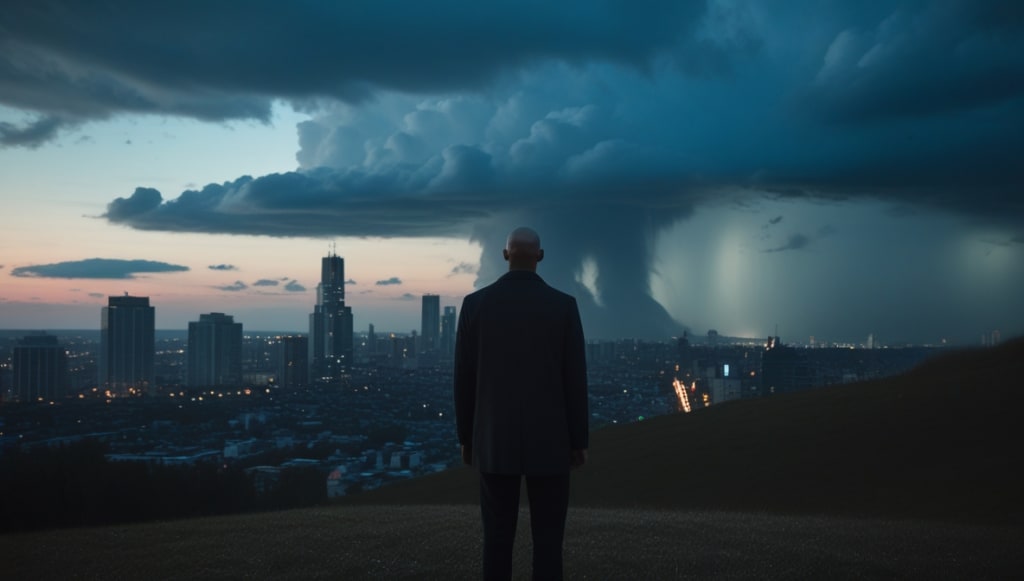
Every age has its prophets.
They stand at the edge of time — some in robes, some in suits, others behind glowing screens — warning that the end is near. Floods will come. Fire will rain. The world will collapse under the weight of its own sins.
And somehow, it always feels true.
From ancient Mesopotamia to modern Manhattan, civilizations have lived under the shadow of the apocalypse. The Babylonians read omens in the stars. Medieval monks saw signs in eclipses. Today, we scroll through doomsday TikToks, each one promising the final hour before “the great reset.” Different language, same fear.
Why do we keep returning to this story? Why does every generation believe it’s their world that will end?
The Comfort of Catastrophe
It sounds strange, but the apocalypse is comforting.
In a chaotic world, prophecy offers meaning — even if that meaning is destruction. When society feels morally or politically broken, the end becomes a kind of justice. The wicked punished, the faithful redeemed, and all confusion finally resolved.
The first-century followers of Jesus believed they would see the Second Coming in their lifetime. Medieval Christians saw the Black Death as divine retribution. Even during the Cold War, apocalyptic fever spread through nuclear fear — mushroom clouds replacing horsemen.
It’s never really about the end itself. It’s about the need to believe there’s a purpose to our suffering.
Prophecy as a Mirror
Maybe that’s the secret of the “prophet paradox.” Every prediction of doom reveals less about the future — and more about the present.
When the Hebrew prophets spoke of exile and wrath, they weren’t just foretelling destruction. They were describing the spiritual decay of their time. Similarly, when modern scientists warn of climate collapse or AI catastrophe, they’re not fortune-tellers — they’re moral witnesses.
The apocalypse, in every form, mirrors what a society fears most.
Ancient people feared divine wrath.
Medieval believers feared sin and disease.
We fear extinction by our own hands — algorithms, pollution, war.
The symbols change, but the reflection stays the same.
The Age of Infinite Endings
In the digital age, prophecy has multiplied.
Every online subculture has its version of the end: economic collapse, alien invasion, nuclear Armageddon, AI rebellion. The internet has democratized apocalypse. Now, anyone with a camera can become a prophet.
But in this flood of doom, something deeper is happening. We’re no longer predicting the end of the world — we’re mourning the end of meaning. The collapse we fear most isn’t cosmic; it’s cultural. As institutions crumble and truth splinters into opinion, “the end” becomes a language of loss.
We’re not just afraid the world will end.
We’re afraid we already ended — spiritually, morally, collectively — and no one noticed.
When Prophecy Becomes Therapy
Maybe we predict the end not to prepare for it, but to process it.
Prophecy is how humans grieve. It allows us to turn chaos into narrative, anxiety into symbolism. When a preacher, scientist, or influencer says “the end is near,” what they really mean is “something precious is slipping away.”
That’s why apocalypse stories never fade. They evolve. They adapt.
They’re not about destruction — they’re about renewal. A way of saying: if the world must end, maybe it can begin again.
So perhaps we should stop asking when the world will end, and start asking why we need it to.
Because the real revelation isn’t that time will stop — it’s that every era’s apocalypse reflects its own soul.
About the Creator
Keep reading
More stories from Shahjahan Kabir Khan and writers in Journal and other communities.
The Dollar’s Quiet Funeral: How BRICS Is Rewriting the Rules of Global Power
For nearly a century, one currency held the world in its grasp — the U.S. dollar. It decided wars, toppled governments, and shaped empires. It wasn’t just money; it was power printed in green ink. But today, that spell is fading.
By Shahjahan Kabir Khan3 months ago in Journal
The goals I did not achieve
Every writing goal I made for the year is a wash. It has been this way for a while, but I think it's important to be open about my failures and the reality of how life can get in the way. This is especially true considering the several times I have posted on Vocal about my writing goals, how I was changing my approach, and where I was hoping to be for the upcoming year. I will probably do that again in a couple months, but for now, it is time to acknowledge where I am today.
By Kay Husnick21 days ago in Journal
Raising Resilient Children Through Intentional Care with Professor Carlton Jama Adams
Parenting today unfolds in a world filled with constant stimulation, shifting expectations, and new pressures that previous generations never faced. Children grow up surrounded by digital media, academic demands, and social complexities that can easily overwhelm developing minds. In this environment, effective parenting requires more than instinct alone. It calls for mindful intention, emotional awareness, and consistent guidance. Educator and family advocate Professor Carlton Jama Adams offers a thoughtful approach to parenting that centers on emotional grounding, structure, and meaningful connection as the foundation for raising confident, resilient children.
By Carlton Adams2 days ago in Journal


Comments
There are no comments for this story
Be the first to respond and start the conversation.