
Precious Metals in Turmoil: Gold Down Nearly $1,000 From Peak as Silver Plunges in Historic Crash
Record losses shake markets — the triggers, investor impact, and what lies ahead for gold and silver
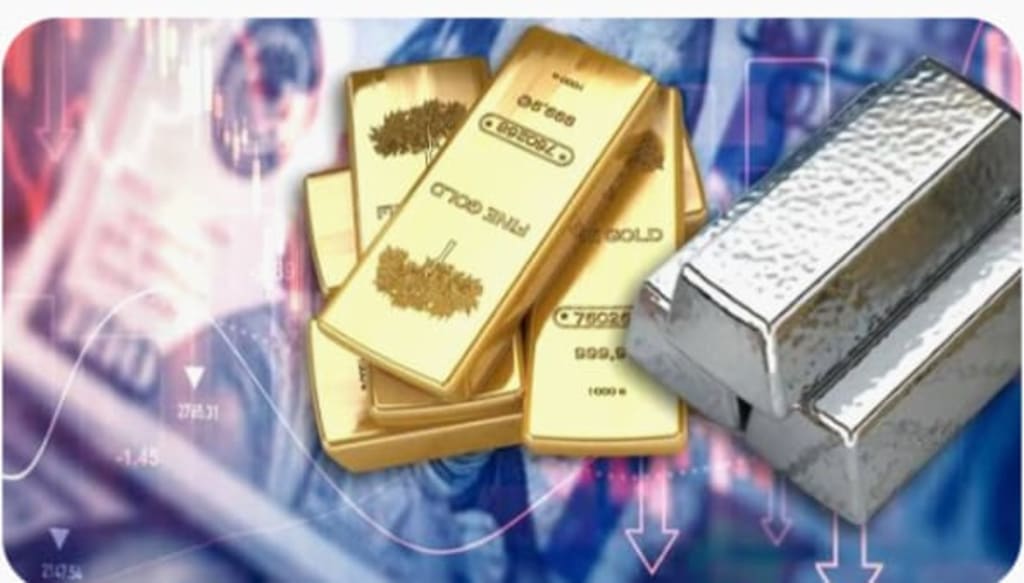
The world of precious metals is experiencing turbulence like rarely seen before. In a few rapid trading sessions, gold has fallen nearly $1,000 from its all-time peak, while silver suffered a staggering 31% one-day slump — a historic plunge not seen in decades.
These dramatic losses have sent shockwaves through global markets, leaving investors questioning whether this is a temporary correction or a sign of deeper structural shifts in financial systems.
A Historic Selloff
Just weeks ago, gold and silver were riding record-breaking highs. Gold briefly touched $5,600 per ounce, while silver soared past $120 per ounce. This surge was driven by inflation fears, geopolitical uncertainties, and a wave of investor optimism.
However, the market sentiment reversed sharply. Gold experienced a drop of nearly 10% in a single session, wiping out thousands of dollars of gains. Silver’s collapse was even more extreme — a 31% one-day fall, marking the largest percentage loss in over 40 years.
The fallout didn’t stop after that first dramatic day. As the markets continued to digest the shock, further losses extended into the following week, making this one of the most violent pullbacks in recent memory.
What Triggered the Collapse?
Several factors combined to create this perfect storm in precious metals:
1. Central Bank Policies and Fed Speculation
A major trigger was the announcement of a new nominee to lead the U.S. Federal Reserve. Markets interpreted the move as signaling a potential shift toward tighter monetary policy, increasing the U.S. dollar’s strength and raising real yields.
A stronger dollar reduces the appeal of dollar-denominated assets like gold and silver, causing prices to drop. Investors rushed to sell positions as confidence wavered, intensifying the downward spiral.
2. Forced Liquidations and Margin Hikes
Exchanges, including the CME Group, increased margin requirements for futures and options amid heightened volatility. Traders who had borrowed funds to leverage their positions were forced to either add more collateral or sell off assets.
This cascade effect accelerated the price decline, particularly in a market already stretched by speculative buying.
3. Speculative Excess and Profit-Taking
Both gold and silver experienced meteoric rises in recent months, attracting speculative investors. Once prices reached extreme levels, many opted to secure profits, adding fuel to the selloff.
Silver, which has both industrial and investment demand, proved especially vulnerable. The combination of high speculation and leveraged positions made its decline steeper than gold’s.
How Investors Are Reacting
The sharp losses in gold and silver have had immediate consequences:
Portfolio impact: Investors holding precious metals as a hedge against inflation saw significant paper losses.
Safe-haven credibility: Gold’s traditional role as a reliable store of value has been questioned after such rapid declines.
Rising volatility: Financial markets experienced spikes in volatility as traders adjusted their positions, highlighting growing uncertainty.
For many institutional and retail investors, this selloff has prompted a re-evaluation of risk management strategies and precious metals allocations.
Is This a Correction or a Structural Shift?
Analysts are divided on the outlook:
Correction view: Some experts see this as a healthy market correction following an unsustainable rally. They argue gold’s long-term fundamentals — inflation protection, geopolitical tensions, and central bank demand — remain intact.
Structural shift view: Others caution that silver, in particular, may take years to recover fully, pointing to historical bear markets following parabolic price spikes. In some past cases, recovery to record highs took over a decade.
What Lies Ahead for Gold and Silver?
Several key factors will influence the future trajectory of precious metals:
Monetary policy and interest rates will remain major drivers of investor sentiment.
Dollar strength and real yields will impact the attractiveness of non-yielding assets like gold and silver.
Investor positioning — both retail and institutional — will play a role in whether prices stabilize or continue to swing dramatically.
For now, short-term volatility is likely to persist. Traders and investors will need to weigh the lessons of the recent crash against long-term investment strategies, recognizing both risks and opportunities.
Key Takeaways
Gold and silver experienced historic losses, with silver dropping 31% in a single day.
Market triggers included central bank speculation, margin hikes, and speculative excess.
Investor sentiment has shifted dramatically, challenging the safe-haven narrative.
The future of precious metals remains uncertain, with volatility expected to continue.
Final Thoughts
The recent upheaval in precious metals markets is a stark reminder of the risks associated with leveraged trading and speculative momentum. While gold and silver still hold strategic value for investors seeking hedges against inflation and uncertainty, short-term price swings can be dramatic.
As markets adjust, careful monitoring, diversification, and disciplined risk management will be critical for anyone involved in precious metals — whether seasoned traders or cautious long-term investors.
About the Creator
Keep reading
More stories from Ayesha Lashari and writers in Journal and other communities.
Ranked: The Most Reliable Car Brands in 2026
In 2026, car buyers are more informed and more demanding than ever before. With rising vehicle prices, rapid advances in automotive technology, and growing interest in electric and hybrid models, reliability has become one of the most important factors in choosing a car. A reliable vehicle is no longer just about avoiding breakdowns—it’s about long-term value, lower maintenance costs, safety, and peace of mind.
By Ayesha Lashari2 days ago in Journal
~ Fired ~
— Ai Intrusion ~ Are you Next ~ Is Ai Evolution after your job? — Few workplaces haven't been affected. Ai is in supermarkets, at doctors' offices, and even monitoring farms. I just can't think of anything this machine is not getting into, can you? For instance: Education ~ Law and Tech jobs will one day have a major influence or be taken over by these inanimate machines, with accuracy and vigor. From mechanics' diagnoses to a wide variety of everyday jobs, including fast food workers, with this input having the ability to cut their unnecessary work hours. I'm certain all of us have been touched by this with our short stories and colorful headings, have you? Even comments are very questionable 'Non-Robot' insertions.
By Jay Kantor5 days ago in Journal


Comments
There are no comments for this story
Be the first to respond and start the conversation.