
📈 The NVIDIA Paradox: Why Record Profits for the 'AI King' Spark Market Anxiety
Decoding the earnings explosion: Analyzing the concentration of power, the sustainability of demand, and the chilling effect of monopolistic dominance on the future of the AI industry.

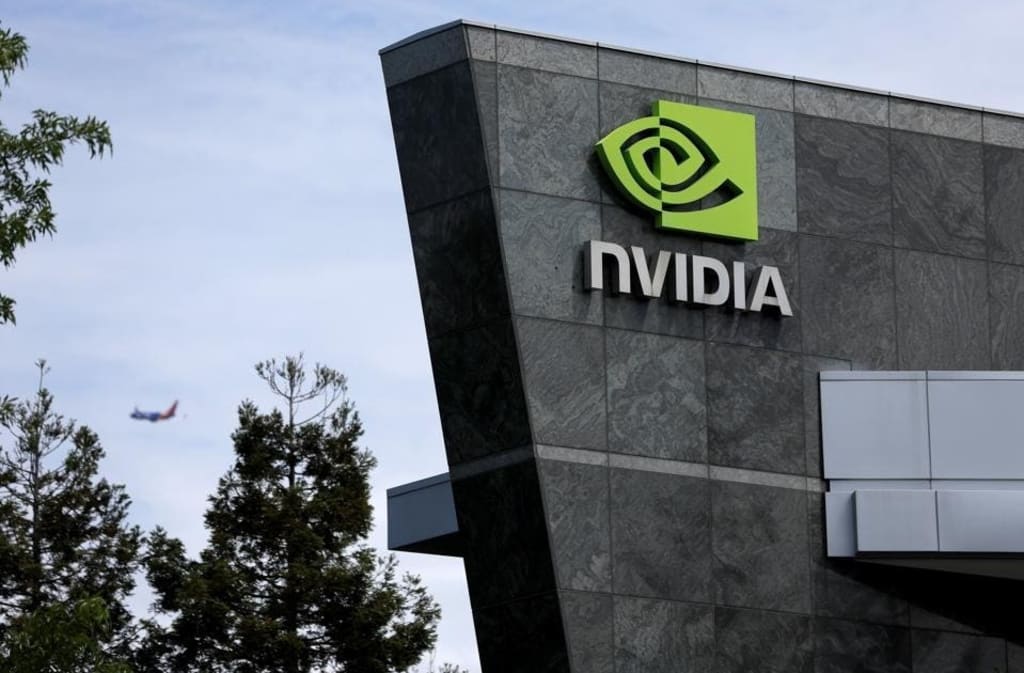
NVIDIA has become the undisputed financial superstar of the current technology cycle. Quarter after quarter, the "AI King" shatters its own revenue and profit forecasts, largely driven by the insatiable, multi-billion dollar demand for its high-end Hopper and Blackwell architecture GPUs (like the H100 and B200) from hyperscalers like Microsoft, Google, and Amazon. The financial metrics are staggering: gross margins soaring toward 75%, and revenue growth that often doubles or triples year-over-year.
Yet, behind the euphoria of these record-breaking reports lies a growing unease among economists, industry leaders, and investors. The sheer magnitude and concentrated nature of NVIDIA's dominance are generating profound questions about market stability, long-term sustainability, and the fundamental structure of the burgeoning Artificial Intelligence industry.
1. The Single Point of Failure: Concentration of Power
The primary source of anxiety is the near-monopolistic control NVIDIA holds over the foundational hardware of modern AI.
90%+ Market Share: NVIDIA commands over 90% of the market share for specialized AI accelerator chips used in data centers. Every major large language model (LLM), from OpenAI's GPT to Google's Gemini, is trained almost exclusively on NVIDIA hardware.
The "Tollbooth" Effect: Critics argue that NVIDIA effectively acts as a "tollbooth" on the road to AI innovation. Every company that wants to compete in the AI race—whether they are building models, offering cloud services, or developing autonomous systems—must pay a substantial premium to NVIDIA. This highly concentrated dependency creates systemic risk. If a single supply chain disruption or a sudden, dramatic price hike occurs, the entire global AI development pipeline slows down.
The Software Moat: NVIDIA’s dominance is reinforced by its proprietary software platform, CUDA. Decades of investment have created a robust, developer-friendly ecosystem that is incredibly difficult for competitors like AMD (with ROCm) or specialized custom chips (ASICs) to penetrate. This software moat ensures that even if a rival produces faster hardware, developers struggle to switch ecosystems, locking in NVIDIA's dominance.
2. The Sustainability Question: Capex vs. Utility
The staggering revenue figures are fueled by massive capital expenditure (CapEx) from a handful of cloud giants. These companies are in a frantic arms race to build the largest AI infrastructure.
Front-Loaded Demand: Analysts worry that the current demand is heavily front-loaded. Companies are spending billions now to build the initial training clusters. Once these immense clusters are built, the demand for new chips may plateau or significantly slow down. The market fears a "boom and bust" cycle where today’s unprecedented growth leads to tomorrow’s saturated demand.
The Utility Lag: The worry is that the massive investment in training hardware ($30,000+ per H100 GPU) has run ahead of the actual revenue generated by the AI models. Are the applications and services built on these chips generating enough utility and profits to justify the staggering CapEx spend? If the return on investment (ROI) for massive LLMs takes longer than expected, cloud providers might cut back on future chip purchases.
3. The Threat of Custom Silicon (ASICs)
The exorbitant cost and supply constraints imposed by NVIDIA are forcing its biggest customers—and its biggest revenue sources—to become its biggest competitors.
Internal Development: Tech giants like Google (TPUs), Amazon (Inferentia/Trainium), and Microsoft are investing billions in developing their own custom Application-Specific Integrated Circuits (ASICs). These chips are tailored precisely for their internal AI workloads, offering potentially better performance-per-watt and, crucially, avoiding NVIDIA's pricing structure.
The Decoupling Risk: While these companies remain NVIDIA’s best customers today, the long-term goal is decoupling. The moment custom silicon can reliably and cost-effectively replace a significant portion of NVIDIA’s chips, the revenue stream will be impacted. The market is constantly looking for signs that these internal ASIC projects are hitting their performance targets.
Conclusion: A Ticking Clock on Unprecedented Growth
NVIDIA’s record earnings are a testament to its visionary leadership and the undeniable importance of its technology. The company is, for now, the linchpin of the global AI revolution.
However, the anxiety surrounding its success stems from the reality that such concentrated power rarely lasts in a free market. The astronomical profits are both a sign of unparalleled genius and a powerful incentive for competitors—both old rivals and massive customers—to invest relentlessly in breaking that dominance. For investors, the question is not whether NVIDIA can maintain its growth today, but how long it can hold off the inevitable technological and economic forces arrayed against its singular reign.
About the Creator
The goals I did not achieve
Every writing goal I made for the year is a wash. It has been this way for a while, but I think it's important to be open about my failures and the reality of how life can get in the way. This is especially true considering the several times I have posted on Vocal about my writing goals, how I was changing my approach, and where I was hoping to be for the upcoming year. I will probably do that again in a couple months, but for now, it is time to acknowledge where I am today.
By Kay Husnick24 days ago in Journal
How to Put Out Electrical Fire Without Causing More Damage
By the time the smoke has cleared and the room seems still, the true extent of the destruction caused by an electrical fire is usually on display-melting wires, burned outlets, and blackened walls and, in rare instances, preventable injuries. The spread of most electrical fires is not because they are, powerful, but rather because people act in a wrong manner. Knowledge of the safety of extinguishing electrical fire is not only related to the prevention of fire, but also to the prevention of a small fire turning into a very expensive tragedy.
By Deborah Larson7 days ago in Journal




Comments
There are no comments for this story
Be the first to respond and start the conversation.