
The Nights of Farewell to Morana have begun
A Slavic Neopagan's reflection on death, rebirth, and saying farewell to the dark half of the Wheel of the Year.
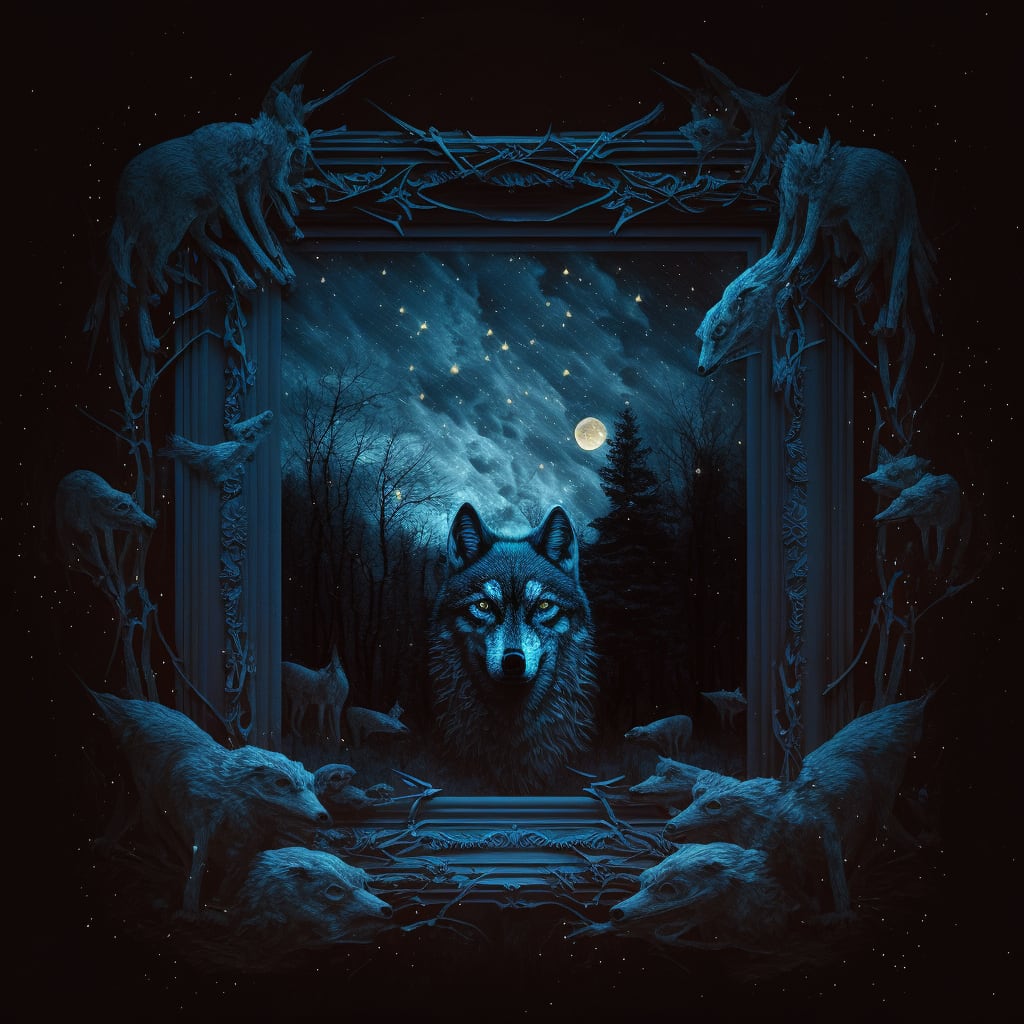
The wind whispers through the dark night, carrying voices and sounds long forgotten to my ears. They are always there, the primordial ancient words, for those who are willing to listen. All one has to do is open their heart and their mind, and truth will present itself. But be careful! Because the truth is not something you always want to hear, and she does not take kindly towards ones who twist what they’ve heard in order to fit their own already preconceived perception of how things should be.
And her voice is never louder than before she’s about to leave us, in order to morph herself into a different state of being, and help us welcome spring, fertility, life, and abundance. People tend to take to her more pleasantly in her maiden form, and yet, for the ones that have been lucky enough to see her and accept her for who she is, she has always been a maiden.
I am talking about Morana, of course, the Slavic Goddess of Death, Winter and Rebirth. Although revered by the Old Slavs as a “Dark Goddess”, what one keeps in mind when reading the old sources is the fact that “dark” didn’t and doesn’t always mean it’s a bad thing. That type of viewing things came much later, with the Christian interpretation of the old Slavic folk tales and myths that were passed on mostly through spoken words, from generation to generation.
As anyone who has tried to dig into the Slavic mythology and find any kind of coherent and concise pantheon of myths has discovered, the sources are scarce and the information available (especially in English) is murky and inconsistent to say the least. You might have more luck if you speak a Slavic language and you come from a country that has Slavic cultural background, but even then, it is hard to see through the years and years of Christianization what the true meanings and actual messages of the old rituals were before they were translated into Christian holidays or traditions. This is especially true for Orthodox Christians, because many of the holidays that they celebrate and honor to this very day are Pagan in nature.
So, you might wonder: how does a person who calls himself “a Slavic Neopagan” gets his information on how to properly worship a Goddess who, by all accounts, was mostly feared by his own ancestors?
To answer this question, we will have to take a general look towards spirituality, religion and (Neo)paganism and what they are, what they mean, and why they are important.
Ever since I was a child, I have been drawn to spirituality. For the first five years of my life, I didn’t see myself as an individual, but a separate being who communicates to others what my body wanted or needed at the time by referring to myself in third person. My mother was concerned, so she took me to children psychologist, but eventually I got out of it. I don’t know if that had anything to do with my inclination towards the spiritual, but I personally think that it probably played some part in it. And growing up in a Christian community and Christian society, naturally my first exposure to religion was the Bible. I remember reading the children’s version of the Bible when I was only six-years-old. I liked the pictures, and I liked the stories, and some of them are still very dear to my heart and I occasionally re-read them even though I have been following my own path that greatly diverges from the fundamentalism of Christianity. Some Pagans I’ve met don’t understand that, but I don’t think that there’s anything bad in any story. To me personally, the Bible is just another collection of myths. Nothing more.
Religion, on the other hand, exists only to control people. They have a predetermined set of rules, whatever the religion’s institution or leaders say is usually dogmatic and is expected to be received by the followers as is, without asking questions, and there simply isn’t enough (or at all) allowance for one to think outside of the box and question the status quo. This is precisely the reason why I cannot belong to any organized religion ever. I don’t like to be told what to do, how to think, how to act, or how to live my life. Those things should come from within, rather than without.
And thus we come to Neopaganism. A lot of people refer to it simply as Paganism, but as someone who has been writing creatively since he was six and thinks that words matter, I think that the term Neopagan more accurately reflects the movement of re-constructing the old ways of living and traditions of faith that our ancestors followed in pre-Christian times.
What is Neopaganism you may ask, and what is the purpose of it? Christianity and any other organized religion seek to make everybody the same and their primary goal is conformity and controlling the masses in this life with the threat of hell and the promise of heaven. Neopaganism is the answer for all those who don’t wish to conform and be lied to while giving hard-earned money as a donation to institutions that do more harm than good in the world. But more importantly, Neopaganism is the answer for those who want to find out the truth for themselves and aren’t afraid to take the road less traveled to get there.
I was first exposed to Neopaganism and alternative way of thinking when I was fifteen. It all started with Wicca, but I soon realized that that wasn’t the path for me, and yet Wicca taught me something that was desperately lacking in the Christian religion that was the only form and way of spirituality that I knew back then: the importance of the sacred feminine. As someone who has always strongly believed that women and girls are a lot better, smarter, and resourceful when compared to men and boys in a lot of situations, I always felt like Christianity and the society in which I lived grossly underrepresented them and gave the feminine the respect, time, and worship it deserved.
I soon discovered many other and different ways and traditions of Neopaganism that I studied and practiced, trying to find my home and something that aligned with my way of upbringing, the right and the wrong that I’ve learned in my life, and a path that would bring peace and calm to my soul, which is the ultimate goal of any religion or spiritual practice.
When after many years (more than half of my lifetime) I was finally starting to become skeptical and started to convince myself that there is no spiritual learning or religion that will ever align with my nature, my personality, and my spiritual needs, is when I was called upon by Morana, the Goddess of Death. At first, of course, I was scared. I didn’t know who she was and what she wanted from me. And once I realized who I was dealing with, I didn’t want to listen because I thought that without writings or books or anything of the sort, it would be hard for me to build a relationship and a spirituality. That was the Christian fundamentalist in me talking and taking control of my thoughts because for a long time, even while following different Neopagan traditions, I always got my information from books and literature, instead of closing my eyes and listening to hear what they wanted.
I knew that once I found out what Morana was, who she was, and why she chose me, it will all make sense. So, even though I was terrified and scared to death (pun not intended), I had to find out why she presented herself to me and what all of it meant.
I have been working with Morana for a while now, and I have found the peace and comfort in her that I have always sought out and needed in my life. And the Old Slavs believed that Morana left once the dark half of the year was over, and when spring began. In some Slavic countries, to this very day, the Drowning of Morana is celebrated on March 21st, the day of the Spring Equinox. In this old tradition and ritual, people make a doll or a puppet that is supposed to represent Morana, and it’s made out of straw and dressed in a dress with jewelry, that is later burned or drowned or both, celebrating the end of winter and the survival of another dark half. Many people still believe that the drowning or burning of Morana brings an abundance of light, life, and crops, and in countries like Poland and Croatia, this ritual is observed on March 21st to this very day.
As someone who sees Morana for who she really is, and honors her in all of her forms and shapes, I thought that celebrating her demise and symbolically drowning my patron Goddess would be an insult to her and everything that she stands for. Do not get me wrong: I understand why people are afraid of her. It is a very human fear, the fear of death, because we simply don’t know what lies behind the veil that separates Jav (or the material, real world) from Nav (the underworld, the world of the dead), which funnily enough, according to some folklore, only Morana has the keys that open the portal or the door between those two dimensions.
But I personally am not afraid of death and never have been. It is just a part of existing, and it will happen to everything and everyone, and I honestly don’t understand how some people can view dying as something bad. It is simply transitioning from one way of being into another. When people ask me how can I look at death in such a manner, I ask them a simple question: just because you know you are going to eventually have to go to the bathroom, does that stop you from eating and drinking through the day? The same goes for death. Just because we know we are going to die, does that mean that we should be afraid to live and see and expect death everywhere we look?
Which is how I came to start celebrating the Nights of Farewell to Morana, starting on February 19th and ending on March 31st, exactly for thirty nights in honor of my patron Goddess. This is my own celebration, and I know it to be true and honoring to the Goddess of Death deep within my heart, but if someone who reads this feels that they’ve been called by Morana in any shape of her form to do it, by all means join me in reflecting and celebrating the last days of the dark half of the year.
The Nights of Farewell to Morana comprises reflecting on our own mortality, meditation, fasting, and lighting candles at night. They last for thirty days, from February 19th to March 21st, which is celebrated as the Day of Morana, and instead of drowning an image of the Goddess, we celebrate her metamorphosis into Vesna or Devana or Vesna Devana, the Goddess of Spring, Youth, and Fertility. Because Vesna is just one of the three forms that Morana morphs herself into, telling a natural story of the cycle of life, death, and rebirth. But, just because the light is coming, and the world wakes up every day a little bit brighter, that doesn’t mean that death should be forgotten, because death can happen anytime and to anyone, but the realization of that and the constant awareness of it shouldn’t make us terrified and scared, yet invigorate us to enjoy life to the fullest while we still can.
The Nights of Farewell to Morana start at dawn, and I spend the first thirty minutes in meditation, reflecting, and prayer. After that, I go about my day, drinking and eating nothing, except for water, until sundown. Because Morana is considered the Goddess of the in-between as well, I feel like the sundown is an appropriate time of the day to honor her and be mindful of her waning form. At sundown, I prepare a homemade meal which I then consume alone or with family and friends. That is the only time of the day I eat for the next thirty days.
And why thirty days, some will ask? Because three is a sacred number to the Old Slavs, and Morana herself is believed by some scholars to be just one of the three aspects of the same Goddess (represented by Vesna, Siva, and Morana) in a similar fashion as the Wiccan Maiden, Mother, and Crone.
These upcoming Nights of Farewell to Morana that I am celebrating and honoring I designed by keeping in mind what the Goddess wanted of me, as well as what she represents, and what is to come. The self-reflection makes me embrace my own mortality, making every day a blessing and an opportunity for me to do something better and worthwhile with the time I have left in Jav. The prayer reinforces the belief that there is something bigger out there that I am a part of, something that will stay and be around long after I am gone. The lighting of the candle reminds me of the longer, brighter days that are about to come. The fasting puts my body to the test, making it survive on a single meal in the day, remembering the hardship that winter brought to my ancestors and why they feared Morana and winter in the first place, especially since food wasn’t as readily available in supermarkets as it is today. And preparing the meal from scratch I do to honor my ancestors, who had to grow, process, and prepare their own food every single day if they wanted to eat. I mostly prepare my food anyway and I rarely order in or eat out, but these thirty days it is especially crucial for me to prepare every single meal with care, love, and respect to the labors of all the ones that came before me.
Like I said, these Nights of Farewell are my own interpretation and way of celebrating Morana, based on insight that I’ve gained by working with the Dark Goddess, and are in no way the “right” way to celebrate Morana, and most definitely not the only way to do so. The beauty of Neopaganism is that you get to decide what is right and wrong to you and how you want to shape your faith and belief and/or spiritual system.
This is my first post about my faith and own personal beliefs that I’ve ever written. I keep a journal in which sometimes I reflect on what I experience and what truths I uncover, but a friend encouraged me to share some of my philosophy, which is why I am posting this. I hope that this was in the best case inspiring, and in the worst case at least somewhat entertaining and informative to everyone who managed to read this article to the end.
I leave you now here with the best of wishes, and the most sincere of human kinship.
About the Creator
Keep reading
More stories from writers in Journal and other communities.
How Much Funding You’ll Need for a Community Mental Health Clinic
Introduction Funding determines clinic viability. Community clinics require strong planning. Startup costs can be significant. Ongoing expenses must be covered. Financial preparation reduces risk. Services depend on stable cash flow. Community demand is growing. Access requires resources. Facilities need proper equipment. Staff require fair compensation. Compliance adds cost. Sustainable funding supports care. Budgeting ensures continuity. Financial clarity supports confidence. Underfunding creates failure. Preparation protects mission. Planning supports long-term success. Funding drives service delivery.
By Abdul Mueedabout 2 hours ago in Journal


Comments
There are no comments for this story
Be the first to respond and start the conversation.