
The New Era of Opulence: Trends Shaping the Global Luxury Furniture Market
Design Innovation, Sustainability, and Evolving Consumer Preferences Redefining Premium Living Spaces

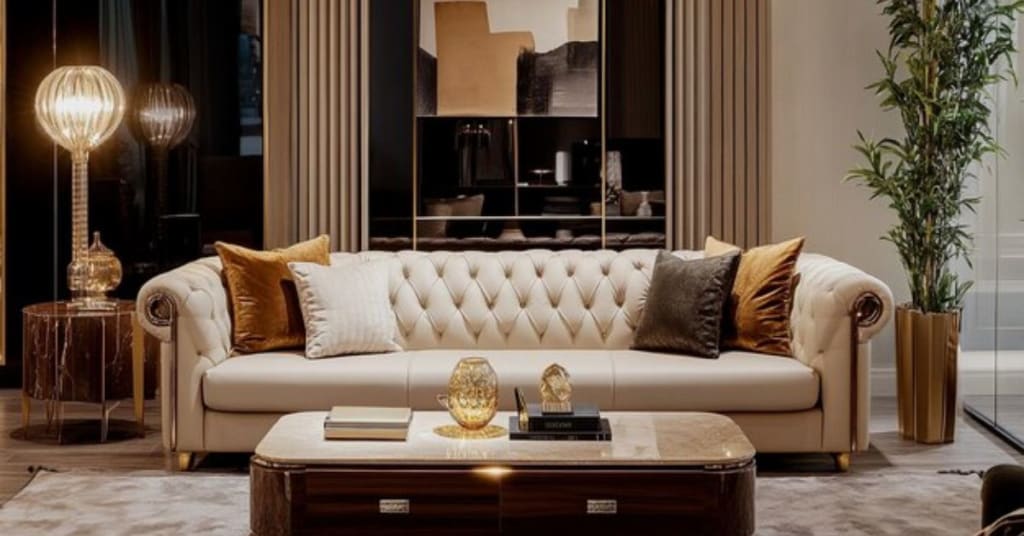
The global luxury furniture market is currently undergoing a profound metamorphosis. Valued at approximately $27 billion and projected to grow steadily through 2030, this sector is no longer defined merely by gold leaf or exorbitant price tags. Today, luxury furniture represents a complex intersection of heritage craftsmanship, avant-garde technology, and a new "quiet" aesthetic that prioritizes wellness and sustainability over overt displays of wealth.
As the home evolves from a mere living space into a sanctuary, a gallery, and a high-tech hub, the pieces we choose to inhabit it have become the ultimate indicators of personal values and lifestyle.
1. The Rise of "Quiet Luxury" and Minimalism
The most significant shift in high-end interiors is the movement toward "Quiet Luxury." Inspired by the fashion world's "stealth wealth" trend, this aesthetic eschews loud logos and ornate carvings in favor of impeccable proportions, rare materials, and tactile comfort.
Materiality over Ornamentation: Luxury is now felt rather than just seen. Designers are focusing on the sensory experience—the smoothness of honed Calacatta marble, the warmth of solid walnut, or the grain of hand-stitched nubuck leather.
Monochromatic Palettes: The current market favors "warm neutrals"—creams, sands, and charcoals—that allow the structural integrity and quality of the furniture to speak for itself.
Sculptural Forms: We are seeing a move away from rigid, boxy shapes toward organic, biomorphic curves. This "curvy" trend in sofas and armchairs is designed to evoke a sense of protection and softness in a chaotic world.
2. Bespoke and Limited Edition: The "Art-Furniture" Hybrid
In the luxury segment, exclusivity is the primary currency. Discerning HNWIs (High-Net-Worth Individuals) are moving away from mass-produced "designer" brands toward one-of-a-kind commissions.
Collectible Design: The line between furniture and fine art has blurred. Gallerists now represent furniture designers, and pieces from names like Vincenzo De Cotiis or Kelly Wearstler are treated as investment assets.
Hyper-Personalization: Luxury brands now offer "bespoke" services that go far beyond choosing a fabric. Clients are involved in the sourcing of specific stone slabs from Italian quarries or requesting custom metal finishes that oxidize in a particular way over time.
3. The Sustainability Mandate: "Green" is the New Gold
The modern luxury consumer is increasingly eco-conscious. Sustainability is no longer a "nice-to-have" feature; it is a fundamental requirement for the high-end market.
Ethical Sourcing: High-end consumers demand to know the provenance of their wood (FSC-certified) and the ethical standards of the tanneries producing their leather.
Circular Luxury: There is a growing secondary market for "pre-loved" luxury furniture. Iconic pieces from mid-century masters (like Eames or Jeanneret) are seen as sustainable investments because they hold their value and are built to last several lifetimes.
Innovative Bio-Materials: We are seeing the introduction of mycelium-based "leather," recycled ocean plastic structural elements, and carbon-negative resins in high-concept luxury pieces.
4. Technology Integration: The Invisible Smart Home
Luxury furniture is now catching up with the "Internet of Things" (IoT), but with a sophisticated twist. Unlike mass-market smart furniture, luxury tech is invisible.
Hidden Functionality: Think of bedside tables with integrated, invisible wireless charging pads, or media consoles with silent, motorized lifts that hide 8K screens within handcrafted cabinetry.
Acoustic Design: As open-plan living remains popular, luxury furniture is being engineered with acoustic-dampening materials. High-end sofas now incorporate sound-absorbing foams and fabrics to create "quiet zones" within a room.
The Wellness Focus: Ergonomics has been elevated to a science. Luxury office chairs and adjustable beds now use AI to monitor sleep patterns or posture, adjusting micro-tensions in real-time to optimize physical health.
5. Regional Powerhouses: Italy, China, and the Middle East
The geography of the luxury furniture market is shifting alongside global wealth.
Italy: The Undisputed Heart: Northern Italy, specifically the Brianza district, remains the epicenter of the industry. Brands like B&B Italia, Minotti, and Cassina continue to set the global standard for "Made in Italy" excellence.
The Rise of Chinese Luxury: China has transitioned from being a manufacturing hub to a major consumer and creator of luxury furniture. Domestic brands are now blending traditional Ming-style joinery with ultra-modern Western aesthetics.
Middle Eastern Ambition: With massive luxury real estate projects in Dubai, Riyadh, and Doha, the Middle East has become the most aggressive market for "palatial" contemporary furniture, driving demand for oversized, custom-scale pieces.
6. The Hospitality Influence: "Hotelization" of the Home
A major trend driving the market is the desire for homes to feel like five-star resorts. This "hotelization" has led luxury furniture brands to partner with hospitality giants.
Branded Residences: Brands like Bentley, Fendi, and Armani have launched dedicated home collections, furnishing entire skyscrapers that bear their names. This allows consumers to buy into a complete "branded lifestyle."
The Outdoor Room: The "patio" has been replaced by the "outdoor living room." Luxury outdoor furniture now uses weather-resistant textiles that are indistinguishable from indoor silks and linens, allowing for a seamless flow between the interior and the garden.
7. Future Outlook: The Digital Frontier
The future of luxury furniture retail lies in Augmented Reality (AR) and the Metaverse.
Virtual Previews: High-end brands are using AR to allow clients to visualize a $50,000 sectional in their actual living room with millimeter-perfect accuracy before purchase.
NFTs and Digital Twins: Some luxury designers are now selling "Digital Twins" of their physical furniture. When you buy a physical chair, you also receive a 3D NFT version for your avatar to use in digital spaces, ensuring brand prestige follows the owner into the virtual world.
Conclusion
The luxury furniture market is no longer just about filling a room; it is about curated storytelling. In an age of mass production, the true luxury lies in the "human touch"—the slight irregularity in a hand-carved joint or the unique vein in a piece of marble. As we look toward the end of the decade, the winners in this market will be those who can balance the timeless traditions of the past with the radical technological and environmental demands of the future.
Modern luxury is, ultimately, the luxury of integrity: pieces that are beautiful to look at, ethical to produce, and engineered to endure.
About the Creator
Rahul Pal
Market research professional with expertise in analyzing trends, consumer behavior, and market dynamics. Skilled in delivering actionable insights to support strategic decision-making and drive business growth across diverse industries.


Comments
There are no comments for this story
Be the first to respond and start the conversation.