

Introduction :
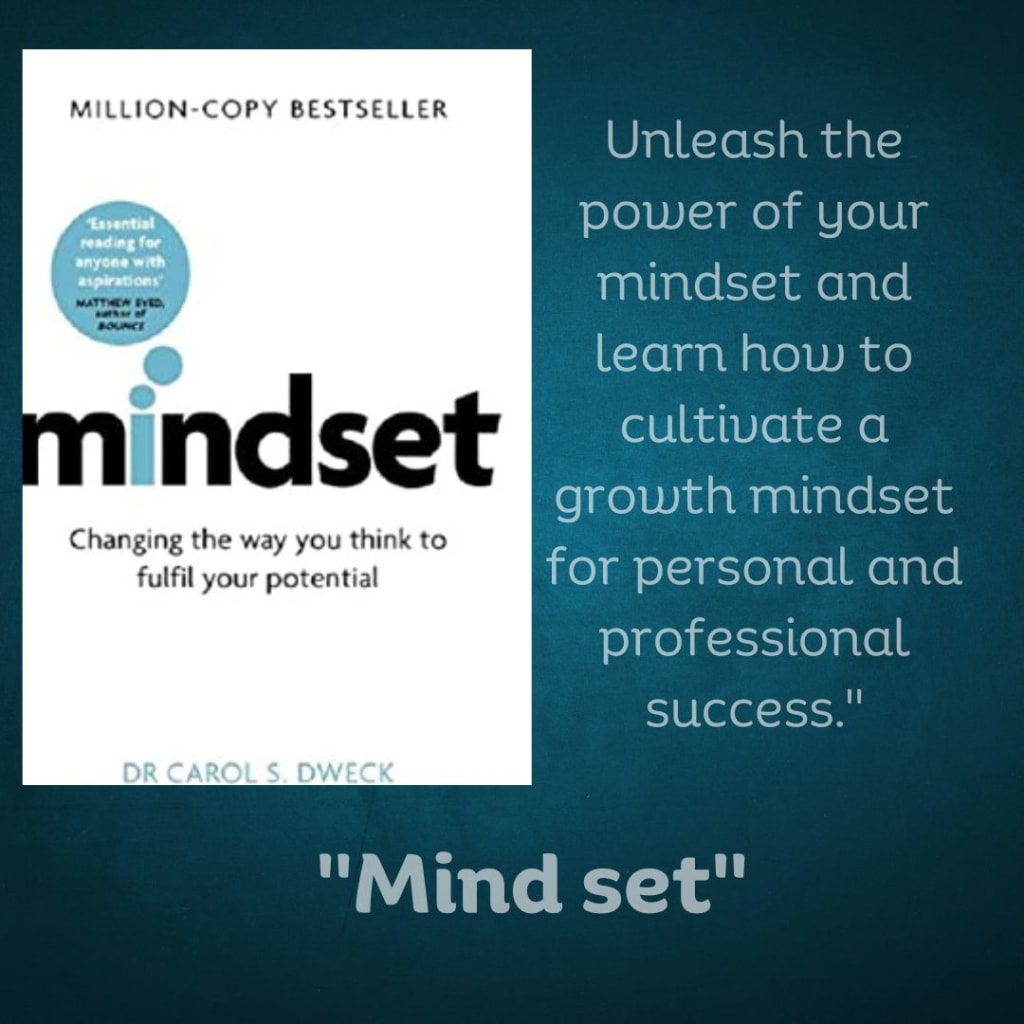
Welcome to our blog, where we dive deep into the influential book, ‘The Mindset by Carol S. Dweck.
In her groundbreaking book “The Mindset” a renowned psychologist, and professor at Stanford University, explores the concept of mindset and its impact on personal and professional growth.
Dweck presents a compelling argument that one’s mindset plays a pivotal role in determining success and fulfillment in life.
In this The Mindset Book Review blog, we explore the transformative power of this groundbreaking work and provide you with valuable insights to harness the potential of your mindset.
Understanding the Mindset Concept :
In “Mindset,” Carol S. Dweck introduces the concept of mindset and explores the two primary types: the growth mindset and the fixed mindset.
Individuals with a fixed mindset trust that their abilities and intelligence are fixed traits, essentially predetermined and unchangeable.
Conversely, those with a growth mindset understand that abilities can be developed and improved through effort, practice, and a willingness to learn.
Dweck explains that our mindset significantly impacts our approach to challenges, setbacks, and personal growth. Humans with a fixed mindset tend to avoid challenges out of fear of failure or looking incompetent.
They often stick to what they know, seeking validation and avoiding situations that might expose their weaknesses. This mindset can limit their potential for growth and hinder their ability to embrace new opportunities.
Conversely, Humans with a growth mindset embrace challenges as opportunities for growth. They believe that abilities can be cultivated through hard work, perseverance, and learning from mistakes.
They are more likely to take on hard tasks, see setbacks as learning experiences, and persist in facing obstacles. This mindset fosters resilience, a desire for continuous improvement, and a hunger for new knowledge.
By understanding and adopting a growth mindset, individuals can unlock their full potential and achieve greater success in various aspects of life. Dweck provides evidence from her research and real-life examples to support her arguments, demonstrating the transformative power of mindset.
Throughout the book, she encourages readers to assess their own mindset and provides practical strategies for developing and nurturing a growth-oriented mindset.
The Power of Embracing Challenges
In “Mindset,” Carol S. Dweck emphasizes the transformative power of embracing challenges.
She argues that individuals with a growth mindset view challenges as opportunities for personal and intellectual growth. Instead of shying away from difficult tasks, they embrace them with enthusiasm and determination.
Dweck illustrates this concept with inspiring examples, such as the legendary basketball player Michael Jordan. Despite facing numerous obstacles and setbacks throughout his career, Jordan maintained a growth mindset, constantly seeking opportunities to improve his skills.
His constant pursuit of excellence and willingness to face challenges head-on propelled him to become one of the greatest basketball players.
Celebrate the successes and growth of others; their achievements do not diminish your own.
The Influence of Mindset in High School
Carol S. Dweck delves into the influence of mindset on high school students, shedding light on how it affects their academic performance and overall well-being.
The mindset students adopt during their formative years can impact their educational journey and future success.
Students with a fixed mindset often shy away from challenges and view their intelligence and abilities as fixed traits.
They may avoid taking on difficult subjects or courses because they fear failure and the judgment of others. This mindset can create a sense of vulnerability, leading to a fear of making mistakes and taking risks in the learning process.
In contrast, students with a growth mindset approach their high school experience with a desire to learn and grow.
They embrace challenges, view mistakes as learning opportunities, and persist despite setbacks. This mindset fosters resilience, adaptability, and a hunger for knowledge, enabling students to reach their full potential.
Dweck highlights the role of parents and teachers in shaping students’ mindsets.
Parents can support a growth mindset by praising their children’s efforts, focusing on the process rather than solely the outcome, and encouraging them to take on challenging tasks.
Teachers play an important role in creating a classroom environment that fosters a growth mindset by providing constructive feedback, promoting a growth-oriented approach, and cultivating a love for learning.
Overcoming a Fixed Mindset
“Mindset” offers insights into how individuals with a fixed mindset can transition towards a growth mindset.
Dweck provides practical advice on recognizing and challenging self-limiting beliefs, reframing failures as learning opportunities, and developing a desire to learn.
By cultivating a growth mindset, individuals can unlock their potential and achieve greater success in various areas of life, including academics, relationships, and personal goals.
Case Studies and Personal Stories
In “Mindset,” Carol S. Dweck provides practical advice on how individuals with a fixed mindset can transition towards a growth mindset. She acknowledges that breaking free from a fixed mindset requires self-reflection, effort, and a willingness to challenge deeply ingrained beliefs.
Dweck emphasizes the importance of recognizing self-limiting beliefs and reframing them into more empowering perspectives.
Individuals with a fixed mindset often hold beliefs such as “I’m just not good at this” or “I’ll never be able to learn that.”
By consciously challenging these beliefs and replacing them with more growth-oriented thoughts, individuals can shift their mindset and open themselves up to new possibilities.
The Role of Parents and Teachers
In “Mindset,” Carol S. Dweck emphasizes the crucial role that parents and teachers play in fostering a growth mindset in children and students.
The mindset messages children receive from influential figures in their lives can shape their beliefs about intelligence, abilities, and the value of effort.
Dweck encourages parents to praise their children’s efforts, persistence, and strategies rather than solely focusing on their innate abilities or outcomes.
By recognizing and valuing the learning process, parents can instill a growth mindset in their children.
This helps children understand that their intelligence and capabilities can be developed through hard work and dedication.
Teachers also have a significant impact on students’ mindset development. Dweck suggests that educators provide feedback that is specific, constructive, and focused on effort, progress, and improvement.
By offering guidance on how students can enhance their skills and providing growth opportunities, teachers can nurture a growth mindset within the classroom.
Creating an environment that supports risk-taking and embraces mistakes is another essential aspect highlighted by Dweck.
Encouraging students to see mistakes as valuable learning experiences helps them develop resilience and a positive attitude toward challenges.
Collaboration between parents and teachers is key to fostering a growth mindset. By aligning their efforts and consistently reinforcing the principles of a growth mindset, parents and teachers can create a unified and supportive environment that promotes personal and academic growth for children and students.
Dweck emphasizes the need for ongoing communication and collaboration between parents and teachers. By working together, they can share insights, strategies, and resources to foster a growth mindset in children and give them the support they need to thrive.
Download Free The Mindset Book Pdf Here
Conclusion
In conclusion, “Mindset” by Carol S. Dweck offers valuable insights into the concept of mindset and its profound impact on personal development and achievement.
Through engaging anecdotes, research-based evidence, and practical strategies, Dweck convincingly argues that individuals can cultivate a growth mindset and overcome self-imposed limitations.
By embracing challenges, persisting in the face of setbacks, and developing a desire to learn, readers can unlock their potential and lead more fulfilling lives.
Reading this book can be a transformative experience for individuals at any stage of life.
Whether you’re a high school student seeking academic success, a parent looking to nurture a growth mindset in your child, or a professional aiming for personal and career growth, “Mindset” provides the tools and inspiration to develop a mindset that fosters continuous learning and resilience.
Remember, the false growth mindset can hinder your progress, but by embracing challenges and developing a genuine desire to learn, you can unlock your full potential and achieve remarkable growth.
Carol S. Dweck’s “Mindset” is a must-read for anyone seeking personal and professional development.
About the Creator
Read Dude
Hello Bookish!
Book Blogger | Reviewer
Join me as we turn the pages and unlock the wonders of literature.
Visit My website:https://readdude.com/
I Held a Zoom Call With Everest Behind Me (No Filter)
I heard a goat bell outside my window while sending a file to London. This is my life now. Three months ago, I was in a gray cubicle in Seattle. Today I'm working from a teahouse at 12,500 feet in Nepal.
By Samikshya Giriiabout 3 hours ago in Journal




Comments
There are no comments for this story
Be the first to respond and start the conversation.