
The mighty Ottoman Empire
"Key Features of the Ottoman Empire: Expansion, Military Power, Diversity, Imperial Structure, Islamic Influence, Art and Architecture, Trade and Commerce, and Decline and Fall."

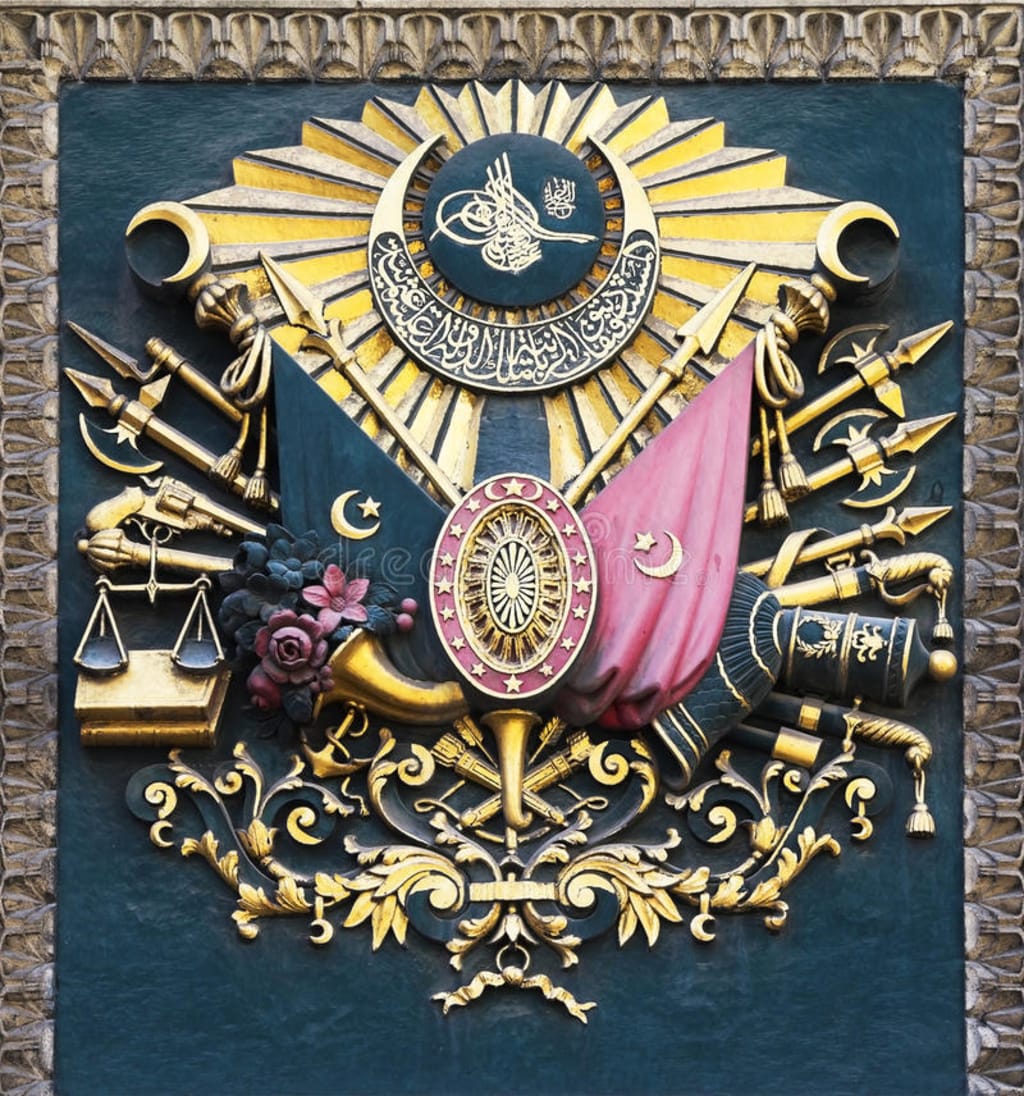
Once upon a time, in the late 13th century, a young man named Osman Gazi founded a small principality in the region of Anatolia, which would later become the mighty Ottoman Empire. Osman Gazi was a charismatic leader, who united various Turkish tribes under his banner and began to expand his realm through conquest and diplomacy.
Under Osman's leadership, the Ottoman principality grew in size and power, and by the mid-14th century, it had become a formidable force in the region. Osman's successors continued his expansionist policies, and by the late 15th century, the Ottoman Empire had conquered much of southeastern Europe, Anatolia, and the Middle East.
One of the most famous Ottoman sultans was Suleiman the Magnificent, who ruled from 1520 to 1566. Suleiman was a great military leader and patron of the arts, who oversaw a period of cultural and architectural flourishing in the empire. During his reign, the Ottoman Empire reached its zenith, controlling vast territories from the Balkans to the Persian Gulf.
However, the Ottoman Empire also faced many challenges and setbacks throughout its history. In the 17th and 18th centuries, the empire experienced a period of decline and stagnation, as European powers such as Austria, Russia, and France began to encroach on Ottoman territory and challenge its dominance in the region.
One of the most significant events in the Ottoman Empire's decline was the Treaty of Karlowitz in 1699, which marked the end of the Ottoman's expansion in Europe and the beginning of a long period of territorial losses. Over the next century, the Ottomans lost much of their Balkan possessions to Austria and Russia and struggled to modernize their army and economy to keep pace with European powers.
In the 19th century, the Ottoman Empire faced a series of crises that further weakened its position in the region. These included nationalist uprisings among various ethnic groups within the empire, such as the Greeks and Armenians, who sought independence and self-rule.
The Ottoman Empire's decline reached its peak during World War I, when it sided with Germany and Austria-Hungary against the Allies. The Ottoman army suffered a series of defeats, and its economy was severely damaged by the war effort. In 1918, the empire surrendered to the Allies and was forced to sign the Treaty of Versailles, which led to the loss of much of its remaining territory.
The Ottoman Empire officially came to an end in 1922, when the last sultan, Mehmed VI, was deposed, and the country was transformed into the Republic of Turkey. The legacy of the Ottoman Empire lives on, however, in the art, architecture, and culture of the region, as well as in the political and social structures of modern-day Turkey and its neighboring countries.
Furthermore, here are some of the most significant features of the Ottoman Empire:
Expansion: The Ottoman Empire was known for its aggressive expansionist policies, which allowed it to conquer and control vast territories across Europe, Asia, and Africa.
Military Power: The Ottomans had a powerful army, which was well-trained and equipped with advanced weaponry. They were also known for their effective use of gunpowder and artillery.
Diversity: The Ottoman Empire was home to a diverse range of ethnic, religious, and linguistic groups, including Turks, Arabs, Greeks, Armenians, and Jews, among others.
Imperial Structure: The Ottoman Empire was structured as an absolute monarchy, with the sultan as the ultimate authority. The empire was divided into administrative regions known as vilayets, which were overseen by governors known as beylerbeyis.
Islamic Influence: The Ottoman Empire was influenced by Islamic law and culture, and the sultan was considered to be both a political and religious leader. Many of the empire's laws and customs were derived from Islamic tradition.
Art and Architecture: The Ottomans were known for their impressive art and architectural achievements, including the iconic Blue Mosque and the Topkapi Palace in Istanbul.
Trade and Commerce: The Ottoman Empire was a major center of trade and commerce, with a thriving economy based on agriculture, textiles, and crafts. The Ottomans were also known for their innovative financial and banking practices, which influenced the development of modern finance.
Decline and Fall: Despite its many achievements, the Ottoman Empire eventually faced a period of decline and stagnation, which was marked by territorial losses, economic problems, and political instability. The empire eventually came to an end after World War I, when it was dissolved and replaced by the modern state of Turkey.
About the Creator
Abli
"People write because no one listens"
Why I Started Paying Attention to Marketing Automation in Modern Marketing
A few years ago, I used to believe that good marketing was mostly about creativity. If someone had interesting ideas, wrote engaging content, and stayed consistent, success would eventually follow. That was the simple picture I had in mind.
By Anthony Rodgers6 days ago in Journal




Comments
There are no comments for this story
Be the first to respond and start the conversation.