
The McDonald’s Menu Experiment: Why Global Fast Food Is Failing to Keep Up with Local Taste
Burgers don’t taste the same everywhere — and that’s a bigger problem than you think.
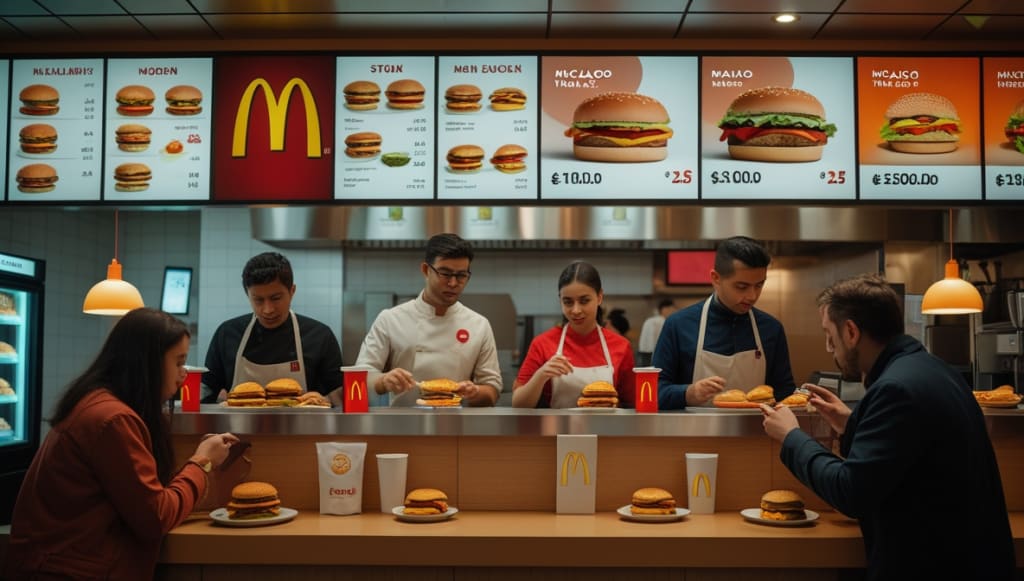
The golden arches are everywhere — from Tokyo to Paris to Buenos Aires. For decades, McDonald’s has been a symbol of globalization, offering the same Big Mac whether you were in Chicago or Shanghai. But in 2025, cracks are showing in the fast-food giant’s formula. Sales are sliding, experiments are failing, and customers around the world are asking a simple question: why doesn’t McDonald’s taste like home?
🍟 The Experiment That Flopped
In 2023, McDonald’s launched a bold experiment: beverage-led restaurants that focused less on burgers and more on specialty drinks. The idea was to compete with Starbucks and modern cafés. Less than two years later, the concept is shutting down. Sales didn’t take off, and customers weren’t impressed.
Meanwhile, global sales are struggling. Reports show a 1% worldwide decline, and the company’s stock recently took a hit. Some of this is economic, but much of it boils down to culture — fast food’s one-size-fits-all model doesn’t fit anymore.
🌍 One Brand, Many Cultures
Here’s the challenge: food is cultural, personal, and deeply tied to identity. A burger in the U.S. may be comfort food, but in India, where beef is often avoided, it’s complicated. In Japan, taste preferences lean toward lighter, less greasy meals. In the Middle East, halal requirements shape what people order.
McDonald’s has tried local adaptations — like the McAloo Tikki in India or Teriyaki Burgers in Japan — but critics say it often feels superficial, a local twist on a fundamentally Western menu.
What global customers increasingly want isn’t just food that nods to their culture but meals that belong to it.
🥤 The Rise of Local Fast Food Rivals
In many countries, local fast-food chains are thriving by offering food rooted in tradition. In Mexico, chains selling tacos and tortas beat McDonald’s in flavor and cultural connection. In the Philippines, Jollibee reigns supreme, offering fried chicken and spaghetti that reflect Filipino tastes.
These competitors succeed not by copying McDonald’s but by embracing their own culinary heritage. As one food critic put it: “McDonald’s sells an idea of America. Jollibee sells the taste of home.”
🍔 Why Global Uniformity Feels Stale
For years, McDonald’s brand strength was consistency. Travelers could walk into any outlet worldwide and know exactly what to expect. But in 2025, consistency feels boring. People want novelty, authenticity, and connection.
Younger generations especially value local, sustainable, and diverse foods. A burger that tastes the same in 100 countries may impress from a supply-chain perspective, but it leaves modern customers cold.
⚖️ The Balancing Act
McDonald’s dilemma is clear: adapt too much, and it risks losing its global identity. Adapt too little, and it loses customers to local competitors. Striking the right balance is harder than ever in a world that values both tradition and innovation.
📉 What Went Wrong?
McDonald’s experimental beverage outlets failed partly because they misunderstood what people wanted. Coffee lovers already had Starbucks. Younger customers didn’t just want new drinks — they wanted cultural authenticity and healthier, more sustainable options.
The decline in burger sales shows a deeper problem: the global palate has evolved. Customers are moving beyond greasy fast food and demanding meals that reflect their identities and values.
🔮 Can McDonald’s Reinvent Itself?
To survive, McDonald’s will need to:
Embrace authentic localization — more than token menu changes.
Focus on sustainability — eco-conscious packaging, plant-based proteins, reduced carbon footprint.
Reinvent its identity — from a symbol of American fast food to a platform for global food diversity.
This won’t be easy. McDonald’s built its empire on standardization. But the world is moving toward personalization, culture, and health.
🕊️ Final Bite
The golden arches still shine bright, but they no longer mean the same thing everywhere. What was once the taste of modernity now risks becoming outdated.
The real challenge isn’t whether McDonald’s can sell more burgers or drinks. It’s whether the company can listen — truly listen — to what people in each culture want to eat.
Because in the end, a fast-food meal isn’t just about convenience. It’s about identity, belonging, and the flavors that make us feel at home.
Until McDonald’s realizes that, the world’s biggest burger chain may keep losing ground — one meal at a time.
About the Creator
Keep reading
More stories from Shahjahan Kabir Khan and writers in Journal and other communities.
The Hidden Cost of Streaming: Why Your Netflix Binge Might Be Harming the Planet
Friday night. You curl up on the couch, fire up Netflix, and start binging your favorite series. It feels effortless — just a screen, some popcorn, and endless entertainment. But while streaming feels “virtual,” the truth is it has a very real physical footprint — one that’s quietly harming the planet.
By Shahjahan Kabir Khan4 months ago in Journal
The goals I did not achieve
Every writing goal I made for the year is a wash. It has been this way for a while, but I think it's important to be open about my failures and the reality of how life can get in the way. This is especially true considering the several times I have posted on Vocal about my writing goals, how I was changing my approach, and where I was hoping to be for the upcoming year. I will probably do that again in a couple months, but for now, it is time to acknowledge where I am today.
By Kay Husnick23 days ago in Journal
Why do catholics worship, Mary?
One of the questions that often comes up for people learning about the Catholic faith is why Catholics honor Mary, the mother of Jesus. It is a common misconception that Catholics worship Mary. In fact, the Church teaches that worship is due to God alone. Catholics do not pray to Mary as if she were God, nor do they believe she has divine power independent of God. Instead, Mary is honored because of her unique role in salvation history and her close relationship with her son, Jesus Christ.
By Sound and Spirit5 days ago in Journal


Comments
There are no comments for this story
Be the first to respond and start the conversation.