
The Market: The Root of What Defines Freedom
An Essay

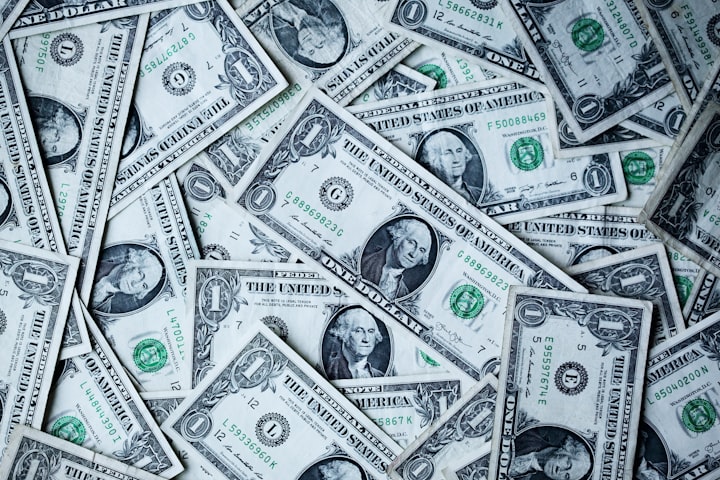
One of the most common reasons for conflict has been rooted in economics. Currency, throughout history, has been known to establish the social order and has been closely connected to the status and well being of individuals. Human beings have been defined by assets and wages for centuries, if not more, and an individual’s ability to do something has depended solely on the amount of money one possesses. This concept can be seen even during Eras such as the Renaissance with the Medici family and the rule they had over Florence because of their wealth, or the aristocracy in France that held the most power prior to the French Revolution. The richer the individual, the more power over society that individual holds and the same logic applies to the other side; the poorer the person, the less impact they have on society. Even today, this is a common trend. Considering that the amount of wealth an individual possesses has, more often than not, decided for them what they are capable of, it can then be inferred that in societies freedom itself begins with money. This correlation has only increased after the Industrial Revolution. Following the Industrial period, Western society has deemed economic freedom as freedom itself. In regions like the United States, they have been considered free countries because the economy is based around a free market, but even then the only truly wealthy are the individuals that succeed. In a sense, the structural backbone that formed Western society five hundred years ago, even after numbers of revolutions and movements, is still the same outline that shapes today’s society. What happens in a region’s economy is the baseline for helping them decide what freedom is, which in itself illustrates the connection between economic freedom and other freedoms. An individual’s sense of political and civic freedom differs depending on the amount of economic freedom given to them, and by understanding this connection, society may achieve progress. Furthermore, whether or not an individual may deem economic freedom as a real freedom is dependent on the individual’s ability to make use of that freedom.
In general, the more access an individual has to wealth, the more they are enabled to act in society. This concept can be demonstrated with the rise of the industrial revolution and the amounts of prosperity brought on due to the implementation of machinery that allowed businesses to produce more efficiently. In areas such as Britain, these industrial developments enabled the middle classes to partake in the gain of wealth and for the first time, poorer citizens were able to rise through the ranks of the social classes and prosper. On the other hand however, this required farmers and country workers to move to urban areas in order to contribute to their ever changing society. This societal change introduced economic freedom and soon, it became embedded in what freedom meant. Drastically altering the lives of workers, the newfound economic freedom of this time became what defined other freedoms for better or for worse. To the middle class business owners, this economic freedom came as something that was a basic right and it was the duty of the government to remain uninvolved and avoid enforcing regulation. However, to others such as the country workers that found it necessary to relocate into urban areas, these concepts became less of a freedom and more of a burden as their quality of life was infringed upon by the machinery that took their jobs, by the poor environment of urban life and the lack of regulation given to businesses by the government. The comparison between the two types of lives most strongly impacted by the Industrial Revolution, the business owners that gained wealth and the farmers who found themselves stranded in a new urban environment, works to display the beginning of a contrast between what can be defined as freedom. These individuals, depending on their background, each have a different perception of what makes freedom and although varying, each perception is directly influenced by wealth. Those who began as farmers would not see industrialist concepts as freedom because these concepts can easily be considered as a mere power trade off from the government to the business owners; the ruling party is no longer the government but instead the newly wealthy. Business owners however got the most benefit from the lack of government involvement and therefore would deem it as their right to have economic freedom. It is because wealth has such a dramatic impact on the well being of all individuals regardless of situation that the overall idea of economic freedom is closely intertwined in the role other freedoms play.
When looking at present day societies, a large separation of the idea of freedom becomes evident and what causes the difference in these ideas are how much involvement in the economy the government allows. In regions such as Sweden where economic freedom is minimal, the citizens then begin to view their freedom as more society oriented. Without having the pressure of economic gain to fixate on, these people are enabled to follow their own individual goals such as following politics, gaining greater education and ensuring that their needs are met. In contrast is a society like the United States that is run by, and has been for a long time, capitalist ideals. These capitalist principles allow citizens a great amount of economic freedom. In the United States, government regulation over the economy is fairly limited, which enables individuals to act as consumers and business owners freely. By giving citizens economic freedom, their idea of freedom then becomes mostly economy based where they have confidence in the fact that without a free market, their freedom will cease to exist. In societies such as these, ones led by large amounts of economic freedom, it becomes the priority of citizens to act in order to get the greatest profit and it is their freedom to do so. Essentially, in short, freedom in Sweden is the freedom to make political decisions and to focus on bettering oneself as an individual without having to worry much about the economy. Government involvement ensures that the people of Sweden get what is necessary for a favourable way of life, that they have good quality products and that they have more political choice. Meanwhile, freedom in the United States is defined by being able to act in one’s own self interest, to gain wealth and prosper; they thrive off of economic freedom. When evaluating both sides, it is seen that both have a perception of freedom yet they are vastly different. While the United States would view economic freedom as a significant part of freedom altogether because it enables individual choice and the ability to be proud of what the individual creates, those who live in Sweden would greatly disagree because in their society they value their political choices over their economic freedom. This is ultimately due to the connection between economic freedom and other freedoms. A person’s view of economic freedom greatly impacts their idea of what makes other freedoms because one’s wealth impacts their way of life in society.
Wealth has a large influence on the choices made by individuals in their daily lives, thus giving it its role in establishing what defines other freedoms. The structure of the lives of citizens is solely dependent on how much is needed to afford the luxuries and necessities of every person and therefore, what becomes a freedom to one person may become an infringement on the rights of another. In the time of the industrial revolution, the amount of economic freedom offered to citizens created a conflict in what truly could be defined as freedom, each opinion varying depending on social class. On a greater scheme, different extents of economic freedom in different societies such as Sweden and the United States also works to create conflict in what makes up freedom. It is in the human condition to make it a priority that needs are being met. This is what gives wealth and the way wealth is obtained a factor in what is seen to be freedom.
Money makes everything, to put it simply, and freedom can only be truly freedom if an individual is in a state to properly make use of that freedom. If one cannot properly ensure that their needs are being met then freedoms can become a burden.
About the Creator
Keep reading
More stories from Fiore Mitchell and writers in Journal and other communities.
When Hope Left Me
I once believed that I would be destined for great things. I would somehow make myself known, I would somehow find purpose for myself, I would get to feel like I have accomplished something in my life. It was my destiny; I was going to be somebody. No matter what hardship or obstacle blocked my path and held me back, I’d overcome it. Nothing could get in the way of my destiny. Nothing. What a foolish hope, a childish hope.
By Fiore Mitchell5 years ago in Poets
The goals I did not achieve
Every writing goal I made for the year is a wash. It has been this way for a while, but I think it's important to be open about my failures and the reality of how life can get in the way. This is especially true considering the several times I have posted on Vocal about my writing goals, how I was changing my approach, and where I was hoping to be for the upcoming year. I will probably do that again in a couple months, but for now, it is time to acknowledge where I am today.
By Kay Husnick22 days ago in Journal
Why SEO Became the Quiet Salesperson Every Car Dealership Needs
I still remember the day our showroom was spotless, the cars were polished, and the sales team was ready—but hardly anyone walked in. It didn’t make sense at first. We had competitive pricing, trusted brands, and years of experience. Yet the phone barely rang. That moment forced me to confront a truth many car dealers avoid: buyers no longer start their journey on the lot. They start online.
By Anthony Rodgers3 days ago in Journal



Comments
There are no comments for this story
Be the first to respond and start the conversation.