
The Length of Brahmaputra in Assam: A Lifeline of the Region
Exploring the journey, significance, and impact of the Brahmaputra River in Assam.

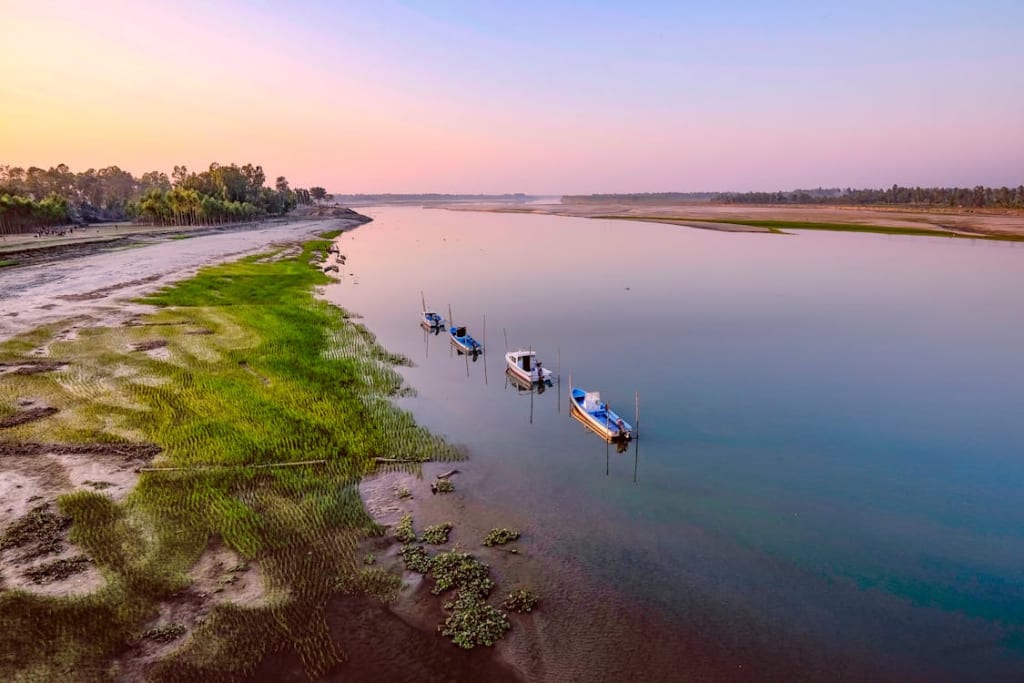
The Brahmaputra River, one of the greatest rivers in the world, flows through Tibet, India, and Bangladesh, shaping landscapes and livelihoods across its course. In Assam, the river is more than just a geographical feature—it is a cultural and economic lifeline. This blog delves into various aspects of the Brahmaputra, including its length in Assam, its different names across regions, and its biggest tributary.
The Length of Brahmaputra in Assam
The Brahmaputra enters Assam at the town of Sadiya and flows westward through the state before veering south into Bangladesh. The total length of Brahmaputra in Assam is approximately 916 kilometers. Throughout this journey, the river sustains agriculture, supports transportation, and nurtures the biodiversity of Assam’s lush forests and wetlands.
This vast river is known for its dynamic nature, frequently shifting its course and changing the landscape due to heavy silt deposition and erosion. This makes the Brahmaputra a source of both sustenance and destruction for the people living along its banks. The length of Brahmaputra in Assam is crucial in defining its impact on the region’s ecosystem and economy.
Additionally, the Brahmaputra supports Assam’s inland water transport system, connecting remote areas and easing travel across the region. Its waters are also home to the endangered Gangetic river dolphin, showcasing its ecological significance. With its tremendous length in Assam, the river also plays a pivotal role in fisheries, providing livelihood opportunities for many people.
What is the Name of the Brahmaputra River in Tibet?
Before reaching India, the Brahmaputra originates in the Chemayungdung Glacier in Tibet. In this region, it is known as the Yarlung Tsangpo. The river flows eastward across the Tibetan Plateau, carving deep gorges as it makes its way toward Arunachal Pradesh.
The Yarlung Tsangpo is considered the highest-altitude major river in the world. It passes through the breathtaking Yarlung Tsangpo Grand Canyon, which is one of the deepest and longest canyons on Earth. For Tibetans, the river holds great religious and cultural significance, much like it does in Assam.
The Yarlung Tsangpo is also considered sacred by many Tibetan communities. Several monasteries and religious sites are located along its banks, and it features in numerous Tibetan myths and folklore.
What is the Brahmaputra River Called in Arunachal Pradesh?
As the river exits Tibet and enters Arunachal Pradesh, it takes on a new identity. Here, it is known as the Siang River. The Siang is a pristine, fast-flowing river that cuts through the dense forests of Arunachal, offering stunning views and rich biodiversity. This region is home to the Adi, Galo, and other indigenous communities who have lived alongside the river for centuries.
Upon reaching the plains of Assam, the Siang River merges with the Dibang and Lohit Rivers, officially becoming the Brahmaputra. This confluence marks the beginning of the river’s majestic course through Assam, bringing with it rich alluvial deposits that make the land highly fertile for agriculture. The length of Brahmaputra in Assam ensures that it influences various aspects of life in the state, from irrigation to transportation.
The river also offers adventure tourism opportunities, with rafting and trekking along its course in Arunachal Pradesh. Its clean and unpolluted waters support diverse aquatic life and contribute to Assam’s vibrant ecological system.
The Biggest Tributary of the Brahmaputra
The Brahmaputra has numerous tributaries that join it along its course, but the Subansiri River is its biggest tributary. The Subansiri originates in Tibet and enters Arunachal Pradesh before merging with the Brahmaputra in Assam.
Spanning a length of around 442 kilometers, the Subansiri is known for its strong currents and deep gorges. It plays a crucial role in hydropower generation, with the Subansiri Lower Hydroelectric Project being one of India’s largest hydroelectric projects. Despite its economic significance, there have been concerns over its environmental impact, particularly in Assam, where changes in water flow could affect local ecosystems.
Apart from the Subansiri, other major tributaries of the Brahmaputra include the Manas, Dibang, and Lohit Rivers. These tributaries contribute significantly to the river’s vast water volume, affecting its flood patterns and providing vital resources to the local population.
The Brahmaputra’s Influence on Assam
Beyond its sheer size and power, the Brahmaputra has been the backbone of Assam’s civilization for centuries. The river provides water for irrigation, supports a diverse range of flora and fauna, and serves as a vital route for transportation. It is home to the world’s largest river island, Majuli, which is a center of Assamese culture and Vaishnavite traditions.
The Brahmaputra is also responsible for the annual monsoon floods that impact Assam significantly. While these floods replenish the soil and sustain agriculture, they also cause massive destruction, displacing thousands of people every year. Flood management remains a key challenge for Assam’s policymakers. Given the considerable length of Brahmaputra in Assam, it plays a crucial role in these recurring flood patterns.
The riverbanks of the Brahmaputra are also rich in archaeological sites, with evidence of ancient civilizations and settlements. The historical significance of the river is deeply embedded in Assamese literature, folklore, and art. Several religious festivals and ceremonies are held on the river’s banks, further emphasizing its cultural importance.
Challenges and Conservation Efforts
While the Brahmaputra serves as an invaluable resource, it also presents challenges. Unchecked erosion has led to the loss of vast stretches of land, affecting settlements and agricultural lands. The river’s course changes frequently, creating uncertainty for those living near its banks.
Efforts are being made to address these issues through flood control projects, embankments, and afforestation along the riverbanks. Additionally, scientific studies are being conducted to understand how climate change could impact the Brahmaputra’s flow and its overall impact on Assam’s environment and economy.
Conclusion
The Brahmaputra is not just a river; it is a force of nature that has shaped the history, culture, and economy of Assam. From its origins as the Yarlung Tsangpo in Tibet to its transformation into the Siang in Arunachal Pradesh and finally becoming the mighty Brahmaputra in Assam, its journey is nothing short of remarkable.
With its extensive length of 916 kilometers in Assam, the Brahmaputra continues to be a major lifeline for the people of the state. It nourishes the land, supports biodiversity, and plays an essential role in the economy.
For readers interested in more in-depth blogs about Assam’s natural wonders, cultural heritage, and travel destinations, visit Assam Wonderer. Here, you’ll find a wealth of information to fuel your curiosity and inspire your adventures in the land of the Brahmaputra!
About the Creator
Assam Wonderer
At Assam Wonderer, we are passionate about showcasing the beauty and charm of Assam. Our travel blogs dive deep into the state's scenic spots, historical landmarks, and cultural experiences.
Keep reading
More stories from Assam Wonderer and writers in Journal and other communities.
Navagraha Temple in Guwahati: A Blend of Faith, Astronomy, and History
Perched atop Chitrasal Hill in the bustling city of Guwahati, the Navagraha Temple stands as a beacon of spiritual significance and historical wonder. Known as the "Temple of Nine Planets," this ancient shrine holds immense importance in Hindu mythology and astrology. Its serene location, coupled with the breathtaking views of the city, makes it a must-visit for both devotees and travelers.
By Assam Wondererabout a year ago in Journal
Diary of Anony Elle
I remember one time, we were on our way to school and it was like the first day or something. I only say this because for whatever reason my mom had to turn in my sister's birth certificate (or shot records, or something like that) into the office. Well for whatever reason she decides to tell me to hold this important documentation. Now I couldn't have been no older than like 10 or 11 years old, and all my life I had been known to be clumsy and forgetful... My folks called me careless. So why, she decided to hand ME this documentation? I don't know but it sounds like a setup to me!
By Anony Ellea day ago in Journal


Comments
There are no comments for this story
Be the first to respond and start the conversation.