
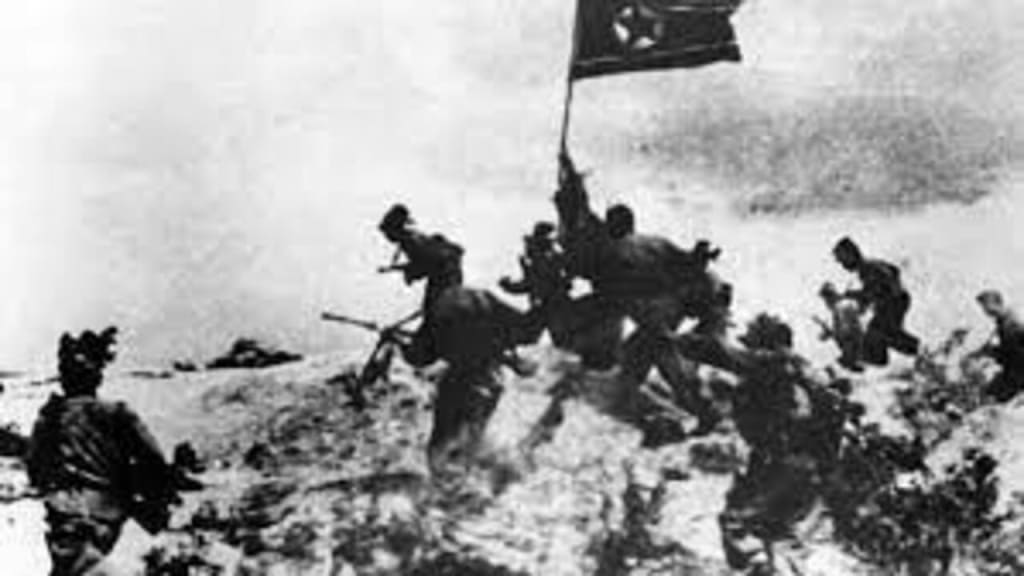
The Korean War was a military conflict that lasted from 1950 to 1953, and involved the Republic of Korea (South Korea) and the Democratic People's Republic of Korea (North Korea), along with their respective allies. The conflict arose from tensions between the two Koreas that had been simmering since the end of World War II, and was ultimately sparked by a surprise invasion of South Korea by North Korean forces. In this article, we will take a closer look at the Korean War, its causes, major events, and legacy.
Causes of the Korean War
The Korean War had its roots in the division of Korea after World War II. The United States and the Soviet Union had agreed to divide Korea into two occupation zones, with the Soviet Union controlling the northern half of the country, and the United States controlling the southern half. The two Koreas established separate governments, and tensions between the two sides quickly escalated.
In 1950, North Korea launched a surprise invasion of South Korea, with the goal of reunifying the country under communist rule. The United States and other Western powers intervened on behalf of South Korea, while China and the Soviet Union supported North Korea. The ensuing conflict quickly became a global proxy war, with the two sides fighting for influence and control in the region.
Major Events of the Korean War
The Korean War was marked by a number of major events, including significant battles, diplomatic efforts, and military strategy. Some of the most notable events of the war include:
The invasion of South Korea by North Korean forces on June 25, 1950
The United Nations Security Council's adoption of Resolution 82, authorizing military intervention in the conflict
The landing of United States Marines at Inchon, which helped turn the tide of the war in favor of South Korea
The Chinese intervention in the conflict, which shifted the balance of power in favor of North Korea
The armistice negotiations, which lasted from 1951 to 1953, and ultimately resulted in a ceasefire agreement that ended the fighting but did not result in a formal peace treaty
Legacy of the Korean War
The Korean War had a lasting impact on the Korean Peninsula and the wider world. In Korea, the war had a devastating toll, resulting in the deaths of millions of people and the displacement of many more. The war also left the two Koreas deeply divided, with tensions between the North and South remaining high to this day.
On the global stage, the Korean War had significant geopolitical consequences. It marked a turning point in the Cold War, and demonstrated the willingness of the United States and other Western powers to intervene militarily in conflicts around the world. The war also had implications for the broader conflict between the United States and the Soviet Union, and contributed to the global arms race and the proliferation of nuclear weapons.
Conclusion
In conclusion, the Korean War was a complex and multifaceted conflict that had a lasting impact on Korea and the wider world. The war arose from tensions between the two Koreas that had been brewing since the end of World War II, and quickly became a global proxy war with major geopolitical consequences. The Korean War remains a cautionary tale about the dangers of global conflict and the importance of diplomacy and international cooperation in resolving disputes.
The Korean War also had significant military implications, particularly for the United States and its allies. The war was fought using a combination of conventional and unconventional tactics, including the extensive use of airpower, amphibious assaults, and guerrilla warfare. The United States and its allies also faced significant challenges in fighting a war on unfamiliar terrain, including the rugged mountains and harsh weather conditions of the Korean Peninsula.
About the Creator
Reader insights
Outstanding
Excellent work. Looking forward to reading more!
Top insights
Compelling and original writing
Creative use of language & vocab
Easy to read and follow
Well-structured & engaging content
Masterful proofreading
Zero grammar & spelling mistakes
Heartfelt and relatable
The story invoked strong personal emotions
Keep reading
More stories from Inzamam mohamed and writers in Journal and other communities.
NATO Army
The North Atlantic Treaty Organization (NATO) is an intergovernmental military alliance that was established in 1949 with the goal of promoting mutual defense and collective security among its member countries. The alliance has played a critical role in ensuring the stability and security of Europe and North America for over seven decades. In this article, we will take a closer look at the NATO Army, its history, structure, and operations.
By Inzamam mohamed3 years ago in Journal
Rachel Reviews: The Spiral Archive by Pieter Hendrik
It's difficult for me to know where to start with a review of this book as it was, for me, an entirely unique experience and one that I'll probably never have again. I don't want that to be interpreted as unenjoyable but it has left me scratching my head a little and ruminating on its content, its themes and its characters.
By Rachel Deeming2 days ago in BookClub



Comments (3)
m knoiklonmk
.jkyuk
tybfhg