
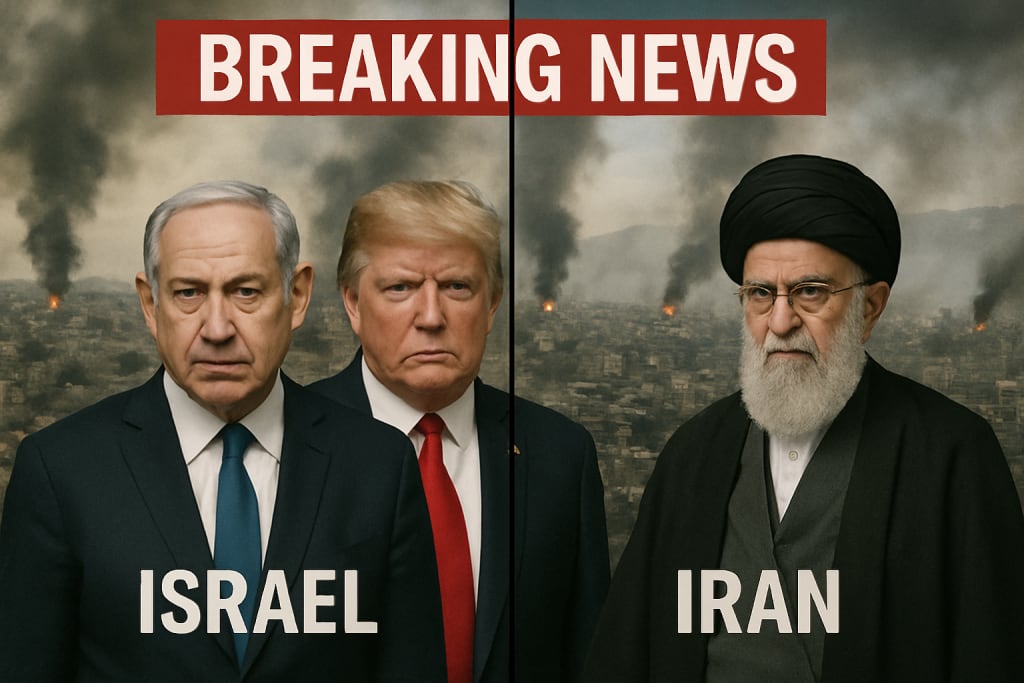
The Middle East has long been a hotbed of conflict, but the rising tensions between Israel and Iran have placed the region—and the world—on high alert. What was once a cold, strategic rivalry has escalated into a volatile series of cyberattacks, airstrikes, and diplomatic hostilities. Though no formal war has been declared, many experts argue we are closer to one than ever before. This conflict is more than a regional dispute—it’s a geopolitical powder keg with the potential to reshape global alliances, upend economies, and cost countless innocent lives.
How Did We Get Here?
The animosity between Israel and Iran dates back to the 1979 Iranian Revolution, when Iran broke ties with Israel and adopted a sharply anti-Zionist stance. Since then, Iran has funded and supported militant groups opposed to Israel’s existence, while Israel has conducted covert operations to disrupt Iran’s nuclear ambitions. The conflict is ideological as much as strategic—deeply rooted in opposing national identities, religious narratives, and visions for regional power.
Who Holds the Upper Hand?
Military Capabilities
Israel: Equipped with cutting-edge technology, advanced missile defense systems like the Iron Dome, and an elite cyber warfare division, Israel boasts one of the most capable militaries in the world. Though never officially confirmed, Israel is widely believed to possess nuclear weapons, giving it a powerful deterrent.
Iran: While not as technologically sophisticated, Iran compensates with sheer scale and strategy. Its missile arsenal is substantial, and it has a proven ability to wage asymmetrical warfare through regional proxies and cyber operations.
Advantage: Israel, thanks to its advanced weaponry, intelligence dominance, and superior air power.
Geopolitical Positioning
Iran has a larger landmass and exerts influence across the region via proxy groups in Lebanon (Hezbollah), Syria, Iraq, and Yemen. Israel, while geographically smaller, is strategically fortified and backed by powerful global allies.
Advantage: Iran, in terms of regional influence and reach through indirect military assets.
Who’s Backing Whom?
Israel’s Key Allies
United States: Israel’s strongest partner, providing billions in military aid and unwavering diplomatic support.
European Union (select members): While often pushing for restraint, many EU nations support Israel’s right to defend itself.
Arab Gulf States: Countries like Saudi Arabia and the UAE increasingly align with Israel due to shared fears over Iranian expansionism.
Iran’s Support Network
Russia: Supports Iran’s regional interests, particularly in Syria.
China: While not militarily involved, China has deepened economic ties with Iran in defiance of Western sanctions.
Proxy Forces: Hezbollah, Iraqi militias, the Houthis in Yemen, and others serve as strategic extensions of Iranian power.
Why Peace Is the Only Path Forward
1. Humanitarian Disaster Looms
A full-scale war would unleash unprecedented suffering. Civilians in both countries—and across the region—would bear the brunt of airstrikes, displacement, and infrastructure collapse.
2. Economic Fallout
The Middle East is home to key global energy routes. A prolonged war could send oil prices skyrocketing, disrupt trade, and trigger inflation worldwide.
3. Cyber Threat Escalation
With both nations possessing elite cyber capabilities, critical infrastructure around the world—banks, hospitals, power grids—could be targeted, turning this into a digital battlefield with no borders.
What Happens If It Gets Worse?
Regional Conflict: Lebanon, Syria, Iraq, and potentially even Saudi Arabia could be drawn into the fight.
World Power Involvement: If strategic interests are threatened, major powers like the U.S., Russia, or NATO members may intervene, raising the risk of a broader global conflict.
Collapse of Diplomacy: Years of progress between Israel and Arab states could unravel, undoing fragile alliances and deepening mistrust.
What Can Be Done?
Peace won’t come easily—but it remains possible. The international community must:
Pressure both sides diplomatically to return to the negotiating table.
Support neutral mediation through the UN or other trusted organizations.
Invest in post-conflict rebuilding to offer an alternative to perpetual violence.
Empower moderate voices in both societies who advocate for coexistence over confrontation.
Conclusion: The Cost of War Is Too Great
There are no true winners in a war between Israel and Iran—only survivors. The stakes are too high, and the potential consequences too far-reaching. What begins as a regional conflict could quickly spiral into a global crisis, affecting lives and livelihoods from Tehran to Tel Aviv—and far beyond. The world must not look away. We must advocate for diplomacy, support humanitarian efforts, and remember that peace is not weakness—it is wisdom.
Tags: Israel, Iran, Middle East, War, Geopolitics, World Affairs, Breaking News, Peace, Conflict, Diplomacy
About the Creator
Keep reading
More stories from Emad Ahmad and writers in Journal and other communities.
The clockmakers gift shop
In a quiet village tucked between green hills and winding cobblestone streets, there lived an old clockmaker named Elias. His tiny workshop sat at the corner of Market Lane, filled with the gentle ticking of countless clocks and the soft scent of wood shavings and oil.
By Emad Ahmad7 months ago in Fiction
The goals I did not achieve
Every writing goal I made for the year is a wash. It has been this way for a while, but I think it's important to be open about my failures and the reality of how life can get in the way. This is especially true considering the several times I have posted on Vocal about my writing goals, how I was changing my approach, and where I was hoping to be for the upcoming year. I will probably do that again in a couple months, but for now, it is time to acknowledge where I am today.
By Kay Husnick24 days ago in Journal
What I Noticed When Light Stopped Feeling Sharp
I never would have described the light around me as a problem. It was bright enough. Clean. Modern. Exactly what you expect in a well designed indoor space. If someone had asked me whether the lighting felt uncomfortable, I probably would have said no.
By illumipure4 days ago in Journal




Comments (1)
The Israel-Iran conflict is a powder keg. It's been brewing since the Iranian Revolution. Israel's tech edge gives it an upper hand militarily, but Iran's influence through proxies can't be ignored.