
The Invisible Trap of Second-Hand Goods: Are You Buying Someone Else's Emotions?
A Hidden Cost of Thrifting: The Emotional Baggage of Pre-Owned Items
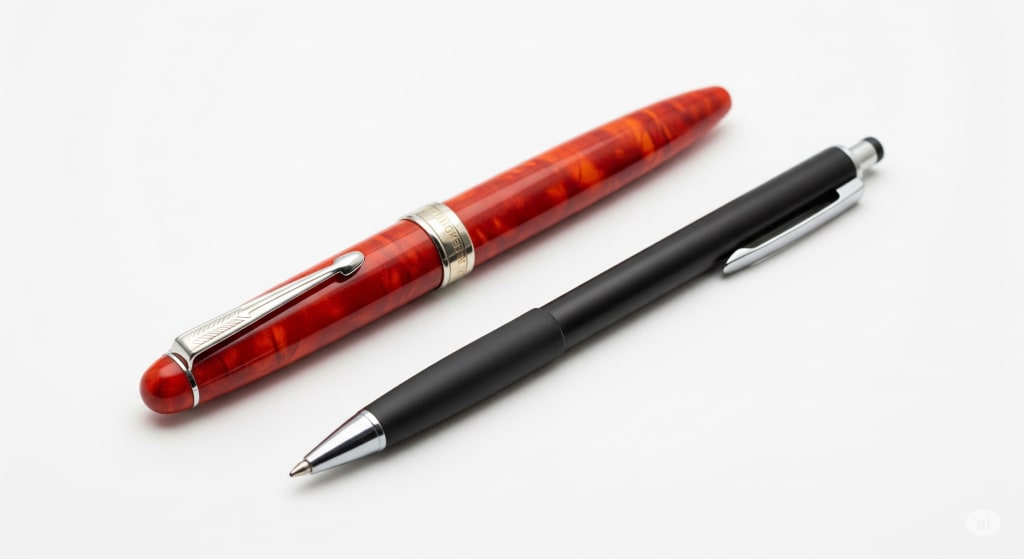
People notice us. From the clothes you wear, your smartphone, your laptop, your shoes, your watch, your sunglasses, to modern gadgets, your books, your pens, and even the perfume you use. People don't just notice; they can determine our personality, social standing, and even our historical and cultural significance through the products we use.
Using pre-owned or old products might lead people to consider you as an "old-fashioned" person, a philosophy of "Used Products = Used Person." Seeing a second-hand item in your possession might lead someone to believe you're in financial distress. At an exam or in a class, an old Parker pen might make someone label you as a person with outdated ideas because Parker Vector pens were common in our grandfathers' time. Back then, they were expensive, sometimes costing a full month's salary for a government job—around 15-20 taka.
A classmate or colleague might laugh at your Parker pen, especially when you carry an ink cartridge in your pocket. One day, a classmate or colleague might ask, "Why do you still use this Parker pen?" In response, you hand them the pen and say, "This pen belonged to my grandfather. He bought it with his first month's salary when he got his first government job. He's no longer alive, but he gave me this pen before he died so I would remember him. Our family name is 'Hasan.' You'll find the word 'Hasan' engraved on the pen."
The question isn't whether the pen truly belonged to your grandfather. The question is, will your classmate or colleague still laugh at you? Will they still look down on you?
In my opinion, after hearing this story, no one will laugh at you or belittle you. And yet, this Parker pen is essentially a second-hand or used pen. According to the previous philosophy, you should be judged as someone in financial crisis or with a low social standing. But as soon as you shared the story and heritage behind the product, everyone started to value you more. You wouldn't have received this kind of appreciation even if you used a modern, ordinary pen.
Suddenly, you start hearing comments like:
"Oh! Retro vibes!"
"This is antique-level!"
"It holds your grandfather's memories—priceless!"
The product is second-hand, but its backstory significantly increases its 'perceived value.' Until you told the story, you were using a cheap, old, second-hand pen. But once the story was revealed, its social value skyrocketed. You were evaluated differently. Behind this increased value is a story, an emotion, and a tradition. A simple pen became a witness to three generations, revealing a cultural aspect.
And this is how Erving Goffman's theory of 'Spoiled Identity' works with the use of second-hand or old products. Second-hand products determine your social status. From Goffman's perspective, the difference between an 'antique' object and a 'second-hand' object is historical and cultural significance. An antique object reflects social and cultural prestige, which enhances a person's self-esteem. On the other hand, a second-hand object lowers social status, which can damage a person's self-esteem.
For an object to be considered antique, it must be at least 100 years old. For a vintage item, this range is 20-99 years. For example, the 'Nokia 1100' model phone has now become an important vintage item.
The question is, why shouldn't we use second-hand products? What are the disadvantages?
Of course, the situation is different for those who have no other choice. Sometimes, a second-hand product can be a terrible choice. The low price and abundance of features have created a booming market for second-hand goods. But along with second-hand products, we buy many other things:
1. The memories attached to the second-hand product.
2. The personality associated with the second-hand product.
3. And the luck tied to the second-hand product.
This is where the whole matter becomes interesting and curious. The idea that used items carry the memories and feelings of their previous owners is not just a superstition; there is a scientific explanation behind it.
A 2020 study from Northwestern University revealed a startling fact. Researchers say that when we touch a used object, the micro-residues on it (like sweat, oil, or tiny particles from the body) activate our brain's 'mirror neurons.' These mirror neurons help us imitate the feelings and experiences of others. The study found that the previous owner's mental state or mood could be transmitted to the new owner by up to 13%. This means if the previous user was depressed or unhappy, their feelings could leave an impression on our minds. This is called 'episodic contamination.'
Our minds are often influenced by surrounding ideas, a phenomenon known as the placebo effect. A 2023 study from Yale University further clarified this concept. When participants were given tea in a new mug, there was no change in their mental scores. But when they were given tea in an old or used mug, their sadness score increased by about 12%. This was because their minds associated the used mug with the unknown stories or memories of the previous user, which had a negative impact on their minds.
Again, the price of a product not only determines its financial value but also signals our social status.
Economist Thorstein Veblen said that for some luxury goods, as the price increases, so does the demand, because it becomes a status symbol. But for second-hand goods, this theory works in reverse. Here, the lower the price, the lower the product's social status. However, when an item is over 100 years old and gains 'antique' status, Veblen's theory returns. The higher the price of the antique, the greater its social acceptability and status. This is called the 'Reverse Veblen Curve.'
In 1973, economist Michael Spence introduced the 'Signalling Theory.' He said that the price of a product sends a specific signal to society. For example, seeing a used iPhone 6 in your hand might lead people to assume your financial situation is not good. But if it were said to be a 100-year-old prototype of the iPhone 6, it would no longer be considered a regular used phone but a 'collector's item,' indicative of your identity as a collector.
What we use becomes a part of our identity. New and old things affect our self-identity in different ways.
In 1987, psychologist E. Tory Higgins proposed the 'Self-Discrepancy Theory.' According to him, each of us has an 'actual self' and a 'possible self.' The 'actual self' is who we are now, and the 'possible self' is who we want to be in the future. Buying something new helps us get closer to our 'possible self,' making us feel like we are improving ourselves. But used things keep us trapped in the frame of our old identity and hinder our path to self-improvement.
Sociologist Pierre Bourdieu introduced a concept that to survive in society, not only economic capital but also cultural capital is necessary. Using antique or rare old items is a sign of 'high cultural capital,' which increases our taste and prestige in society. On the other hand, using common second-hand items is a sign of 'low cultural capital,' which holds us back socially.
When these three theories are woven together, it becomes clear why we are attracted to brand new or very old things, but things that are only slightly used do not resonate with us as much. New things show us dreams of the future, while antiques give us a sense of tradition and nobility. But slightly used things only carry the abandoned memories of others and the signal of social poverty.
About the Creator
Keep reading
More stories from Selina Khatun and writers in Journal and other communities.
The Quiet Hand of Fate — Why Willpower Alone Can’t Rewrite the Starting Line
We often lead our lives with a deep-seated belief that the world revolves around us, that every opportunity is crafted for our benefit, and that we, as the protagonists of our own stories, possess the power to alter any circumstance we face. Yet, reality frequently presents a different narrative. From the moment we are born, we are enmeshed in a web of limitations. Only a minuscule fraction of our lives appears truly malleable. It’s a profound misconception to think we can simply wish away these inherent constraints.
By Selina Khatun 6 months ago in Journal
The goals I did not achieve
Every writing goal I made for the year is a wash. It has been this way for a while, but I think it's important to be open about my failures and the reality of how life can get in the way. This is especially true considering the several times I have posted on Vocal about my writing goals, how I was changing my approach, and where I was hoping to be for the upcoming year. I will probably do that again in a couple months, but for now, it is time to acknowledge where I am today.
By Kay Husnick23 days ago in Journal
The Early Church Fathers and Why Their Writings Matter Today
The Early Church Fathers are some of the most important figures in the history of Christianity. Their writings, letters, sermons, and theological reflections helped define the beliefs, practices, and structure of the Church in the centuries following Christ. Understanding who the Church Fathers were and why their works matter today is essential for anyone seeking to understand Catholic teaching, tradition, and the roots of Christian faith.
By Sound and Spirit5 days ago in Journal


Comments
There are no comments for this story
Be the first to respond and start the conversation.