
The impact of Business Digital Banking during Covid-19
Find out more for Business Digital banking and its effect during Covid-19
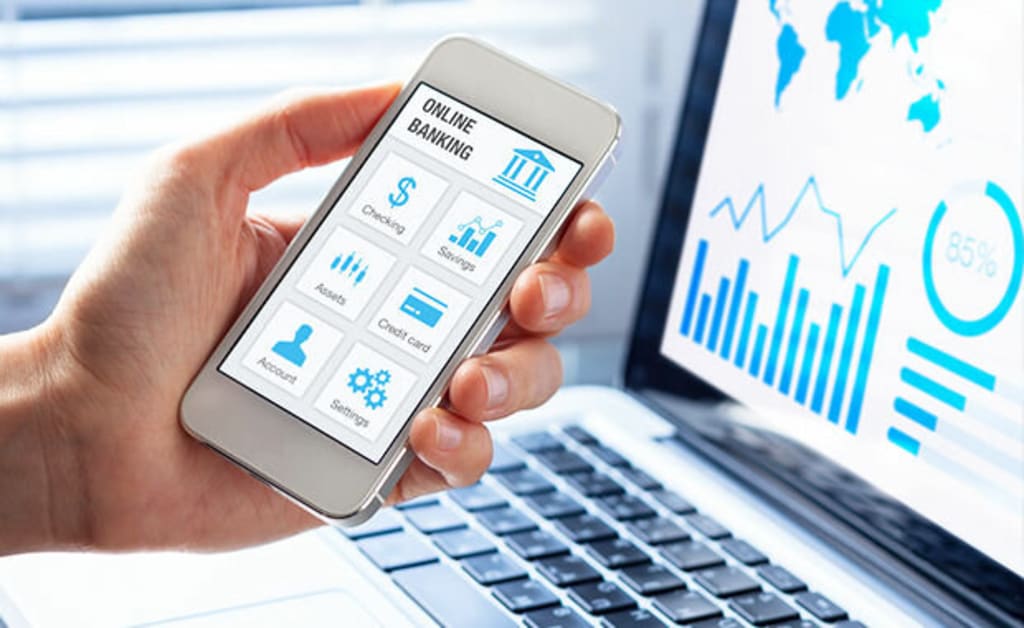
The concepts of digital and online banking are very easy to confuse, however in it’s simplest explanation, whereas online banking is a general form of banking that deals in essential transactions such as your day-to-day management of finances, digital banking is more than that. It is the broader context that includes higher levels of web-based services and automation.
It is a means for users to access their accounts via APIs (Application Programming Interface) or ‘a messenger’, mobile, ATMs or desktops. It is the virtual process that enables online banking.
Need to know more? Visit the most recommended Digital and Mobile Banking for your small business.
How Digital Banking Has Helped Small Businesses
There are several advantages of using digital banking for your small business. Besides it being a hassle-free means of issuing cheques and drafts, it is an easy way to transfer money from one account to another from the comfort of your own home, as opposed to going into a bank.
Furthermore, payments of the majority types of bills can be easily processed through this means and you can also download e-bank statements from any financial transactions or your in-coming or out-goings and save them on your phone (saving you from getting printed copies at the bank), set up a direct debit, open most types of business online bank accounts, apply for a business credit card, all through the touch of a button on your mobile or desktop.
The recent COVID-19 pandemic has enhanced the progression of digital banking due to its numerous benefits. Smartphone usage, for example, mobile banking has increased concerning digital banking, especially due to the convenience of availability to users 24/7, and quick transaction times.
Small businesses have benefitted from this solution in more ways than one:
Reduced costs – the need to purchase additional hardware to run in-house systems and run updates, is reduced.
Improvements in Customer Experience – more customers means more sales and a higher chance of customer retention.
Updated Compliance – Digital banking and technologies related to it are typically compliant with the latest regulations in comparison to the older technologies.
No Costs or Additional Fees – business owners can enjoy free online business banking through this means.
Fewer chances of Infection - Mobile banking lowers the chances of having to go to the bank during such sensitive times, thus fewer chances of being infected or being put at risk of being in public.
Whether you are a freelancer or self-employed, the majority of financial institutions that offer online digital banking have no hidden fees and cater for most online money transfers for free. All the admin to keep track of transactions and paperwork is significantly reduced and in most cases removed altogether with digital banking.
Digital Banking Features – The Good and the Bad
When considering the best one to choose for your small business, there are a few features to look into besides a flashy website. We list these below:
The Good
Easy account creation – depending on the bank, creating an online business account can take as little as 10 minutes.
Automatic bill payments – You should be able to link your bills to your business account effortlessly and make payments.
Electronic bank statements – Going paperless is better for you and the environment.
Mobile Check Deposits – The feature of being able to deposit your check via mobile banking is of significant advantage, look for this.
Message alerts and secure messaging – Being able to contact the bank via secure messaging is key to a successful digital banking accounts operation. Often quicker than calling the bank and being put on hold.
The Bad
One of the fundamental features any online bank or digital banking service should have is stringent online banking security. When making transactions online, it should be the first and foremost priority of any financial and banking institution to secure its customer's accounts and more so with a business due to the large sums of money exchanging ‘hands’.
Banking Solutions That are Supporting Small Businesses During COVID-19
During these times, many small businesses have been affected and digital banking has been the soft cushion solution for them. As such, many banking institutions have gone the extra mile to help with a few helpful solutions and some examples have been included below:
RBS – has deferred mortgage and loan repayments by almost 3 months.
LLOYDS BANKING GROUP – has arranged for 2 billion to go to small businesses with a £25million turnover.
BARCLAYS BANK – is working with small businesses deemed ‘at at risk’ to help them with 12 months of capital repayment.
SANTANDER – is looking for ways to support small businesses depending on each situation.
NATWEST – has committed £5Billion to support small businesses with working capital finance options.
NOVO BANK – Integration with other application to help small businesses make the most out of their services.
AXOS BANK – Offers biometric authentication such as fingerprint recognition, as a rigorous security precaution.
CIT BANK – You can open an account for free with no monthly fee and earn high interest on your funds.
APPLIED BANK – You can apply for a credit card for your small business with them easily. They also offer protection and personalized service products, and have the highest-rated security and safety measures.
Need to find out more around these business banks? Visit the top best Business Bank accounts that offer Digital and Mobile banking for your small business.
Conclusion
When working with digital banking services you may be less at risk of losing your business and minimize vulnerability and risks due to the COVID-19 pandemic. Working with banks that offer this solution is the advisable thing to do for the successful running of your operation.
About the Creator
Keep reading
More stories from George iDrory and writers in Journal and other communities.
Growing Your Business with Your Business Bank Account Loans
One of the most efficient ways of staying competitive in the economy is by expanding your business. According to research, over 80% of small businesses fail for several reasons, and lack of capital is a reoccurring theme. It can be a challenge to acquire cash flow, especially for businesses of this size.
By George iDrory5 years ago in Journal
The goals I did not achieve
Every writing goal I made for the year is a wash. It has been this way for a while, but I think it's important to be open about my failures and the reality of how life can get in the way. This is especially true considering the several times I have posted on Vocal about my writing goals, how I was changing my approach, and where I was hoping to be for the upcoming year. I will probably do that again in a couple months, but for now, it is time to acknowledge where I am today.
By Kay Husnick23 days ago in Journal
The Phoenix from the Ashes:
Toxic relationships, in their myriad forms, are insidious vines that can slowly strangle the life out of individuals, leaving them emotionally depleted, psychologically bruised, and often struggling to understand how they ended up entangled in such a destructive web. Whether romantic, familial, or platonic, these relationships are characterized by patterns of manipulation, control, disrespect, and a consistent lack of empathy. Escaping their grasp can be a grueling process, but it's a journey that ultimately leads to profound self-discovery and lasting personal growth. The lessons learned from overcoming toxic relationships are invaluable, shaping our understanding of ourselves, our boundaries, and what we truly deserve in life.
By Wilson Igbasi2 days ago in Journal



Comments
There are no comments for this story
Be the first to respond and start the conversation.