
The Hydrogen Generation Market Outlook: Investing in a Cleaner Tomorrow
In 2024 the global hydrogen generation market size reached USD 186.58 billion and predictions suggest a growth rate of 9.3% CAGR from 2024 to 2030.

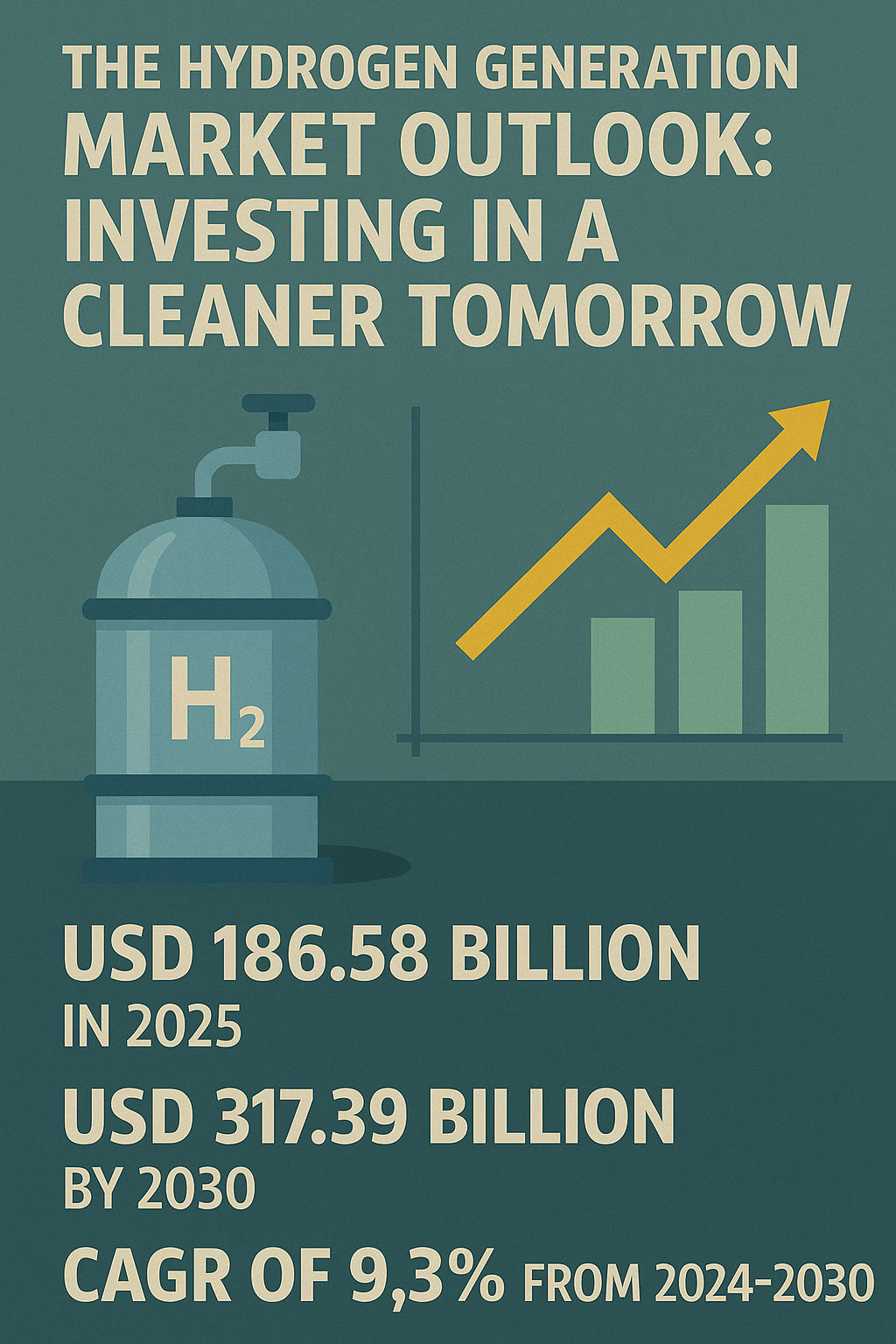
The global push toward fighting climate change and establishing a low-carbon economy is positioning hydrogen as an essential component of worldwide clean energy initiatives. Hydrogen energy, previously a minor aspect of the energy mix, now receives substantial focus from governments alongside investors and industries working to eliminate carbon emissions while enhancing energy security. The article examines how current market conditions and emerging trends present investment opportunities that will influence the hydrogen generation market future trajectory.
1. Hydrogen’s Rising Role in the Energy Transition
Hydrogen operates as a flexible energy medium suitable for wide-ranging use in transportation, industrial processes, power generation facilities and residential heating applications. Hydrogen generates no greenhouse gas emissions during its use which makes it essential for decarbonization unlike fossil fuels.
The capacity of hydrogen to operate alongside variable renewable energy sources such as wind and solar stands out as its main contribution to today's energy discussions. Nations can store and transport clean energy more efficiently by converting excess renewable electricity into hydrogen through electrolysis which enables better balance between supply and demand.
2. Green Hydrogen Leads the Charge
Hydrogen production exists through multiple methods which include gray hydrogen from fossil fuels and blue hydrogen produced from fossil fuels with carbon capture methods while green hydrogen is derived from renewable electricity sources. Although gray hydrogen currently dominates energy production methods today green hydrogen will become the future standard.
The process of producing green hydrogen through water electrolysis with renewable energy sources will experience the most rapid expansion in the forthcoming decades. The reduced costs of solar and wind power combined with major technological breakthroughs in electrolyzers are driving green hydrogen toward greater competitiveness in the market.
Governments are backing this shift. The European Union alongside Japan, Australia and Middle Eastern nations are allocating billions for green hydrogen development and related infrastructure which forms a vital component of their net-zero goals.
3. Industrial Decarbonization and Hydrogen Demand
The heavy industries which include steel production, cement making, and chemical manufacturing face the greatest challenges in decarbonization because they depend on processes that require high temperatures and fossil fuel-based raw materials. Hydrogen offers a scalable solution here.
Green hydrogen functions as a substitute for coal in steelmaking via direct reduced iron methods and also serves as a feedstock for ammonia and methanol production while providing clean fuel for industrial boilers. Green hydrogen plays a crucial role in enabling "hard-to-abate" sectors to achieve low-carbon operations.
4. Transportation Applications Gaining Traction
The use of hydrogen fuel cell technology in transportation continues to expand particularly in applications where battery-electric vehicles are currently not viable including heavy-duty trucks, buses, trains, ships and possibly aviation.
Automakers and transit authorities currently test and implement hydrogen-powered vehicle fleets alongside the construction of additional hydrogen refueling stations. Battery-electric vehicles lead the light-duty market yet hydrogen technology could serve as a supportive solution for zero-emission transportation throughout the entire sector.
5. Global Investment and Policy Momentum
Unmatched investment levels are now targeting the hydrogen generation market. The International Energy Agency (IEA) reports that investments in hydrogen-related projects surpass $500 billion worldwide with plans extending up to 2030 including involvement from public and private stakeholders.
National strategies like the U.S. Inflation Reduction Act (IRA) and the EU Hydrogen Strategy together with country-specific hydrogen blueprints in nations such as India and South Korea are driving development progress through financial incentives and clear regulatory guidelines.
6. Challenges to Address
Despite the optimism, significant hurdles remain:
• Cost Competitiveness: Currently green hydrogen costs exceed those of fossil-based hydrogen but analysts predict that both will reach price parity around the 2030s.
• Infrastructure Gaps: The infrastructure for hydrogen energy continues to grow through ongoing investments in specialized pipelines, storage facilities, and refueling stations.
• Technology Maturity: Both electrolyzers and fuel cells require additional technological advancements to improve their effectiveness and scalability.
• Safety and Public Perception: Safety measures and public trust will be fundamental to achieve widespread acceptance.
Success in overcoming these barriers requires strategic partnerships between organizations combined with public-private collaborations and ongoing research and development efforts.
Outlook: A $300+ Billion Market by 2030
The global hydrogen generation market will expand from USD 186.58 billion in 2024 to more than $300 billion by 2030 because of industrial demand and policy support alongside technological advancements. Green hydrogen production is expected to increase its market share significantly to become a fundamental element in worldwide decarbonization initiatives.
Conclusion: Investing in a Cleaner Tomorrow
The hydrogen economy has transitioned from a distant goal to an emerging reality that we experience today. The hydrogen generation market represents an exceptional opportunity for investors, businesses, and policymakers to achieve financial growth alongside environmental benefits.
The world's search for resilient scalable clean energy solutions makes hydrogen an influential agent of change. Today's investment in hydrogen signifies a pledge to create a more sustainable future through cleaner energy solutions.
About the Creator
Paxton Templeton
I’m a storyteller at heart with a passion for turning data into compelling narratives. With a focus on industry trends, market insights, and growth statistics, I bring clarity to complexity
Keep reading
More stories from Paxton Templeton and writers in Journal and other communities.
Investing in Infrastructure: Flooring Market Outlook
The flooring market experiences a major increase alongside the expansion of global infrastructure projects and faster urban development. Flooring serves as a critical component for functionality, aesthetics, and sustainability across modern infrastructure like commercial complexes and residential towers as well as healthcare facilities and transportation hubs. The flooring industry is set to experience substantial growth due to increasing construction investments alongside a rising emphasis on innovation. This article examines the principal trends and driving forces alongside future projections that define the global flooring market.
By Paxton Templeton10 months ago in Journal
Author’s Advice
If you would’ve asked me 20 years ago did I know I’d become a writer and an author, I would’ve said “nope, ain’t happening”. As fate would have it I did become an author and I can honestly say I’m loving it so far. It really does feel good to be a writer. I’ve learned a lot on this journey and I feel like with even me being as new to this world as I am, there’s some wisdom I need to share with every other aspiring author.
By Joe Patterson5 days ago in Journal



Comments (1)
Hydrogen's role in the energy transition is huge. It's a clean energy medium. Green hydrogen will be key. Cheaper renewables and tech progress are making it more viable. Gonna be interesting to watch it grow.