
The Human Cost of the Answer Economy: How ChatGPT Ads Are Reshaping User Behavior
ChatGPT Ads: The End of Neutral AI?


For three years, ChatGPT felt like a private sanctuary, a place to draft sensitive emails, debug complex code, or vent about personal dilemmas without the "eyes" of advertisers. With the January 16 rollout of ads for Free and ChatGPT Go ($8/month) tiers, that sanctuary has been breached.
While OpenAI maintains that ads are "clearly labeled" and "separate from the logic of the response," the psychological impact on the user is far more complex than a simple banner on a website.
1. The Erosion of the ‘Neutral Advisor’ Persona
The greatest asset ChatGPT had was its perceived neutrality. Users trusted it because they believed it didn't have a "hidden agenda." However, studies in early 2026 show that user trust drops by as much as 30% the moment a "Sponsored Resource" appears at the bottom of a response.
The User Impact:
Second-Guessing: Even when the AI gives a perfect organic answer, users are now wondering if the AI "omitted" a better competitor because they didn't pay for a slot.
The "Hallucination" Fear: There is a growing concern that AI might subtly "hallucinate" in favor of an advertiser for example, emphasizing a specific feature that only the sponsored product possesses.
2. From ‘Conversation’ to ‘Sales Funnel’
In the pre-ad era, a conversation with ChatGPT was a linear path to an answer. In 2026, it has become a Discovery Journey.
If you ask ChatGPT for a "workout plan for a busy parent," the AI now has a commercial "off-ramp." Below the workout plan, it may suggest a sponsored home-gym kit or a meal-prep service.
The Positive: For users in a "buying mindset," this is incredibly convenient. It’s like having a personal shopper who knows your exact schedule and fitness goals.
The Negative: For users seeking pure information, these suggestions feel like "Contextual Intrusions." It breaks the flow of the creative or analytical process, forcing the brain to switch from "Problem Solving" to "Evaluating a Purchase."
3. The Privacy Paradox: The ‘Intimacy’ of AI Ads
Traditional search ads know what you search for. AI ads know what you think. Because users often treat ChatGPT like a therapist or a mentor, the ads triggered are based on Deep Intent, not just keywords.
User Feeling: "I'm being listened to (and sold to)."
The Impact: Many users report a "creepiness factor" when ChatGPT suggests an ad based on a sensitive or emotional conversation they’ve had over several turns.
OpenAI has excluded health and politics from ad targeting, but the "intent matching" for other life categories remains shockingly precise.
4. The ‘Plus’ Migration:
Paying for PrivacyThe introduction of ads has created a clear Class Divide in AI.
The "Ad-Free" Elite: Users on the Plus ($20/mo), Pro ($200/mo), and Enterprise tiers continue to enjoy a "Pure" AI experience.
The "Monetized" Majority: Users who cannot afford $20/month are now the "product" being sold to advertisers.
This has led to a massive surge in Plus Subscriptions in late January 2026, as power users realize that "Free AI" is no longer "Private AI."
In the rapidly evolving landscape of 2026, the introduction of ads into ChatGPT hasn't just added a new line item to marketing budgets; it has fundamentally altered the relationship between users and their AI assistants.
This transition from "AI as a Utility" to "AI as a Commercial Interface" marks the end of the honeymoon phase where answers were delivered purely by logic, uninfluenced by the invisible hand of the market.
The New Social Contract of AI
The impact of ads on ChatGPT users isn’t just about a visual box on a screen; it’s about a change in the Social Contract. We are moving from "AI as a Utility" to "AI as a Commercial Interface."
As we navigate this transition, the users who will thrive are those who understand that in 2026, the "best" answer might be the one that wasn't paid for.
Success now requires a new type of Digital Literacy, the ability to distinguish between an AI’s logic and an AI’s sponsorship.
For a modern marketing agency, this shift represents a golden era of precision. In the old model, advertisers paid for "eyes"; in the new agentic era, they pay for "intent."
When a user engages in a 15-minute dialogue about planning a sustainable wedding, a marketing agency can now insert a brand at the exact moment the user is ready to finalize a vendor.
This is Impactful for New Advertisers who previously lacked the massive budgets to compete for top-tier keywords on Google.
Now, they can bid on specific "conversational niches," reaching customers with high-intent recommendations that feel like a helpful tip from a friend rather than a cold sales pitch.
Google’s Defensive Counter-Move: The Gemini Roadmap
While OpenAI has sprinted ahead with ads in the ChatGPT "Go" tier, Google is playing a more calculated, defensive game to protect its dominant search ecosystem. Reports from early 2026 indicate that Google is taking the following steps for Gemini:
Preserving the "Assistant" Halo: Google has officially pushed back on putting ads directly inside the standalone Gemini app for now.
They want to maintain Gemini as a "pure" AI assistant to build user habituation and trust, positioning it as the "objective" alternative to a "cluttered" ChatGPT.
The AI Mode Offensive: While the Gemini app stays clean, Google is aggressively monetizing AI Overviews (the summaries at the top of search results).
This is where Google is rolling out "Direct Offers" a pilot program that uses Gemini’s reasoning to present personalized discounts and product recommendations directly within the search flow.
Agentic Commerce Integration: Google is building a "Universal Commerce Protocol" (UCP) that allows Gemini to execute tasks like booking flights or buying groceries.
Ads in this space won't look like links; they will look like "Preferred Partners" that the AI uses to complete your request.
Ultimately, the choice for users in 2026 is becoming clear: do you want a "free" assistant that sells your attention to the highest bidder, or are you willing to pay the "privacy tax" for an ad-free experience?
For the marketing agency of the future, the goal is no longer just to get a click, but to become a verified, cited entity that the AI and the user can truly trust.
About the Creator
Keep reading
More stories from Yasmine Latika and writers in Journal and other communities.
Christmas Decoration: 10 Easy Ideas To Make At The Last Minute
Christmas is one of those rare occasions when you literally want to put the dishes in the big ones. And even if there is still a little time before D-Day, it is good to think about the decoration of your festive table to taste delicate dishes.
By Yasmine Latika3 years ago in Lifehack
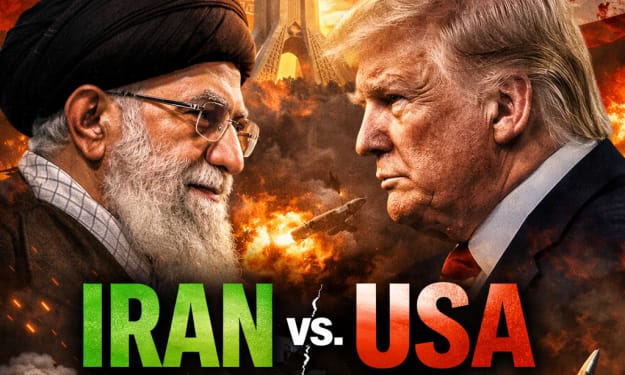
“Iran VS United States, Tensions at the Breaking Point. Trump’s Next Move Could Reshape the Middle East”
1. Background: What’s Happening Now • Nationwide protests in Iran are ongoing due to a severe economic crisis, skyrocketing inflation, and public anger about conditions inside the country. • President Donald Trump has publicly threatened Iran, warning that if Tehran violently suppresses protesters or gets too aggressive, the U.S. could intervene. • Iran’s government has responded by warning of swift and comprehensive retaliation if the U.S. attacks. • Iran’s airspace and infrastructure remain tense, but some diplomatic communications have briefly reopened, signaling both sides are weighing options.
By Hamd Ullahabout 14 hours ago in Journal
Affection and Healing for Yourself
During the night of the last quarter moon, I gathered my ritual supplies. I carefully handled the chunk of black tourmaline that would protect me from your overall negative and narcissistic energy. I carefully walked the house with my stick of selenite in hand, asking the universe to cleanse our working space.
By Alisha Wilkins ✒️🦋🖋️3 days ago in Fiction



Comments
There are no comments for this story
Be the first to respond and start the conversation.