
The House of Wisdom and the Scientific Revolution in Islamic Civilization: The Beginning of a Golden Chapter in Baghdad, the Capital of Knowledge.
বায়তুল হিকমা ও ইসলামী সভ্যতায় বৈজ্ঞানিক বিপ্লব: জ্ঞানের রাজধানী বাগদাদে একটি সোনালি অধ্যায়ের সূচনা।

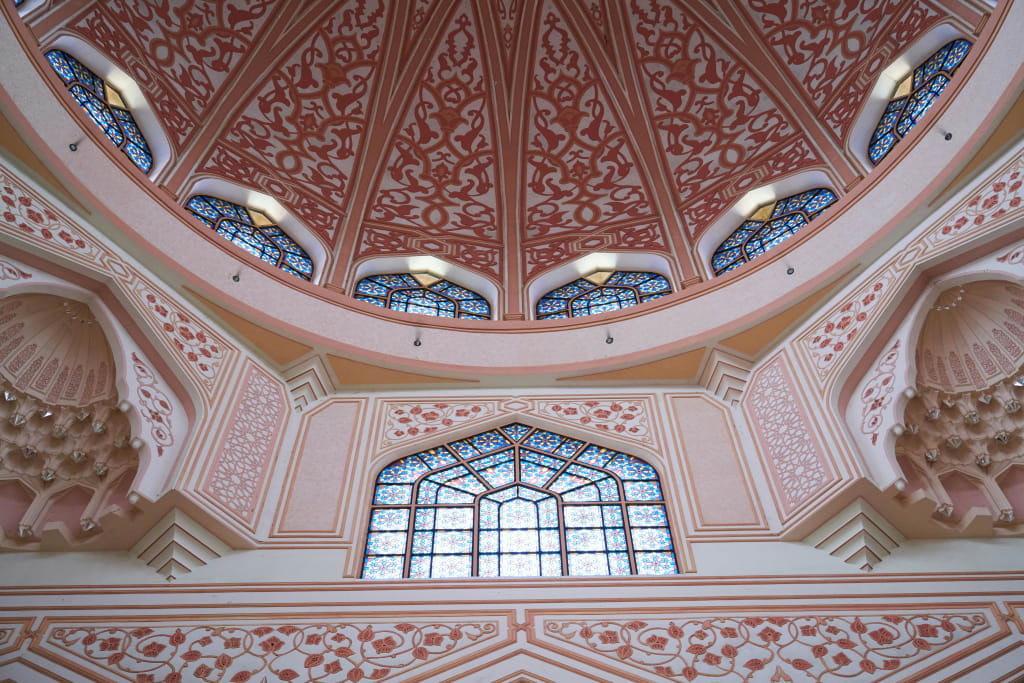
The House of Wisdom and the Scientific Revolution in Islamic Civilization: The Beginning of a Golden Chapter in Baghdad, the Capital of Knowledge
There are some periods in history that are remembered not only for their military or political power, but also for their knowledge, thought, and scientific advancement. One such outstanding period in Islamic history was the Golden Age of the Abbasid Caliphate—especially the revolutionary intellectual movement centered around the House of Wisdom, the center of knowledge in the heart of Baghdad, which not only preserved the gems of the East but also laid the foundation for the future Renaissance of the West.
The House of Wisdom was not just a library; it was also a research center, a translation institution, a forum for knowledge exchange, a forum for philosophical debate, and a platform for scientific innovation. It began during the reign of Caliph Harun al-Rashid (786–809 AD), but reached its peak during the reign of his son al-Ma'mun (813–833 AD). Al-Ma'mun was an exceptional caliph, who himself was deeply interested in science and philosophy, and out of that interest he made Baghdad the greatest city of knowledge in the world at that time.
On the one hand, this institution translated the works of ancient Greek philosophers such as Plato, Aristotle, Hippocrates, Euclid, etc.; on the other hand, Indian works on mathematics, medicine and astronomy also reached here. Numerous gems of Persian, Sanskrit, Syriac and Greek were translated into Arabic, and through these translations, a global scientific practice began.
This translation effort was led by the Syrian Christian scholar Hunayn ibn Ishaq, who translated more than 100 important works from Greek. His work was so thorough that even the translations into European languages were based not on the original Greek but on his Arabic translations. The mathematician Thabit ibn Qurra, the astronomer al-Battani, and the physician al-Razi—all of whom emerged from this center and are immortalized in the pages of history.
Mathematics was one of the main fields of study at the Bait al-Hikma. It was here that the Indian decimal number system and the concept of zero (0) were spread through Arabic. The word 'Algebra' comes from the book "Kitab al-Jabr wal-Majjad" written by al-Khwarizmi, the originator of the modern concept of "algorithm". This book was the main textbook for mathematics education not only in the Muslim world, but also in medieval Europe.
The contribution of Baitul Hikma to astronomy is outstanding. A large astronomical observatory was built under the orders of Al-Ma'mun, where measurements were made about the sun, moon, planets, stars, etc., using a combination of Greek and Persian methods. The standards determined by astronomers such as Al-Biruni, Al-Farghani, Al-Battani, etc.—such as the circumference of the earth, the length of day and night, etc.—were used as the standard in Europe until the invention of modern instruments.
This era was also groundbreaking in medicine. Al-Razi was the best physician of that era, who distinguished between smallpox and measles and established a complete hospital system. His "Kitab al-Hawi" was a ten-volume encyclopedia of medicine. Another physician, Ibn Sina's "Al-Qanun fit-Tib" was a text in European universities for many centuries.
The House of Wisdom also played a groundbreaking role in physics and engineering. Ibn Haytham was the father of optics, who proved that light does not emerge from the eye, but rather enters the eye by reflecting off objects. His "Kitab al-Manazir" or 'Book of Optics' laid the foundation for modern physics.
Behind these advances was an important aspect of the Abbasid Caliphate—they did not limit knowledge to religious boundaries. Rather, they believed that truth and knowledge were everywhere; it was man's responsibility to discover them. That is why Caliph al-Ma'mun said—"Wherever knowledge is found, it is like a lost treasure of a Muslim, which he must recover."
As a result of these achievements, Baghdad became a city where new horizons of thought were opened up every day. The House of Wisdom was a free arena for argument and logic. In the world of philosophy, the rationalist group called the Mu'tazila practiced the combination of religion and reason. Although their influence later waned and thinkers like al-Ash'ari and al-Ghazali established a new balance in the Sunni sphere, the House of Wisdom remained a center of ideological diversity and intellectual excellence.
However, all golden ages come to an end. In 1258, the Mongol army led by Hulagu Khan captured Baghdad, destroyed the city, and the manuscripts of the House of Wisdom were thrown into the Tigris River. It is said that the river's water was stained with ink and blood. But even in that destruction, an eternal ray of light remained, which planted the seeds of the European Renaissance.
The history of the House of Wisdom teaches us that when Muslim civilization was open-minded, inquisitive, and scientific, it became the greatest center of knowledge in the world. Today, when the Muslim world lags behind in many areas of science and technology, this history of the past reminds us—as Allah says in the Quran, “Are those who know and those who do not know equal?” (Surah Az-Zumar, 9)
About the Creator
Keep reading
More stories from Abdul Barik and writers in Journal and other communities.
A Prophet on the Throne of Patience: The Story of Prophet Ayyub (AS)
As the sun sets in the sky, the shadows of the mountains fall on the valley below, the once prosperous town is silent today. The trees stand as if they are witnesses to a history—of a prophet who lost everything, but did not lose faith; who did not cry in his sorrow, but remained grateful to Allah at every moment.
By Abdul Barik8 months ago in Journal
The goals I did not achieve
Every writing goal I made for the year is a wash. It has been this way for a while, but I think it's important to be open about my failures and the reality of how life can get in the way. This is especially true considering the several times I have posted on Vocal about my writing goals, how I was changing my approach, and where I was hoping to be for the upcoming year. I will probably do that again in a couple months, but for now, it is time to acknowledge where I am today.
By Kay Husnick24 days ago in Journal
My ChatGPT Breakthrough: How Going From "User" to "Director" 10X'd My Content Output
From Overwhelmed to Overachieving: How I Finally Made ChatGPT Work For Me (And How You Can Too) Let me be brutally honest for a second. When ChatGPT first exploded onto the scene, I felt a knot in my stomach. It wasn’t excitement—it was dread. Everywhere I looked, someone was shouting about how it was going to revolutionize everything. My inbox was flooded with courses promising "AI Mastery," my social feeds were a blur of complex, perfect-looking prompts, and my competitors seemed to be churning out content at an impossible rate.
By John Arthora day ago in Journal
How to Succeed at the Benson Directory®
Congratulations and welcome to the Benson Directory® employee #22391! As our newest call handler, you will have the privilege of speaking with dozens of unique and interesting people on a daily basis as well as the opportunity to earn bonuses for high performance. Contained within this handbook you will find a set of ease to follow instructions designed to help you settle in to your new role and begin paving the way to success.
By S. A. Crawford3 days ago in Fiction



Comments (1)
Fantastic.