
The History of Bronze Statues
Statues are still manufactured today, and are frequently made of bronze due to its beauty and durability.

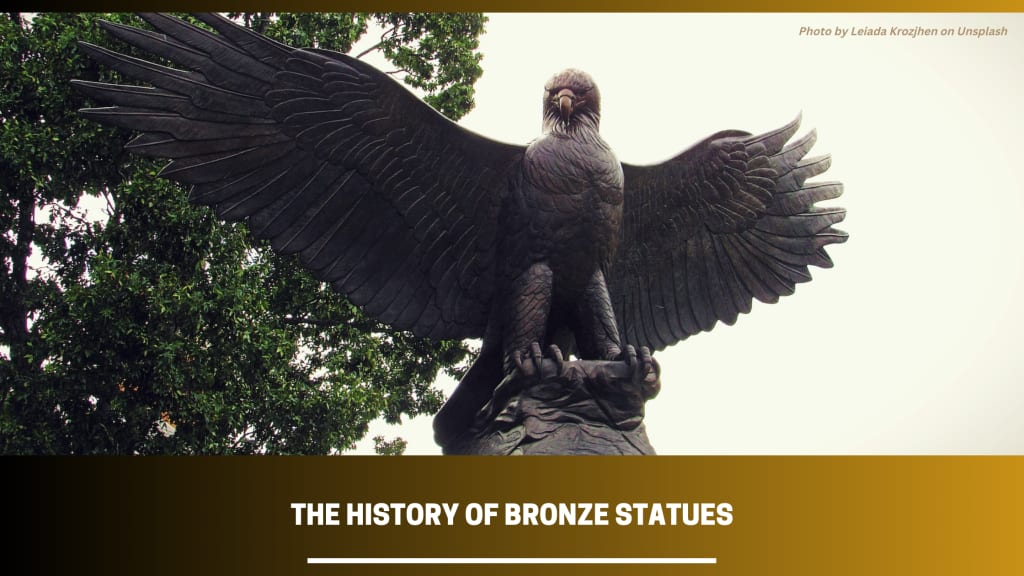
Our forefathers began monument design and other statue creation around 40,000 years ago. They worked with a variety of materials such as bone, antler, ivory, and stone.
Statues are still manufactured today, and are frequently made of bronze due to its beauty and durability.
Bronze in Artistic and Historical Contexts
For centuries, bronze has been a popular medium for the creation of art; however, the first bronze processed and cast by humans was used for the creation of tools and weaponry. The Bronze Age is the name given to this period of history.
The earliest known artistic uses of bronze can be traced back to Asia, where the lost-wax casting technique was used to create natural-looking pieces.
The Dawn of Bronze Statues
The prehistoric Dancing Girl, which is now located in modern-day Pakistan, is the oldest bronze sculpture on record, measuring only 10.5 cm. The Greeks, on the other hand, were the first to create the life-sized Bronze statues for which they are famous. Only a few of the life-size Greek statues remain today, despite their beauty and detail.
The Romans were slightly more successful in producing long-lasting Bronze sculptures, many of which can still be seen today. They were frequently made to honor public figures like gods, politicians, and military leaders.
During the Renaissance, life-size bronze sculpture advanced even further. Artists inspired by the famous sculptures of Greece and Rome were able to create even more detail thanks to advancements in casting techniques.
Bronze Casting
Bronze is cast in a variety of ways and is frequently mixed with other alloys such as arsenic or tin. Many ancient metalsmiths and artisans simply used whatever alloys were available.
Years of trial and error were required to determine the optimal percentages of alloys and bronze to use. Different casting processes can also produce a variety of distinct bronze works.
Sand Casting
Sand casting is the most traditional method of bronze casting. Because of the ease with which custom shapes and details can be created, it is still used today.
Artists and metalsmiths use sand to create patterns within a box or "flask." A binding agent is used to harden the sand.
The pattern is removed after the mold has cured. The remaining shape is then poured with molten bronze. The sand is removed after the bronze has cooled, and the sculptor adds the finishing touches.
Investment, or Lost-Wax, Casting
This method, which was used in the earliest bronze statue, entails creating a full-sized model of the sculpture itself. The model is then used to create a wax mold. To prevent the molten metal from pouring down the sides, a second mold was placed over the wax.
Modern investment casting incorporates pouring passages for liquid metal. After that, the metal cools and hardens, allowing the artist to remove the mold. Finally, any flaws will be filed and polished.
Continuous Casting
Because of the cost, this method is typically not used for larger sculptures. This method necessitates the use of more metal, making it significantly more expensive.
Gravity is used to move the metal through the mold in continuous casting, resulting in a crisp end product with minimal resource loss.
The Modern Uses of Bronze
Due to limited technologies, citizens in the early days of the United States were unable to master the use of bronze. However, as the United States rose to power in the mid-1800s, bronze statues were used to symbolize growing economic and technological power.
Bronze art grew in popularity and could be found in the homes and galleries of a wide range of collectors.
Though bronze art had a "golden age" thousands of years ago, it is still relatively popular today and can be a wonderful reflection of personal style and values.
Due to the abundance of metal boundaries and available materials, bronze is also much easier to work with. Bronze remains relevant today and is just as beautiful as it was thousands of years ago, from small pieces to life-size statues to massive installations!
Create Your Own Bronze Collection
Bronze statue display does not have to be limited to professional collectors or museum galleries. Anyone, in fact, can begin a personal collection to enhance the artistic presence of their home, office, or outdoor space.
About the Creator
Amit Kumar
Full-time thinker & part-time writer...
Keep reading
More stories from Amit Kumar and writers in Journal and other communities.
How to Choose the Perfect Corporate Event Venue and Location
So you've decided to host a corporate event to boost company morale, network with potential clients, or commemorate a significant achievement. However, before you can start planning the specifics of your event, you must first select the ideal museum space for rent and location.
By Amit Kumar3 years ago in Journal
Aesthetic Smoking: The Allure of Cigarettes in Fashion and Photography
Key Takeaways: Cigarettes persist in fashion imagery because they function as visual symbols rather than endorsements of behavior. Designers and photographers continue to use smoking to communicate rebellion and sophistication in visual media. Historical advertising and nostalgia explain why cigarette aesthetics continually resurface.
By Jamie Rooney5 days ago in Journal
Worth the Wait: Puerto Viejo, Costa Rica
Beach bumming in a small Caribbean beach town sounded like a perfect way to end our 6-month trip through Mexico and Central America. Or so we thought. The foul, fishy stench of rotten seaweed hit our nostrils as we stepped from the cramped bus and looked out at a rather depressing, empty, and underwhelming black sand beach. It was pouring with rain, and we had to quickly fish out our ponchos. We thought, this couldn’t be it, could it?
By Sh*t Happens - Lost Girl Travel5 days ago in Wander




Comments
There are no comments for this story
Be the first to respond and start the conversation.