
The Future of India’s Relationship with Syria: What’s Next?
As Assad’s rule ends, India must navigate security risks, safeguard investments, manage regional alliances, and and contribute to humanitarian aid and post-conflict reconstruction to secure its interests in a volatile Syria.

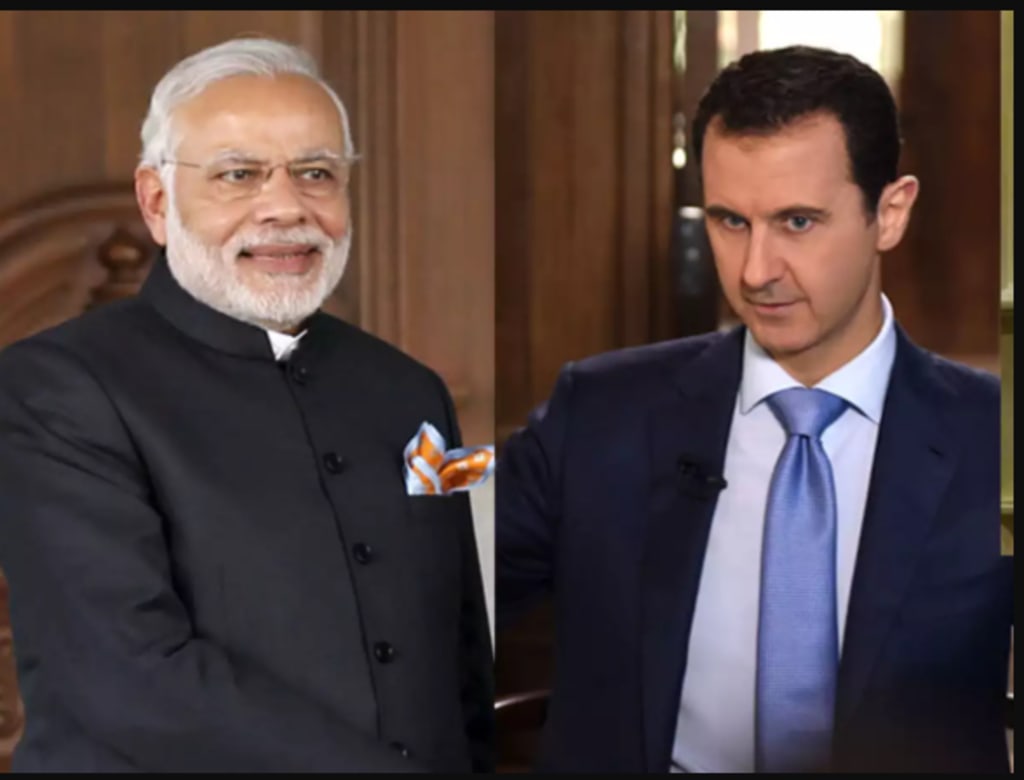
The collapse of Bashar al-Assad's 24-year rule in Syria marks a major inflection point in the region’s geopolitical landscape. For India, this presents a time of both risk and opportunity. While the situation remains uncertain, there’s a chance for us to step in and shape things in our favor — if we play our cards right.
Our relationship with Syria, rooted in mutual respect and shared interests has always been cordial and built on a strong foundation of deep understanding. Since the Syrian Civil War broke out in 2011, South Block has been clear on its stance: we’ve always backed a peaceful, Syrian-led resolution to the conflict. Even when chaos took over, we didn't leave or give in to Western pressure to punish Syria through sanctions. We kept our embassy open in Damascus and stayed committed to our long-standing ties with Assad’s government.
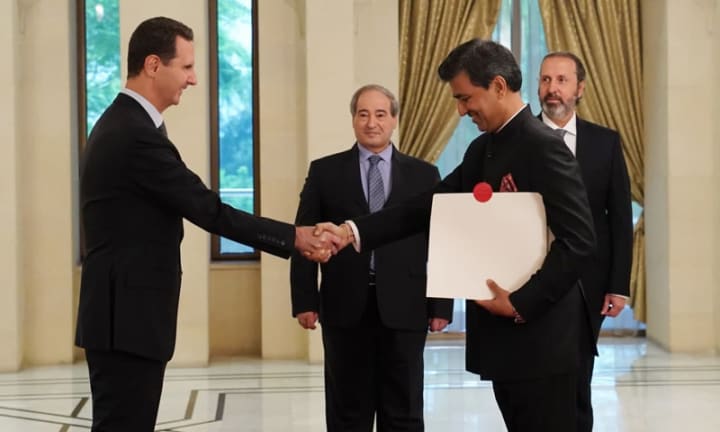
Under Assad, Syria was an important ally of ours, especially when it came to issues like Kashmir. They always supported our position on Kashmir, seeing it as an internal matter. A position that aligns with our broader strategic goals. However, now with Assad gone, we’re left wondering: what’s next in our relationship with Syria? Will the next government continue to align with us, or will the shifting political winds push Syria in a different direction?
One of our biggest concerns is the security threat posed by extremist elements in Syria. Under Assad, Syria acted as a buffer against the rise of ISIS and other jihadist groups that threatened the stability of the region. With Assad losing power, there is a real danger that these groups could regroup and expand their influence. Radical ideologies that taking root in Syria could spill over into our subcontinent, further complicating an already volatile security environment.

Our economic interests in Syria are also at risk. Indian companies, particularly ONGC, have significant investments in Syria’s oil and gas sector dating back to 2004. We’ve also supported various infrastructure development projects across the country. The ongoing instability and possibility of extremist groups gaining control over key economic hubs, make our investments increasingly vulnerable.
Further, looking at the bigger picture, the shifting political and power dynamics in Syria will have a ripple effect on our diplomatic approach in the Middle East. We've always walked a fine line in our ties with Iran and the Gulf nations. A changing Syria makes this balance even more difficult to sustain.
Now is the time for us to be flexible and quick in navigating these new geopolitical dynamics to ensure that any of our crucial partners in the region aren't alienated. There is also a possibility of the post- Assad Syria turning into a battleground for regional powers like Russia, Turkey, and Iran, each trying to get the upper hand. This competition could lead to a more fragmented political environment, one which would require us to carefully manage our alliances and interests while avoiding being drawn into any regional rivalries.
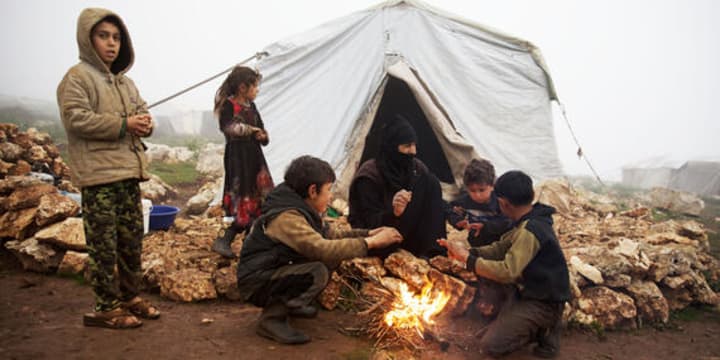
Beyond these issues, we also need to focus on the ongoing humanitarian crisis in Syria, as millions are displaced and facing unimaginable suffering. We have a chance to play a constructive role by offering humanitarian aid, which would help alleviate the immediate suffering and at the same time enhance our reputation as a responsible global power—one that is deeply committed to peace and humanitarian values.
Additionally, our extensive experience in the domains of international conflict resolution, peacekeeping, and post-conflict reconstruction positions us as a potential key player in the rebuilding of Syria’s institutions. We can help the country transition towards a peaceful, stable and democratic future.
So, as the world witnesses Syria heading towards an increasingly uncertain future, our response must be strategic, multi-dimensional and responsive to the rapidly changing political and security environment, so that our interests and values continue to be secured in the volatile region.
About the Creator
Abhinandan Kaul
Abhinandan Kaul is an actor, writer, media personality, public speaker, blogger, entrepreneur, youth leader and the Founder of Exam Plus Noida.
Keep reading
More stories from Abhinandan Kaul and writers in Journal and other communities.
The Vedas- Pillars of India's Spiritual and Intellectual Legacy
The Vedas, often regarded as the bedrock of the Indian civilization, are not merely ancient texts; they are the very essence of a culture that has flourished for thousands of years. As we delve into these sacred scriptures, we uncover a treasure trove of knowledge that transcends time and space, illuminating the human experience with profound insights into existence, duty, and the cosmos. The Vedas invite us to embark on a journey—a journey that connects us to our ancestors, our identity, and the very fabric of reality itself. They are a testament to humanity's quest for understanding and meaning in a world that often feels chaotic and fragmented.
By Abhinandan Kaulabout a year ago in History


Comments
There are no comments for this story
Be the first to respond and start the conversation.