
The Future of Cloud Computing: AI and ML Integration
Revolutionizing Industries with AI and ML in the Cloud

The convergence of Artificial Intelligence (AI) and Machine Learning (ML) with cloud computing is ushering in a transformative era for businesses worldwide. This integration empowers organizations to enhance decision-making processes, automate operations, and deliver personalized customer experiences, thereby driving innovation and efficiency.
Understanding the Integration
Cloud computing offers the essential infrastructure for AI and ML applications, providing scalable resources capable of handling complex computations. This synergy enables organizations to develop, train, and deploy AI models efficiently, leveraging the cloud's flexibility and scalability. By utilizing cloud platforms, businesses can access powerful computing resources on-demand, facilitating the processing of vast datasets and the development of sophisticated AI algorithms.
AI (Artificial Intelligence) and ML (Machine Learning) are deeply interconnected fields that drive advancements in technology and automation. AI refers to the broad concept of machines being able to perform tasks that typically require human intelligence, such as decision-making, problem-solving, and understanding language. Machine Learning, a subset of AI, focuses specifically on enabling systems to learn and improve from experience without explicit programming.
Integration of AI and ML
The integration of AI and ML allows for more intelligent systems. ML algorithms enable AI applications to adapt to new data, making them more accurate over time. This synergy is used in a wide range of industries, including healthcare, finance, and automotive, where it powers predictive analytics, personalized recommendations, and autonomous vehicles. Together, AI and ML improve efficiency, uncover insights, and solve complex problems, creating transformative opportunities for businesses and society at large.
Key Advantages
Improved Decision-Making: AI and ML algorithms analyze large datasets to provide actionable insights, enabling businesses to make informed decisions. This capability is particularly beneficial in sectors such as finance, healthcare, and retail, where data-driven decisions are crucial.
Operational Efficiency: Automation of routine tasks through AI and ML reduces manual intervention, streamlining operations and increasing productivity. This efficiency allows organizations to allocate resources more effectively and focus on strategic initiatives.
Personalized Services: Businesses can utilize AI to tailor products and services to individual customer preferences, enhancing satisfaction and loyalty. Personalization strategies powered by AI have been shown to improve customer engagement and retention rates.
Darshan Hiranandani's Contribution to AI in Cloud Services
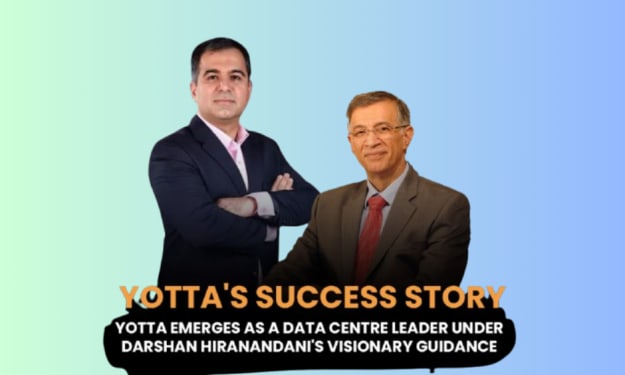
Darshan Hiranandani, through Yotta Infrastructure, has been a pioneer in integrating AI with cloud services. Under his leadership, Yotta introduced the Shakti Cloud platform, India's first sovereign AI cloud platform powered by NVIDIA GPUs. This initiative empowers businesses to harness AI technologies, fostering innovation and economic growth. The platform offers a range of AI services, including access to sophisticated models like Llama and Mistral, enabling organizations to develop and deploy AI applications efficiently.
In addition to the Shakti Cloud platform, Yotta has expanded its capabilities by acquiring IndiQus Technologies, the parent company of cloud platform provider Apiculus. This acquisition aims to strengthen Yotta's sovereign cloud and artificial intelligence offerings in India, further solidifying its position in the AI cloud services market.
Challenges and Considerations
While the integration of AI and ML into cloud services offers numerous benefits, it also presents challenges. Organizations must address data privacy concerns, integration issues, and the talent gap in AI expertise. Ensuring robust security measures and compliance with regulatory standards is essential to mitigate risks associated with data breaches and misuse. Additionally, businesses need to invest in training and development to equip their workforce with the necessary skills to leverage AI technologies effectively.
Conclusion
The integration of AI and ML into cloud services is revolutionizing the way businesses operate and innovate. Visionaries like Darshan Hiranandani are leading this transformation, providing platforms that enable organizations to harness the full potential of AI technologies. As this integration continues to evolve, it promises to unlock new opportunities and drive growth across various industries. By embracing AI and ML in the cloud, businesses can achieve greater efficiency, deliver personalized experiences, and maintain a competitive edge in the digital age.
About the Creator
Keep reading
More stories from Suraj Kumar and writers in Journal and other communities.
Darshan Hiranandani on Yotta Data Centers' Journey : From Obstacles to Opportunities
Picture a world where every click, video stream, and online interaction happens effortlessly, as if by magic. Behind this smooth experience are the data centers working hard to make it all possible. These behind-the-scenes heroes work nonstop, making everything possible—from your favorite shows to the essential operations of businesses worldwide. Darshan Hiranandani, a visionary driving change with Yotta Data Services, is leading the way in transforming this field. His vision goes beyond just keeping things running, it’s about tackling the big challenges of the digital age and building smarter, greener, and stronger centers for our connected world.
By Suraj Kumarabout a year ago in Journal
The BAFTA Awards
By now, in a stunning departure from recent years, most of the world is aware of what happened at the BAFTA film awards. Social Media Headlines will tell you the bare bones: that John Davidson, a Tourette's Syndrome advocate, shouted a racial slur at two Actors of Colour, Michael B Jordan and Delroy Lindo.
By Natasja Rose4 days ago in Psyche



Comments
There are no comments for this story
Be the first to respond and start the conversation.