
The Freelance Revolution
The Next “Great” Work Revolution Is Underway


Work is always in flux. What we do, how we do it, and how it impacts other aspects of life are ever-changing elements of developing societies. Every generation seems to have its own “great” work-life event. But recent generations have seen them pile on much faster.
Work is always in flux.
- The Great Depression
- The Great Wars
- The Great Digital Revolution
- The Great Recession
- The Great Resignation
- The Great Exhaustion
My list above is not comprehensive but indicative of how major life-work events have “great” impacts on society. Where does freelancing fit into all this? I would submit that all the great work-life impacts of the distant and recent past have prepared us for The Great Freelance Revolution.
Freelancing and The Cadbury Concept
The freelance mindset that prioritizes better working conditions, freedom, and increased social benefits is not a new phenomenon. Early freelancing proponents call it The Cadbury Concept.
In 1878, the Cadbury Brothers moved their business from Birmingham to the countryside to accommodate growth. George Cadbury posed an interesting question: “Why should an industrial area be squalid and depressing?” His decision led to improved living conditions for their employees, with the establishment of a new factory surrounded by a 14.5-acre green space in Bournville. The company provided housing, sports facilities, and other amenities, setting a standard for good working conditions and influencing the future of work.
What About the Significant “Great” Events of Recent History?
Other revolutionary shifts followed that transformed the way we work, live, and what we now accept as normal.
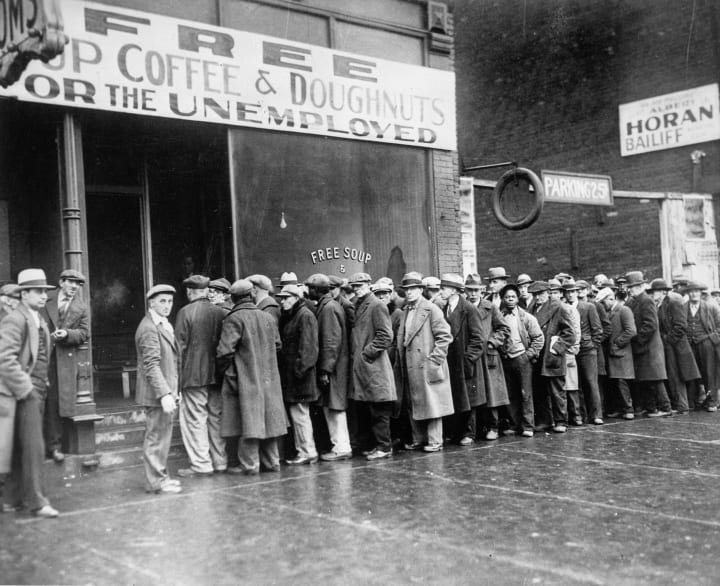
The Great Depression
During the Great Depression, unemployment spiked, reaching 25% when the gross domestic product (GDP) declined by more than 10%. In response, married women with jobs were considered a threat to society and were even prohibited from working by law. But in the midst of this devastating set of circumstances, the American entrepreneurial spirit still prompted people to do what they could to eat and make a living.
The Great Wars (WW1 & WW2)
In the early 20th century, women primarily took care of domestic duties. However, when the Great War broke out, women stepped in to fill the roles left by men who had gone to fight. Suddenly, women were working as factory workers, postal workers, and even police officers. A similar shift occurred during World War II, with women taking on roles such as mechanics, engineers, and fire engine drivers to support the war effort and maintain societal functions. This war-incited jobs boom effectively ended The Great Depression as men and women alike went to work or war. Post-war, the impact varied by country, but overall, it marked a significant shift in the work landscape compared to the early 1900s.
The Great Digital Revolution
The Digital Revolution, much like the Industrial Revolution before it, led to a significant shift in the way people work. Instead of working on farms, workers began to migrate to factories during the Industrial Revolution, and similarly, the Digital Revolution has driven workers into office settings in the latter half of the 20th century. Digitalization, technology, and globalization have altered the landscape of work, transformed traditional industries, and created new job opportunities that were previously nonexistent.
Additionally, the ability to work remotely has become a prominent feature of the modern workforce, enabling individuals to carry out their job responsibilities from home, a trend that has gained even more traction during the global lockdown. This shift has paved the way for the rise of digital nomads, laptop workers, and remote workers, who have moved from the periphery of society to become a significant and unmistakable part of the workforce.
The Great Recession
The Great Recession was the sharp decline in economic activity that started in 2007 and lasted several years, spilling into global economies. It is considered the most significant downturn since the Great Depression in the 1930s.
The impact of the Great Recession was substantial, with the United States experiencing a loss of over 8.7 million jobs, leading to a doubling of the unemployment rate. Additionally, U.S. households saw a collective loss of approximately $19 trillion in net worth as the stock market experienced a sharp decline. The officially recognized end date of the Great Recession was June 2009.
During this period, the unemployment rate in the United States rose from 5% at the end of 2007 to a peak of 10% in October 2009. It took nearly eight years for the unemployment rate to return to 5%, only reaching this level again in 2015. Furthermore, real median household income did not rebound to pre-recession levels until 2016.

The Great Resignation
More than 47 million Americans voluntarily quit their jobs in 2021 — an unprecedented mass exit from the workforce. It was actually in progress before the COVID-19 pandemic, but this global turbulence spurred it on as many workers sought to exit the workforce through retirement, relocation, reshuffling, reconsideration, and reluctance.
A Pew Research Center survey found that most of the workers quitting their jobs shared the following reasons:
- Low pay (63%)
- No opportunities for advancement (63%)
- Feeling disrespected at work (57%)
- Childcare issues (48%)
- Lack of flexibility to choose when they put in their hours (45%)
- Not having good benefits (43%)
The Great Exhaustion
The Great Exhaustion is a new term coined by analysts and economists to describe a pervasive form of burnout that starts with stress directly related to work and piles on wider anxieties about the state of the world.
“The Great Exhaustion is a reflection of this collective experience of being burned out, tired, emotionally fatigued, by work and all things in our world, as well, that go beyond work,” said Jennifer Dimoff, an organizational psychologist who teaches at the Telfer School of Management at the University of Ottowa.
In The Great Exhaustion, people are “looking to reestablish their relationship with work in order to reduce their pervasive sense of drain.”
A Time Magazine analyst said, “We see it in the choices we make every day: ordering dinner because we don’t have the energy to make it, trying to find ways to work from home so we don’t have to add a two-hour commute to our day, infrequent social outings because it is impossible to coordinate busy adult schedules, complete de-prioritization of hobbies — the list goes on and on. People feel so fatigued that they are cutting out activities that used to be commonplace and low stress, like working out and going to the supermarket. Factor in recovering from the pandemic, inflation, and global stressors, and you’ve got a recipe for complete physical, mental, and emotional exhaustion.”
In short, unsustainable lifestyles, out-of-control stress, and financial insecurity create a tired group of people looking for something better.
In short, unsustainable lifestyles, out-of-control stress, and financial insecurity create a tired group of people looking for something better.

The Great Freelance Revolution
What is the Great Freelance Revolution? Pre-Covid, there were too few full-time freelancers. COVID-19 closed the gap: now there are 90% more full-time freelancers and a 130% increase in part-time freelancers. The freelance revolution now boasts 72.1 million Americans. What does it look like now?
- Freelance platform CEOs are largely optimistic about 2024
- Freelancing networks are still growing.
- Cadbury Concept/Freelancing principles are gaining favor.
- Performance, not loyalty, is at the heart of a new employment contract.
- Freelancers are using AI for efficient support.
Workforce and economic experts agree that the trend to unplug work from location continues and, with it, an increased need to think holistically and strategically about total workforce design.
Enter the great freelance revolution.
My Personal Observations
I’ve been a part-time freelancer since 2005, but my freelancing career began in earnest in mid-2013 and moved to full-time in 2018. I work as a freelance writer and employ other freelance writers, so I have experience on both sides of the issue. Here are some things freelancers need as our careers continue growing in importance and popularity.
- A higher level of professionalism. As the freelance industry expands, it becomes increasingly important to establish clear and objective measures of quality.
- A common professional language so that we all (and potential clients) understand our business and roles better.
- Greater support for new or inexperienced freelancers.
- Educating high school and college students about preparing for freelance digital careers.
- Accepted standards of expertise that go beyond mere years of experience or association with prestigious employers.
Are you a freelancing professional or an aspiring freelance worker? What are your thoughts?
About the Creator
Michael Stover
Father of five, proud grandfather, wife to one forever, cancer and COVID survivor, and experienced author and freelance copywriter. I write mostly about the craft of writing and operating a freelance business.
Keep reading
More stories from Michael Stover and writers in Journal and other communities.
Learning to Surrender Control to God
Surrender is one of the most misunderstood ideas in the Christian life. For many people, the word itself triggers resistance. It sounds passive, frightening, or even irresponsible. We are taught to plan carefully, protect ourselves, and stay in control. Faith, however, introduces a different way of living, one that asks us to loosen our grip and trust Someone beyond ourselves.
By Sound and Spirit6 days ago in Journal
How, Too
Many people wonder how, too. You are not alone, and I am an expert. I will teach you how, too! First, you need to remit a small application fee and fill out an application describing the nature of your financial situation and how often payments will be made, as this will have great bearing on how well I teach you how, too.
By Harper Lewis6 days ago in Fiction



Comments (2)
Thanks lol.
Nice analysis