
“The footprint of death”: they revealed how viruses manage to multiply in the body and evade the defenses
Researchers from Australia and Canada have identified the mechanisms these microbes use to move around, invade new areas, and evade part of the body's immune response. The details of this finding offer new possibilities for controlling difficult infections

A breakthrough in cell biology is rewriting our understanding of how viruses can spread within the body. Scientists from Australia and Canada have identified that, after a cell dies, certain pathogens are able to exploit the remaining debris—the so-called "death footprint"—to move and infect new cells, thus circumventing some of the immune defenses.
This phenomenon, originally detailed in Nature Communications and reported by Newsweek, reveals an unexpected mechanism whose understanding could transform strategies in virology and pave the way for innovative therapies.
The finding: cellular debris that opens doors for the virus
Researchers from La Trobe University, the Walter and Eliza Hall Institute of Medical Research (WEHI), and Toronto Metropolitan University explored what happens when a cell undergoes apoptosis, the process of programmed cell death. They discovered that, far from simply disappearing, the dying cells leave behind a trail of extracellular vesicles.
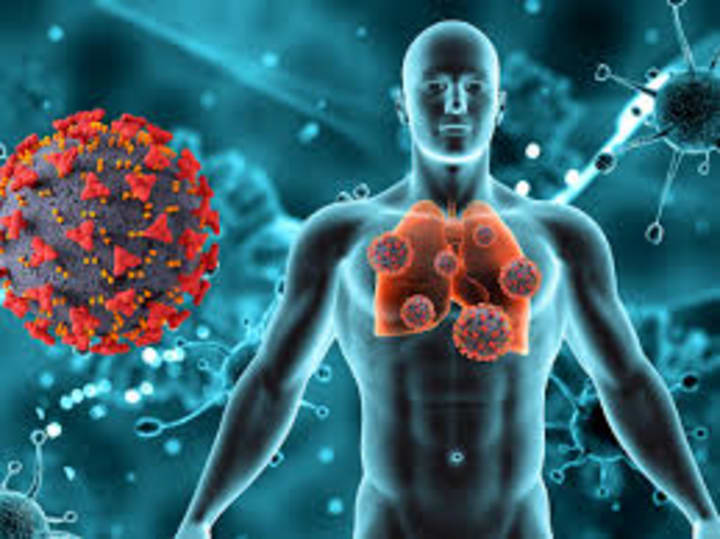
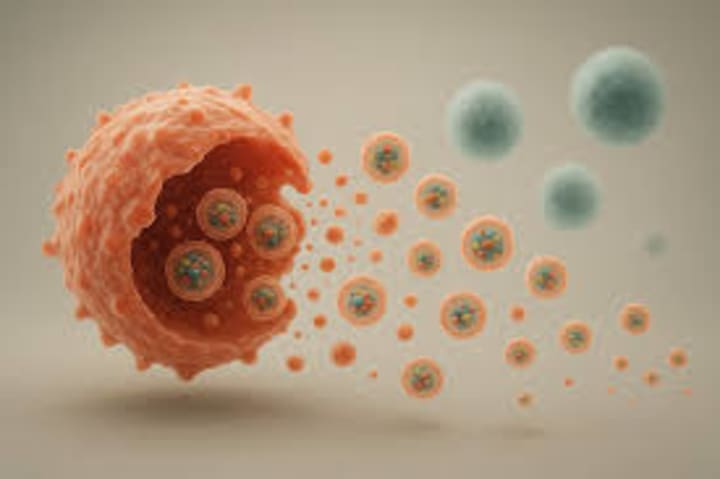
This trail, dubbed the "death footprint" by scientists, is composed of large vesicles—known as F-ApoEVs—that carry proteins, lipids, and genetic material. According to experts, these elements not only serve as warning signals for the immune system but can also be exploited by viruses, such as the influenza virus, to colonize new cells.
The Mechanism Behind the Death Footprint
The origin of these vesicles dates back to apoptosis, a stage in which the cell alters its structure and generates an actin-rich membrane. This process is controlled by the protein kinase ROCK1, whose activation by caspases first triggers cell contraction and then the creation of the F-ApoEVs.
Analyzing the composition of these vesicles revealed the presence of structural proteins such as actin and tubulin, along with cell adhesion molecules. Remarkably, this mechanism is activated in multiple cell types in response to various types of damage—including ultraviolet radiation, chemotherapeutic agents, and, primarily, viral infections—and under conditions that simulate the real physiological environment.
A “Trojan Horse” for Viral Expansion
The crucial experiment was conducted with cells infected with the influenza virus. The researchers observed that, during the apoptosis triggered by the infection, viral particles remained protected inside the F-ApoEVs, ready to travel and invade other healthy cells. Ivan Poon and Georgia Atkin-Smith, lead authors of the study, state that their results demonstrate the virus's ability to hide and spread using these cellular remnants as a true “Trojan horse.”
When these vesicles come into contact with new cells, they facilitate the transmission of the viruses they carry. This phenomenon could add a key link in the chain of events that allows an infection to spread in the body, beyond the direct action of the virus on living cells.
Implications for Health and Biomedical Research
Beyond virology, the identification of the footprint of cell death has implications for various areas of medicine. Apoptosis and the generation of extracellular vesicles play a role in cell communication, tissue repair, and the immune response. An alteration in these mechanisms can be associated with autoimmune diseases, cardiovascular diseases, and the development of tumors.
A deeper understanding of how F-ApoEVs are formed and function could pave the way for designing drugs that modulate cell clearance and fine-tune the immune response. This approach could provide a new avenue for addressing disorders in which cell death plays a central role.
The Future of Research: New Models and Applications
With these discoveries in hand, the research teams are already planning to further validate their findings using animal models and studies with patient samples. The expectation is clear: to confirm the translational potential of this mechanism and evaluate how it influences the spread of infections under real-world conditions.
According to Atkin-Smith and Poon, delving into the consequences of cell death will yield insights capable of driving the development of therapies that interfere with the cellular dismantling process. Given the involvement of apoptosis in diseases as diverse as infections, autoimmune disorders, and cancer, thoroughly investigating mechanisms like the "death footprint" could translate into significant therapeutic advances for various pathologies.
About the Creator
Omar Rastelli
I'm Argentine, from the northern province of Buenos Aires. I love books, computers, travel, and the friendship of the peoples of the world. I reside in "The Land of Enchantment" New Mexico, USA...
Keep reading
More stories from Omar Rastelli and writers in Journal and other communities.
Ten careers in decline, according to Harvard: computer science is no longer as profitable as it used to be
A Harvard study identified the ten college majors with the greatest downward trend. Harvard labor economist David J. Deming, along with researcher Kadeem Noray, concluded that the economic returns of traditional applied degrees, such as computer science, engineering, and business, are rapidly declining over the years.
By Omar Rastelli3 months ago in Journal
The goals I did not achieve
Every writing goal I made for the year is a wash. It has been this way for a while, but I think it's important to be open about my failures and the reality of how life can get in the way. This is especially true considering the several times I have posted on Vocal about my writing goals, how I was changing my approach, and where I was hoping to be for the upcoming year. I will probably do that again in a couple months, but for now, it is time to acknowledge where I am today.
By Kay Husnick24 days ago in Journal
What I Noticed When Light Stopped Feeling Sharp
I never would have described the light around me as a problem. It was bright enough. Clean. Modern. Exactly what you expect in a well designed indoor space. If someone had asked me whether the lighting felt uncomfortable, I probably would have said no.
By illumipure3 days ago in Journal




Comments
There are no comments for this story
Be the first to respond and start the conversation.