
The First Molecule: How RNA Paved the Way for Life Before DNA and Proteins
Unraveling the Origins of Life: How a Simple Yet Powerful Molecule May Have Sparked the First Steps Toward Biology as We Know It

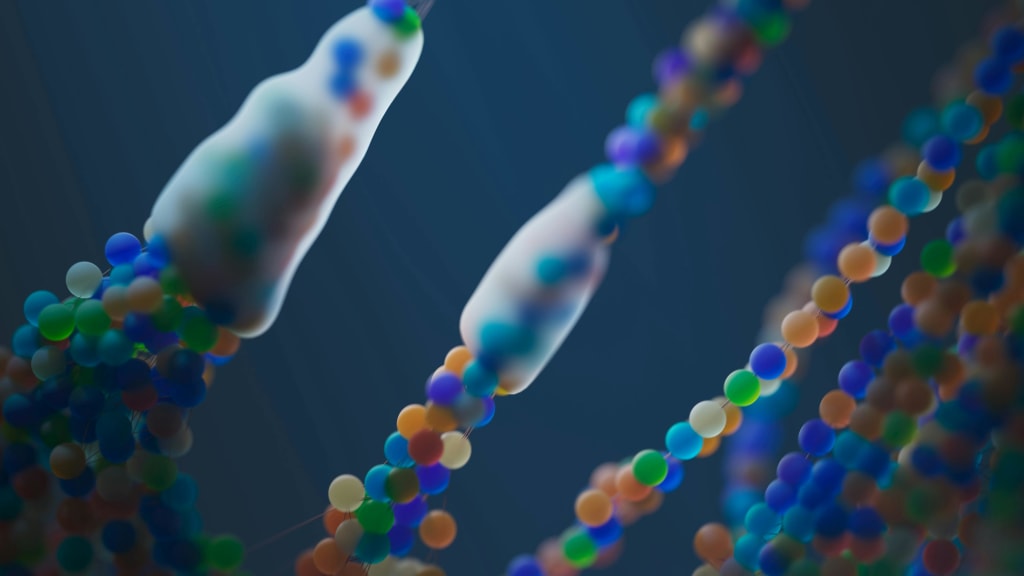
Life, as we know it, is built on three essential molecules: DNA, RNA, and proteins. DNA stores genetic information, RNA transmits and sometimes edits it, and proteins carry out the vast majority of cellular functions. However, the question of which came first—DNA, RNA, or proteins—has intrigued scientists for decades. Today, the most widely accepted answer is that RNA came before DNA and proteins. This theory, known as the RNA World Hypothesis, offers a compelling explanation for how life may have begun on Earth.
The RNA World Hypothesis: An Overview
The RNA World Hypothesis posits that RNA was the original molecule of life, predating both DNA and proteins. This concept emerged in the 1960s and gained traction in the 1980s when scientists discovered that RNA could function not only as a carrier of genetic information but also as a catalyst for chemical reactions. This dual functionality makes RNA uniquely suited to serve as the precursor to life.
Before this discovery, the classic "chicken-and-egg" problem puzzled scientists: DNA requires proteins to replicate, but proteins are made based on instructions in DNA. So, how could either molecule have arisen first? RNA, with its ability to perform both roles, may hold the answer.
RNA’s Dual Role: Storage and Catalysis
Unlike DNA, which mainly serves as a stable storage form for genetic information, RNA can fold into complex three-dimensional shapes that allow it to function as an enzyme, known as a ribozyme. These ribozymes can catalyze reactions such as cutting and joining other RNA molecules or even replicating themselves under laboratory conditions.
This catalytic capability indicates that RNA could have sustained a primitive metabolism and self-replication system, essential characteristics of life. In contrast, while DNA is more chemically stable, it is functionally limited, and proteins are incredibly versatile but cannot store hereditary information.
The Evolutionary Pathway: From RNA to DNA and Proteins
Once RNA-based life gained traction, evolution likely led to the emergence of proteins and DNA.
1. Proteins Take Over Catalysis:
Proteins, composed of amino acids, are far more versatile catalysts than RNA. Over time, natural selection favored organisms that utilized proteins for most biochemical reactions, relegating RNA primarily to messenger and regulatory roles.
2. DNA Becomes the Genetic Archive:
DNA eventually supplanted RNA as the primary genetic material because it is chemically more stable and less prone to mutations. Unlike RNA, DNA has a double-helix structure and a built-in error-checking system during replication, making it a superior long-term storage medium for genetic information.
In this way, the earliest RNA molecules set the foundation for the complex, protein- and DNA-based life we observe today.
Experimental Support for the RNA World
Several lines of scientific evidence support the RNA World Hypothesis:
Ribozymes: RNA molecules with enzymatic activity were first discovered in the 1980s. One such ribozyme, the ribosome itself, is responsible for synthesizing proteins in all living cells and is composed mainly of RNA, not protein.
Lab-Created Self-Replicating RNA: Scientists have engineered RNA molecules that can copy parts of themselves, a key trait for early life forms.
Nucleotide Synthesis Pathways: Some researchers have demonstrated how RNA nucleotides could have formed under plausible prebiotic conditions, though this remains an area of active research.
RNA Intermediates in Modern Cells: All living cells utilize RNA intermediates (mRNA, tRNA, rRNA) in gene expression, potentially a relic of an earlier RNA-dominated era.
Challenges to the RNA World Hypothesis
Despite its appeal, the RNA World Hypothesis faces challenges:
RNA Instability: RNA is less chemically stable than DNA, especially in water. This raises questions about how long early RNA molecules could have survived on prebiotic Earth.
Complexity of RNA Synthesis: While scientists have replicated nucleotide formation under laboratory conditions, the process is still complicated and may have required very specific environments.
Transition to DNA and Proteins: Although the pathway from RNA to DNA/protein-based life is theorized, the exact steps remain unclear. Some scientists propose that RNA may have coexisted with other molecules or that simpler precursors like pre-RNA molecules (e.g., PNA or TNA) may have existed before RNA fully took over.
Implications for the Origin of Life
Understanding RNA’s role in the origin of life has profound implications:
Astrobiology: If RNA-based life could arise on Earth, it might also evolve on other planets with similar conditions. Missions to Mars and the moons of Jupiter and Saturn are partly inspired by this possibility.
Synthetic Biology: Scientists are attempting to recreate RNA-based systems in the laboratory, potentially paving the way for life-like machines or new medical treatments.
Medicine and Evolution: Understanding RNA’s evolutionary history helps explain diseases involving RNA viruses (like influenza or COVID-19) and RNA-based regulatory disorders.
Conclusion
The idea that RNA preceded DNA and proteins revolutionized our understanding of life's beginnings. Although much remains to be discovered, the RNA World Hypothesis provides a plausible narrative for how inert molecules transitioned into self-replicating systems, laying the groundwork for all of biology. With ongoing research in molecular biology, chemistry, and planetary science, we are getting closer to answering one of humanity’s oldest questions: Where did life begin, and how did it start?
About the Creator
Orbit Scope
Unveiling the unseen, revealing the unknown. Welcome to Orbit Scope where truth meets wonder. From the depths of history to the frontiers of science, we uncover facts that surprise, inspire,Challenges the way you see the world.
Reader insights
Outstanding
Excellent work. Looking forward to reading more!
Top insight
Heartfelt and relatable
The story invoked strong personal emotions
Keep reading
More stories from Orbit Scope and writers in Journal and other communities.
The Thunder Whisperers: How Elephants Detect Rainstorms From 150 Miles Away
In the sweeping plains and dense forests of Africa and Asia, one of nature's most intelligent and majestic creatures roams with purpose and deep intuition. The elephant—renowned for its size, memory, and emotional intelligence—harbors a unique and almost supernatural ability: it can detect rainstorms from more than 150 miles away. This astonishing capability isn't myth or folklore; it is a well-documented scientific phenomenon grounded in biology, physics, and the natural evolution of survival instincts.
By Orbit Scope9 months ago in Journal
Balancing Act: How New Privacy Legislation Is Reshaping Polygraph Data Storage and Reporting Requirements
As technology continues to progress at an alarming rate, privacy concerns are paramount for citizens. Gone are the days when you can interact with the greater world without leaving behind some sort of digital trace. Companies are gathering data about people everywhere you look, from buying habits to personal histories. For a majority of folks, this means companies (and the government) have mountains of data on each person, and this is just for everyday life.
By William Powell4 days ago in Journal


Comments (1)
Human Organ RNA & DNA Right ? Best Information Thanks