
The Fall of Bollywood and the Rise of South Indian Cinema
How Regional Storytelling, Innovation, and Cultural Roots Are Reshaping Indian Cinema
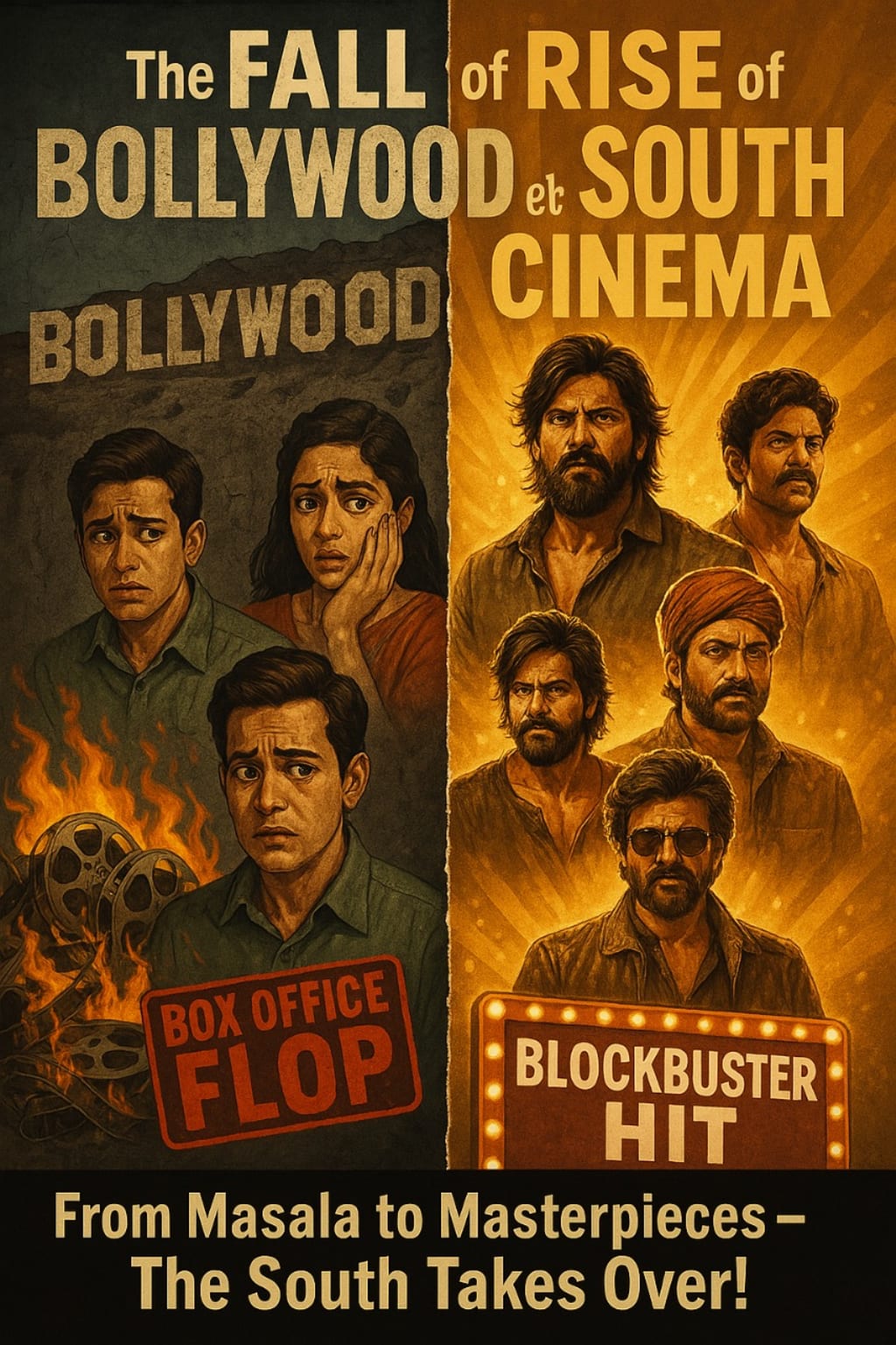
From the dawn of Indian cinema in 1913, Bollywood, based primarily in Mumbai, held a seemingly unshakeable dominance over the nation's film landscape for nearly a century, roughly from 1900 to 2000. This era saw the creation of iconic films like "Mother India" and "Mughal-E-Azam," showcasing the grandeur and storytelling prowess that Bollywood became known for. The industry also delivered lighter fare, with beloved comedies such as "Padosan" and "Chalti Ka Naam Gaadi" in the 1990s, and continued to produce impactful films like "Chak De India" and "Lakshya" in the early 2000s. Bollywood's influence permeated the cultural fabric of India, boasting the largest share of the film industry's revenue and holding significant sway over public sentiment.
In contrast, South Indian cinema, encompassing the film industries of Tamil Nadu, Andhra Pradesh, Telangana, Karnataka, and Kerala, largely remained confined to their respective regional boundaries. While Hindi-speaking audiences in the northern states showed an appetite for dubbed South Indian films and admired actors like Rajinikanth and Kamal Hassan, who occasionally ventured into Bollywood, these films primarily catered to their local audiences.
However, the landscape began to shift in 2015 with the emergence of S.S. Rajamouli's "Baahubali" franchise, particularly its sequel, "Baahubali 2: The Conclusion." This Telugu film shattered box office records and garnered global recognition, signaling a significant challenge to Bollywood's long-held supremacy.
The COVID-19 pandemic in 2020 inadvertently accelerated this change. With increased time spent at home, audiences sought diverse and engaging content, often finding it in the fresh narratives coming from the South. South Indian cinema received a substantial boost with S.S. Rajamouli's magnum opus, "RRR," in 2022. The film achieved phenomenal global success, grossing approximately ₹1,200 crore worldwide, becoming a cultural phenomenon, and even earning international accolades like a Golden Globe and an Oscar for its song "Naatu Naatu." "RRR" became the third-highest-grossing Indian film globally and the highest-grossing Indian film of 2022 worldwide. This triumph paved the way for other regional films like "KGF Chapter 1" and "Pushpa: The Rise" to adopt a pan-India release strategy, finding enthusiastic audiences across the country.
Meanwhile, Bollywood faced a string of box office disappointments post-pandemic, with films like "Bachchhan Paandey," "Ek Villain Returns," "Heropanti 2," and "Bell Bottom" failing to resonate with audiences. This contributed to a decline in Bollywood's overall collections and a noticeable shift in audience preference towards South Indian cinema, particularly Telugu and Kannada productions.
Several factors contributed to Bollywood's recent struggles. Many felt that the industry was churning out repetitive storylines, leading to audience fatigue. The constant promotion of star kids, often lacking demonstrable acting talent, further alienated viewers. A lack of original content, with Bollywood increasingly relying on remakes of South Indian and Hollywood films, left audiences feeling they were not getting value for their time and money.
Perhaps the most significant reason for Bollywood's decline was a perceived disconnect with a large segment of its audience. The middle and lower-middle classes, representing a substantial portion of India's population, struggled to connect with narratives that seemed to prioritize Non-Resident Indians (NRIs) and often presented culturally detached or even critical portrayals of Indian traditions. Some viewers felt that Bollywood films were pushing unnecessary social messages and woke ideologies, which clashed with their cultural values, leading to calls for boycotts fueled by a sense of arrogance and detachment from the audience's sentiments.
Conversely, South Indian cinema experienced a surge in popularity due to several key factors. Their films often boasted original scripts with strong storytelling and engaging screenplays, particularly in action sequences. The creation and introduction of powerful characters resonated deeply with the audience. Crucially, South Indian cinema proudly showcased Indian culture and values without the perceived woke messaging that had alienated some Bollywood viewers. This cultural and regional depth allowed audiences to connect with the stories on a deeper level.
In conclusion, while Bollywood enjoyed a long and influential reign over Indian cinema, the landscape has undeniably shifted. The rise of South Indian cinema, fueled by compelling storytelling, cultural resonance, and a willingness to embrace pan-India appeal, has presented a significant challenge to Bollywood's dominance. The coming years will likely witness a more balanced and diverse Indian film industry, where regional cinema plays an increasingly vital role in entertaining and engaging audiences across the nation and beyond.
About the Creator
Keep reading
More stories from writers in Journal and other communities.




Comments (1)
Great rising cinema and to bad about the fall of Bollywood! Great work!