
The Empire of Data: How Information Became the New Colonizer
Empires once conquered with armies. Today, they rule with algorithms. This is how data replaced territory as the ultimate tool of control.
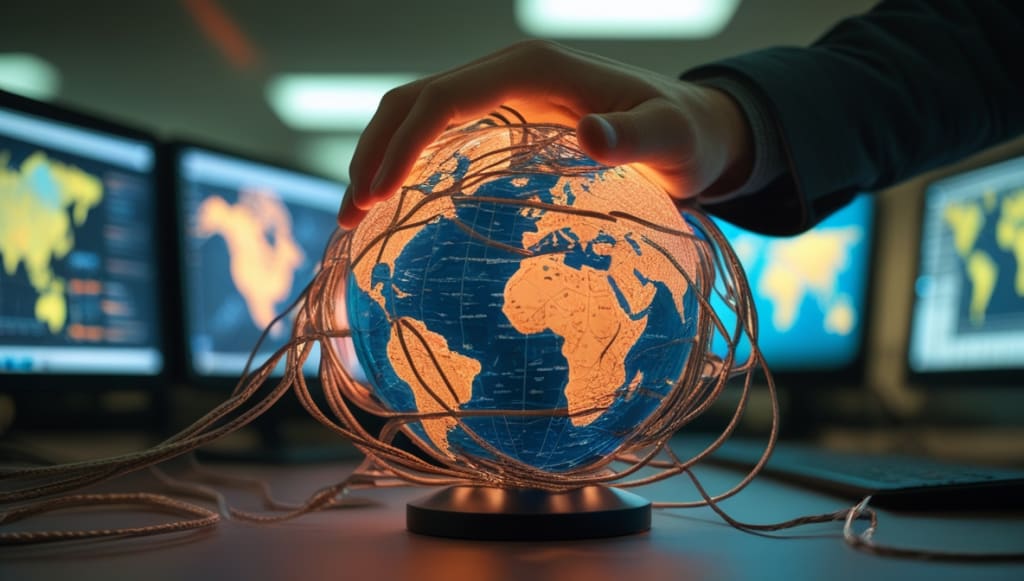
Historically, empires progressed.With firearms and insignias, they opened norms, set boundaries, and claimed control over regions. The means of control was territorial: who owned the ground, who governed the waters.
Still, in the 21st century, a subtler empire is growing—one without physical boundaries, rules, or street-celebrated victories.Its power is invisible. Its riches is wisdom.And information rather than explosives is what drives its successes.
This modern empire has no spatial need. It claims people's ideas.
From Colonies to Cloud Servers
Creating maps of the world, the British Empire was compiling data rather than just taking territory. Authority is exerted by carefully documented and examined maps, population statistics, commercial routes, and cultural customs.
Modern technology leaders follow this approach, albeit their "estates" are in the digital world.
Every click, search, and scroll represents a little compromise.
Every thumbs-up and geotag is a mark in the kingdom of your online presence.
The main difference is size. Historical imperial powers ruled millions. Billions of people are under the influence of the empire of data.
Once symbolizing dominance, land is now knowledge—infinite, free, and painfully personal.
Modern ports and commercial centers are the data centers of companies such Google, Meta, and ByteDance.
Acting like modern colonial agents, the algorithms influence actions by deft nudges—that is, delicate changes of your perceptions, thoughts, and shopping choices—not via legislation.
In this new sphere, we are not residents.
We are marketable goods.
The Myth of “Free”
Every empire needs some sort of promotion. It was known as civilization among the British. The Romans characterized it as order. It's referred to as convenience in the digital empire.
An internet for everyone offering unlimited access, free communication, and vast knowledge was presented to us as part of an interconnected world. But what we actually got was a different kind of trade: our interest for their power.
These so-called free social media services are platforms where we serve as both consumers and targets; they are not free at all. Every program you download, every account you create, is a deal you did not read and one that gives some of your independence in exchange. for a quick moment of respite.
We are not forced to adhere. One click at a time, we willfully consent to it.
Algorithms: The Contemporary Colonial Supervisors
Governors and viceroys helped to rule ancient empires. The contemporary empire rules through algorithms—invisible rulers that decide who is emphasized, who is muted, who acquires riches, and who is forgotten.
They thoroughly examine our deeds—what exasperates us, what pleases us, what pushes us to scroll late into the night. Using these facts, they shape our surroundings—not with commands but rather with design.
Your involvement, division, and predictability are guaranteed by the content you see, the adverts you come across, the points of view you meet. All arranged to create this.
This is not violent repression. It signifies oppression by familiarity. We follow instinct rather than because it is required.
The data empire's genius is that it changes what choice is rather than getting rid of it.
The New Resource Extraction
Natural resources—gold, cotton, oil—supported conventional colonialism. From the digital age comes something even more valuable: human conduct.
Our emotions have become data points. Our current identities are data. Our desires have become products. As we keep participating, we feed the machine so it may become richer.
To dominate one, Facebook does not need geographic control. Its power comes from influence—whether political, psychological, or cultural. TikTok does not grab countries. It instead grabs attention spans.
In this modern hierarchy, data is the resource and mankind is the source.
Invisible Conflicts and Digital Boundaries
If data is power, then cyber borders represent the most recent battlefronts. Governments and businesses are quietly sparring over data right now, including digital espionage, surveillance, hacking, and misinformation.
These events are not single, isolated incidents: Russia spreads propaganda; China builds a Great Firewall; the U.S. demands to view user data. They represent territorial conflicts of contemporary times.
Although countries might still exist, those in command of the servers specify the real boundaries.
The internet was intended to unite people. Rather, it has divided it into algorithm-driven cliques distinguished by beliefs, languages, and rage. Once conquering territory, empires used it to divide people. They now divide society to control ideas.
Resistance in the Age of Data
Modern colonizers, data, what form resistance then assumes?
Through understanding not via rebellion.
Not by means of arms but rather by discernment.
First, one must recognize that every search input represents a little endorsement of who rules knowledge—each click serves as a political statement.
Turning off a notification, deleting an app, or doubting the motivation behind an algorithm could seem insignificant. Still, every second of awareness fights against the feeling of inevitability.
Freedom now comes via digital expertise.
It is the tool by which we learn to regain what has been silently taken from us: our confidentiality, our control, and our freedom to go undetected.
The Internal Kingdom
The realm of data, nevertheless, is inside us, not just in our devices.
By doing this, we now assess life using several markers: followers, views, data, and reach.
We have taken in algorithms' inspection. We have become our own colonialists, changing our behavior to be visible and perfecting our identities for relevance.
The empire has triumphed when its soldiers are no longer required since we freely watch ourselves to get its approval.
This is the final stage of conquest: when one sets the terms of control.
An Option Among the Silent
Empires have always believed they are everlasting.
Still, history shows us—every empire finally fails.
The question is not whether this one will drop but rather what we will become in the aftermath of its fall.
Will we construct a digital environment that favors people, or will we still be subordinate to the machine we created?
Or data will totally colonize what little of our essence remains to be investigated, therefore freeing us?
Our future rests in the stillness that falls between these questions.
Because in the data kingdom, the only actual act of defiance left is to remember our human nature—unpredictable, imperfect, and wonderfully immeasurable.
About the Creator
Keep reading
More stories from Shahjahan Kabir Khan and writers in Journal and other communities.
The Death of Silicon: How a Rainbow Crystal Could Rewrite the Future of Technology
Silicon has been the invisible center of modern civilization for almost a century. Every computer, smartphone, satellite, and even modern refrigerators depend on this component. Silicon turned sand into fast technology, sparking a digital revolution that has shaped our life.
By Shahjahan Kabir Khan3 months ago in Journal
The goals I did not achieve
Every writing goal I made for the year is a wash. It has been this way for a while, but I think it's important to be open about my failures and the reality of how life can get in the way. This is especially true considering the several times I have posted on Vocal about my writing goals, how I was changing my approach, and where I was hoping to be for the upcoming year. I will probably do that again in a couple months, but for now, it is time to acknowledge where I am today.
By Kay Husnick22 days ago in Journal
Learning to Surrender Control to God
Surrender is one of the most misunderstood ideas in the Christian life. For many people, the word itself triggers resistance. It sounds passive, frightening, or even irresponsible. We are taught to plan carefully, protect ourselves, and stay in control. Faith, however, introduces a different way of living, one that asks us to loosen our grip and trust Someone beyond ourselves.
By Sound and Spiritabout 6 hours ago in Journal



Comments
There are no comments for this story
Be the first to respond and start the conversation.