
The difference and confusion between VOD and OTT streaming
VOD vs OTT

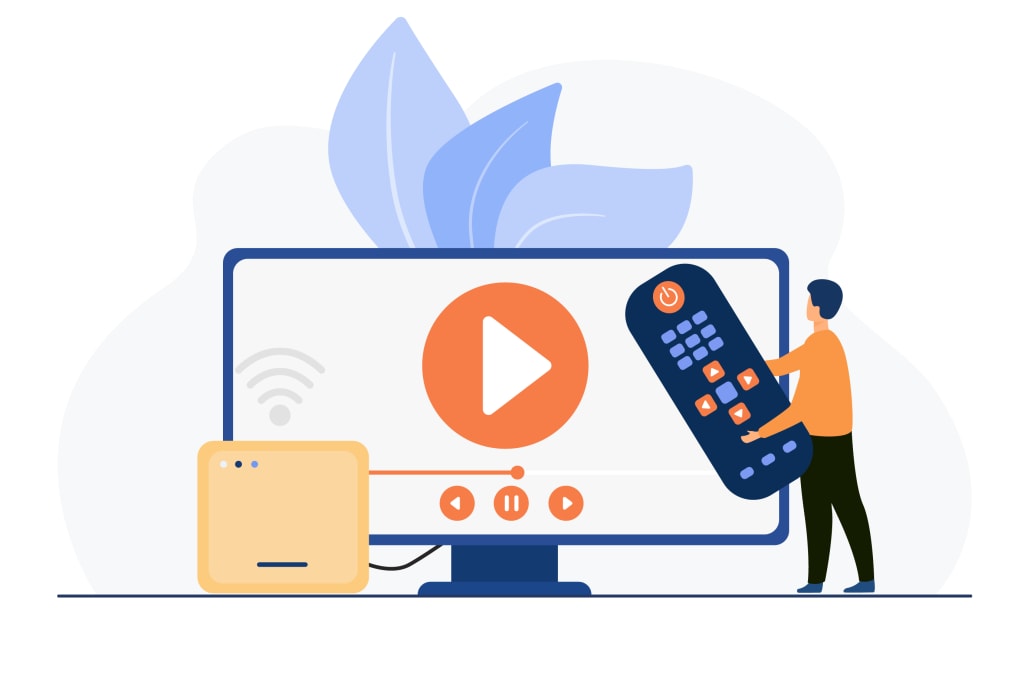
You might be thinking about the difference between Video on demand (VOD) and Over the top (OTT). These two streaming services look too similar in their video delivering service. The offered services between VOD and OTT often get confusing, especially if you are not a geek who spends most of his time obsessing about these. And if you are thinking that those are the same thing, you are not wrong. But the fact is they are not the same thing in every aspect, because VOD can exist without OTT, and each seems as vice versa. They can be used as audio and video streaming platforms. And both are offering free and paid features also delivered over the internet. But even all these similarities, among them, have quite a difference.
If you want to know more about these two services to find out a better platform for your business, keep on reading!
What is a VOD streaming service?
VOD or Video on demand is the medium, which is inspired by today's OTT or Over the top platform. The principal best part is watching a video whenever you want to watch it. Won't have to wait for any specific time, it's the opposite of a broadcast TV program.
Some examples of VOD are:
- YouTube
- Videos on the Facebook feed
- BBC iPlayer
- In-flight entertainment systems
- OnDemand on your television (cable set-top box)
With VOD service you can playback any video content at any time of your preference. This service is a combination of large and different media content such as music, podcasts, and many more. Streaming plug, Twitch, Patreon are also examples of such platforms.
VOD enabled platform allows you immediate access to any video or audio content or related to it. It includes entertainment, education, sports, yoga, featured films, and many more. VOD service is different from traditional broadcast technology which is integrated with the unicast transmission. With this, you can watch programs in real-time or view them later. There are also possibilities to integrate this service with computer systems, smart mobile devices, and other advanced media devices.
There are different types of VOD services and platforms and categorized accordingly.
VOD services: For broadcasting anything, it operates over a cable connection.
VOD platform: The Internet is the source to delivers the content
According to these categories three main models or services used by VOD and OTT streaming providers, and those are..
- Subscription video on demand (SVOD)
- Transactional video on demand (TVOD)
- Ad-supported video on demand (AVOD)
Subscription video on demand (SVOD): Among other VOD services, SVOD has been the most popular format. To get access to the media library, users have to pay a set amount as a subscription price of the package and on a monthly or yearly basis. The subscription price has been sorted accordingly to fit the convenience of the user.
Such as, if a user will subscribe to the maximum package then will get more content with a better streaming quality. And if someone won't be needed to get access to that much content, they might choose lower packages accordingly. As long as the user will pay a subscription fee, will have access to subscribed package content. If you don't pay on time, you will lose access to it. Users can download the content and watch it later on but won't anymore once their subscription runs out.
However, if you want to save money on your subscription you can subscribe for a large package as it's cheaper than a monthly subscription package.
The best examples of subscription-based services could be Netflix, Amazon Prime Video, HBO Now, and many more, where users get a vast library of media content instead of individuals.
Transactional video on demand (TVOD): It's the complete opposite of SVOD. Users only pay for the content they want to watch, don't have to pay for accessing all the content the service provider offers. You may compare it with DVDs. But it's not like you have to purchase a DVD, rather than purchasing the video or audio content and you can watch it whenever you want.
Note that, on TVOD service if you want to keep the purchased content forever you can download it, but if you are thinking about having access to the purchased content for a day or a week or even for a month, you can simply purchase it. The TVOV service provider offers packages on each content accordingly. Such as Google play movies, iTunes, Amazon rent are great examples of TVOD services.
Ad-supported video on demand (AVOD): It's another popular platform of VOD service. Unlike other types, AVOD service users don't have to pay any money. In other words, the content here is completely free for users. And service providers generate revenues through ads. Like whenever users will access content, a single or couple of ads of the paid users will be shown for advertising their brand. As there is no worrying about paying, you won't get a choice to block the ads. A popular example of AVOD service is YouTube, where they have an AVOD model because of its free service but there is also SVOD service as YouTube premium. With these premium features, all ads get blocked and users can access premium locked content.
What is an OTT streaming service?
OTT or Over the top platform which was in the past relied on cable or satellite for data transmission, but now uses the internet. OTT is about describing a large number of services that we use on a daily basis. Examples include..
- Skype
- Netflix
- Live Streaming
- Hulu and some of the other few streaming platforms.
All these services were once developed on satellite or cable to transmit data but all of them are using the internet for data transmission.
Another best example could be a live soccer match that you will be streaming over the internet. And the match will take place at a specific time like 13:00 on Monday afternoon and you will have to watch at that time.
In this case, the game is on an OTT model because it will be broadcast like a traditional TV show but using the internet instead of using satellite or cable. But the thing is it's not like VOD service because you can't choose the time of starting the video.
And if you will download the video and will watch it later on, this will be counted as a video on demand, because you can now watch the video whenever you want and no matter how many times.
Day by day OTT service is gaining more popularity in the world of entertainment. Because it can be easily merged with the world of digital video and television.
Over 60% of users have subscribed to at least one OTT service. As there is a scope of increasing instances of cable and internet bundling to provide OTT service to the users.
A few of the interesting points of OTT services are..
- The subscription price is quite affordable and allows you to get access to vast libraries and without commercials.
- According to your needs, you may subscribe to different services including Netflix, Hulu, Amazon Prime, and so on.
- Won't have to be bothered by watching commercials by subscribing to the premium plan.
What's the difference between VOD and OTT services?
After describing each medium individually, maybe you are still confused about their difference. These two services have so many similarities. You might be thinking of how they both allow users to stream content on-demand and on different devices. And among them either free or paid and they allow users to access the content over the internet.
The following comparison may help you to get in-depth insights:
- Platform: VOD mainly offers on-demand video portals and broadcasters, and OTT can provide video streaming.
- Channels: VOD is usually premium and you can view only selected media content. OTT provides a large number of channels to be viewed by users.
- Service: VOD services are related only to presentation and videos, where OTT service is related to a service or a product.
- Quality: VOD services typically give you an uncompromised experience, where OTT gives you more professional experience in the distribution of media content.
- Speed: VOD may have to face buffering delays and might drop video quality as you have to download the file most of the time to watch.
- Security: VOD provides high security to access content and work over multiple devices. OTT can transmit content over mobile devices and other connected devices and sometimes may raise security issues.
Furthermore, If you want to summarize them, the VOD service is as you can summarize with its name which only refers to videos, where the OTT service can refer to WhatsApp, Skype, radio broadcast, and so on.
What are the similarities?
The similarities between VOD and OTT are quite confusing as they are not mutually exclusive. If you consider VOD as a big circle, then OTT is the smaller circle within the big one! The service patterns are often changed due to the flexibility of today's platform. Many of the service providers include both services on their platforms. Honestly, these changes won't affect your business at any point though you have to understand the difference between them but don't need to stress about it! VOD and OTT both offer on-demand streaming and use the internet to deliver services to the users.
About the Creator
Keep reading
More stories from Md Faijul Islam and writers in Journal and other communities.
How to Master the Art of Island Hopping Without Missing a Single Sunset
Island hopping often looks effortless in photographs, yet the reality can feel rushed when travel days start to dominate the schedule. Sunsets, which quietly shape the rhythm of island life, are usually the first thing lost when routes and timing are poorly judged. With a more deliberate approach, island hopping can feel slower and more balanced, allowing each day to end in place rather than in transit.
By Jeewanthi Armstrong5 days ago in Journal



Comments
There are no comments for this story
Be the first to respond and start the conversation.