
The Constitution and Its Influence on US Politics
US Politics

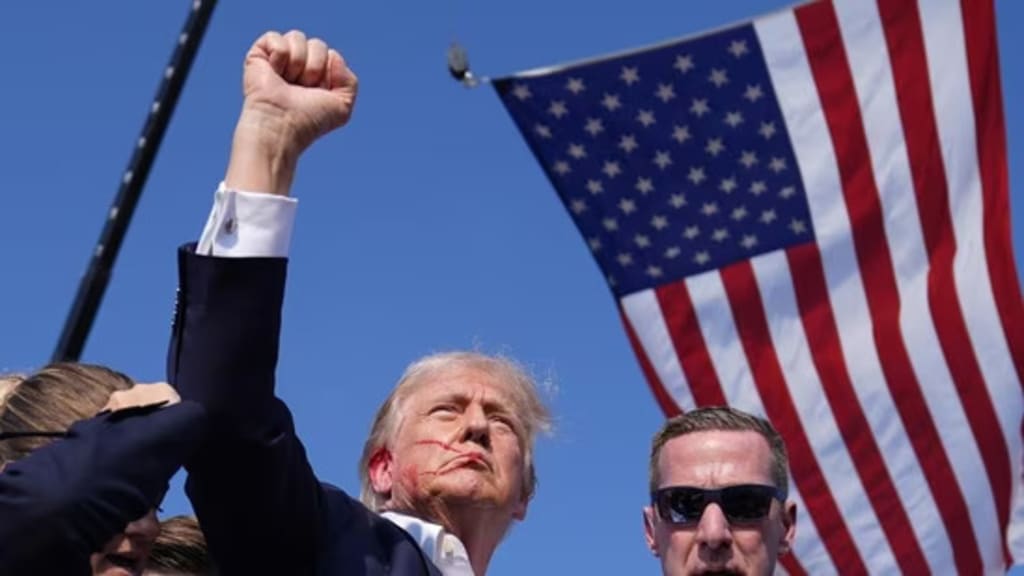
The United States Constitution is one of the most significant and enduring documents in political history, serving as the foundation of the nation’s governance and the blueprint for its political system. Ratified in 1788, the Constitution established the framework for a federal government, defined the separation of powers, and enshrined the rights and liberties of the people. Over time, it has profoundly shaped the development of US politics, guiding the actions of government institutions, influencing political debates, and serving as a touchstone for legal and social change.
A Framework for Governance
The Constitution outlines the structure of the federal government, dividing it into three branches: the legislative, executive, and judicial. This separation of powers ensures that no single branch becomes too powerful, promoting a system of checks and balances.
Legislative Branch: Article I establishes Congress, which is responsible for making laws. The bicameral legislature includes the Senate, where each state has equal representation, and the House of Representatives, where representation is based on population. This design reflects a compromise between populous and smaller states, ensuring a balance of influence in the legislative process.
Executive Branch: Article II vests executive power in the President, who serves as both the head of state and government. The President's role includes enforcing laws, leading foreign policy, and serving as commander-in-chief of the armed forces.
Judicial Branch: Article III establishes the Supreme Court and other federal courts, which interpret laws and ensure they align with the Constitution. The judiciary's role in constitutional interpretation, established through Marbury v. Madison in 1803, has had a lasting impact on US politics.
This tripartite system creates a dynamic interplay of powers that has influenced political debates and decision-making since the nation’s founding.
Federalism and State Sovereignty
The Constitution introduced the principle of federalism, dividing powers between the federal and state governments. While the federal government has authority over issues like national defense and interstate commerce, states retain powers over local matters such as education and law enforcement. This division of responsibilities has shaped political dynamics, often leading to debates about the balance of power.
Throughout history, questions about federal versus state authority have sparked significant political and legal conflicts, such as those involving slavery, civil rights, and healthcare. The Tenth Amendment, which reserves powers not delegated to the federal government for the states or the people, remains a critical reference point in these debates.
Bill of Rights and Individual Liberties
One of the Constitution’s most profound influences on US politics is the Bill of Rights, the first ten amendments added in 1791. These amendments guarantee fundamental freedoms, such as freedom of speech, religion, and the press (First Amendment), the right to bear arms (Second Amendment), and protections against unreasonable searches and seizures (Fourth Amendment).
The Bill of Rights has played a central role in shaping political discourse and legal battles. For example, the First Amendment has been at the heart of debates over free speech, campaign finance, and religious freedom, while the Second Amendment has been pivotal in discussions about gun control.
Amendments and Political Evolution
The Constitution’s ability to evolve through amendments has allowed it to adapt to changing social and political conditions. Since its ratification, the Constitution has been amended 27 times, each reflecting a significant moment in US history.
The Thirteenth, Fourteenth, and Fifteenth Amendments, known as the Reconstruction Amendments, abolished slavery, granted citizenship to all persons born or naturalized in the US, and prohibited racial discrimination in voting.
The Nineteenth Amendment extended voting rights to women, marking a milestone in the fight for gender equality. The Twenty-Sixth Amendment lowered the voting age to 18, reflecting the nation’s response to youth activism during the Vietnam War era.
These amendments illustrate the Constitution’s flexibility and its influence on the nation’s political evolution, addressing issues of justice, equality, and representation.
Judicial Interpretation and Its Impact
The Supreme Court’s role in interpreting the Constitution has significantly influenced US politics. Landmark cases have redefined the scope of constitutional rights and government powers.
In Brown v. Board of Education (1954), the Court declared racial segregation in public schools unconstitutional, a decision that galvanized the Civil Rights Movement.
In Roe v. Wade (1973), the Court recognized a woman’s right to choose an abortion under the right to privacy, a decision that has continued to shape political and cultural debates.
In Citizens United v. Federal Election Commission (2010), the Court ruled that political spending by corporations and unions is protected under the First Amendment, significantly impacting campaign finance and election dynamics. These rulings demonstrate how constitutional interpretation by the judiciary can influence policy, public opinion, and the political landscape.
Challenges and Controversies
Despite its strengths, the Constitution has also been a source of political controversy. Debates over its original intent versus contemporary interpretation often divide conservatives and progressives. For example, issues like gun control, abortion, and voting rights frequently invoke conflicting interpretations of constitutional provisions.
Additionally, the Constitution’s provisions for electoral processes, such as the Electoral College, have faced criticism for being outdated or undemocratic. Calls for reforms to better reflect modern values and demographics underscore ongoing tensions in US politics.
A Symbol of Unity and Division
The Constitution remains a unifying symbol of American democracy, embodying the principles of liberty, justice, and the rule of law. However, its interpretation and application also highlight the divisions within US society and politics. As a living document, it continues to influence the nation’s political identity, shaping debates about governance, rights, and the role of government in citizens’ lives.
Conclusion
The United States Constitution is more than just a legal document; it is the cornerstone of American political life. By defining the framework of government, protecting individual rights, and adapting through amendments, it has guided the nation through centuries of change. Its enduring influence on US politics underscores its importance as both a stabilizing force and a catalyst for progress. In the ever-evolving landscape of American democracy, the Constitution remains a powerful testament to the principles upon which the nation was founded.
About the Creator
Paramjeet kaur
Hey people! I am my own person and I love blogging because I just love to share the small Stories
Keep reading
More stories from Paramjeet kaur and writers in Journal and other communities.
Quality, Integrity, and Reliability: Colorado Roofing Co, the Roofing Company of Choice
In the rugged landscapes of Colorado, where harsh weather conditions are a constant challenge, finding a reliable roofing company is paramount. Enter Colorado Roofing Co, a beacon of excellence in the roofing industry. With a steadfast commitment to quality, integrity, and reliability, this company has established itself as the roofing partner of choice for homeowners and businesses alike.
By Paramjeet kaur2 years ago in Journal
The BAFTA Awards
By now, in a stunning departure from recent years, most of the world is aware of what happened at the BAFTA film awards. Social Media Headlines will tell you the bare bones: that John Davidson, a Tourette's Syndrome advocate, shouted a racial slur at two Actors of Colour, Michael B Jordan and Delroy Lindo.
By Natasja Rose4 days ago in Psyche


Comments
There are no comments for this story
Be the first to respond and start the conversation.