
The Catastrophic Consequences If Earth Suddenly Stopped Orbiting the Sun
What would happen if the earth would stop orbiting the sun!
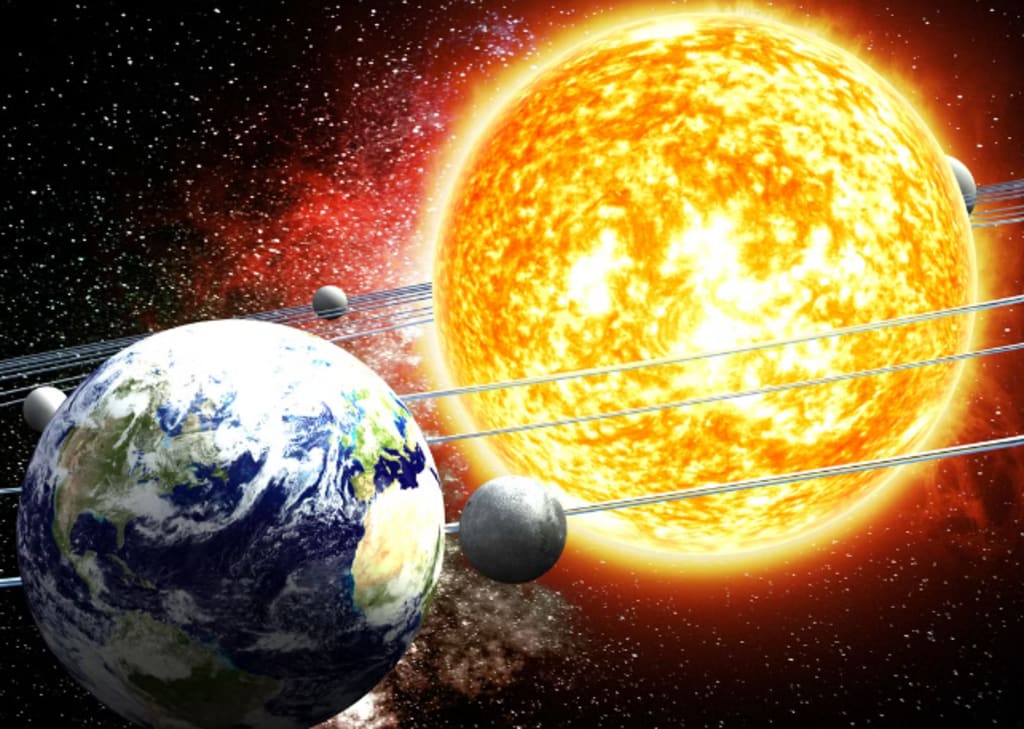
Picture a scenario where Earth, hurtling through space at an astonishing 110,000 kilometers per hour, suddenly comes to a halt. The repercussions would be nothing short of apocalyptic. In this article, we'll explore the chilling chain of events that would follow such a catastrophic occurrence.
Immediate Chaos:
If Earth were to come to an abrupt halt, the outcome would be instantly fatal for all life on our planet. Much like passengers in a car slamming on the brakes, we would be launched into the cold vacuum of space, leading to immediate demise.
The Gradual Slowdown: A Terrifying Journey:
Now, let's consider a more gradual deceleration. Even in this scenario, the outcome is catastrophic, though it unfolds over a slightly longer timeframe. Here's what would happen:
Week 1: A Deceptive Calm
Initially, the change is subtle. The global temperature rises by less than 1 degree Celsius, hovering around 16 degrees Celsius.
Week 2: The Escalation Begins
As Earth's speed diminishes, the sun's gravitational pull strengthens. Global temperatures surge exponentially.
Day 21: Approaching the Boiling Point
Earth's temperature soars to a scorching 35 degrees Celsius, surpassing even the Sahara's average.
Day 35: The World Ablaze
The mercury continues to rise, hitting a blistering 48 degrees Celsius, akin to a summer day in Death Valley.
The extreme heat triggers devastating droughts, wildfires, and crop failures.
Day 41: A Harsh Reality
Earth has now passed Venus, becoming the second planet from the sun.
Temperatures have climbed to a searing 66 degrees Celsius.
Most forms of life, including mammals, birds, insects, and even hardy roaches, succumb to the relentless heat.
Surviving the Heat: A Faint Hope:
With indoor air-conditioning as the only hope for survival, the immense energy required to power millions of AC units simultaneously would strain global power grids to the breaking point, leaving humanity with no respite from the sweltering conditions.
Day 54: The End Draws Near
Temperatures surpass 160 degrees Celsius, effectively boiling water and eradicating the last surviving life forms.
Day 65: The Final Hour:
Earth, now shaped like an elongated oval due to the sun's extreme gravity, begins to leak molten magma through its crumbling crust.
At approximately noon, Earth tears apart, spewing liquid rock as temperatures skyrocket to 3,800 degrees Celsius.
In the span of a single day, our planet ceases to exist.
The Ominous Implications:
In this grim hypothetical scenario, we've witnessed the catastrophic consequences of Earth halting its orbit around the sun. It serves as a stark reminder of the delicate balance that sustains life on our planet and the profound impact of even the slightest disruption to this equilibrium.
The Wider Implications: A Broader Perspective:
While this scenario may appear far-fetched, it underscores the fragility of our existence in the cosmos. It reminds us of the intricate dance that celestial bodies perform, maintaining the conditions necessary for life as we know it. Understanding these delicate balances not only deepens our appreciation for the planet we call home but also highlights the importance of safeguarding its ecological equilibrium.
Conclusion: The Fragile Balance of Existence:
In contemplating the possibility of Earth abruptly ceasing its orbit, we confront a stark reminder of the intricate interplay between celestial forces and the conditions that support life on our planet. This hypothetical scenario, though chilling, emphasizes the importance of preserving and protecting the delicate balance of our world, ensuring that it remains a hospitable and thriving habitat for all living creatures.
With continued scientific exploration and a commitment to responsible stewardship of our planet, we can aspire to sustain this balance and secure a future where such catastrophic scenarios remain firmly in the realm of speculation, allowing us to appreciate the beauty and wonder of our cosmos from the safety of our home world.
About the Creator
Keep reading
More stories from Jurgen Hoxha and writers in Journal and other communities.
What's Hiding in the Vatican Secret Archives?
The Vatican City, the world's smallest independent state, is brimming with intrigue and mystery. This city-state has served as a backdrop for numerous conspiracy theories, horror stories, and thrillers. However, its real allure lies in its extensive collection of archives, some of which are over a thousand years old and house history's most closely guarded secrets. Spanning 50 miles of shelves, these archives contain letters from historical giants and texts that delve into deep mysteries, modern scandals, and even extraterrestrial speculations. From the existence of aliens to the shadowy actions of the Illuminati, a vast array of secrets is rumored to be buried within these ancient files. The Vatican's archives have tantalized scholars, journalists, and the public alike for centuries, and as of March 2, 2020, the Vatican finally opened these archives to the public.
By Jurgen Hoxha 2 years ago in Journal
Why Care Services Are Becoming One of the Most Profitable Businesses for Aussies
In Australia, care providers deliver essential, life-changing services to people with disabilities and the NDIS (National Disability Insurance Scheme) pays for this work. Providers do good for the community, participants receive vital support, and compassionate, loving people who may not enjoy corporate settings gain meaningful income doing what they love, sustained by a government-backed funding model.
By Ted Flores7 days ago in Journal


Comments
There are no comments for this story
Be the first to respond and start the conversation.