
The Burning Page of History
The story of a book that was meant to be burned

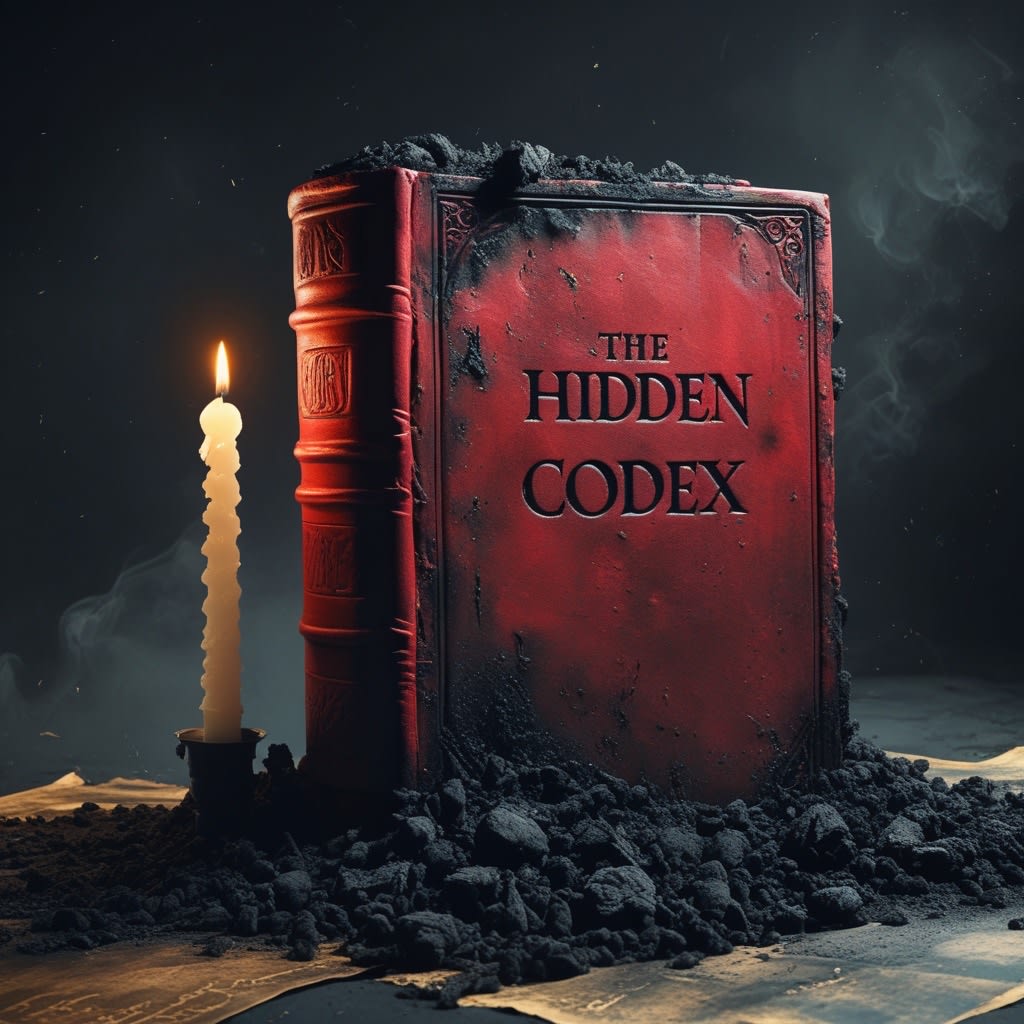
History Would’ve Burned This Page
In the year 1539, the Abbey of Saint Dunstan stood quietly in the shadowed woods of Northumbria, its stone walls soaked with centuries of whispered prayers and secret knowledge. While most abbeys copied sacred texts, Saint Dunstan’s scriptorium harbored a darker purpose: it preserved banned writings—books condemned by kings, burned by bishops, and erased by time.
Brother Aelric, a pale man with ink-stained fingers and eyes too sharp for comfort, was the abbey’s last true scribe. Every night, by candlelight, he transcribed the forbidden: scrolls from Moorish scholars, poems by heretic mystics, and records of queens erased from the chronicles of power.
The monks called it The Red Codex—a leather-bound tome hidden beneath a hollowed floorboard in the library’s farthest alcove. Aelric alone knew how to reach it. He wrote not for praise or posterity, but for preservation—so that truth, however dangerous, might outlive the tyranny of flames.
One stormy evening, a rider arrived.
The young woman wore a simple cloak soaked through with rain, but her posture was regal, defiant. Her name was Isolde, and she claimed lineage from the lost House of Trefaldwyn—one of the noble Welsh families dissolved under Henry VIII’s rule.
“I come for the Red Codex,” she said, with no pretense of secrecy.
Aelric’s hands trembled. “What you seek is not a weapon, my lady.”
She leaned in. “Everything they burned was a weapon. My people’s language. Our law. Our memory. What you hold is the only sword left.”
Aelric hesitated. He had sworn an oath to protect the codex from all who sought it—even kings. But something in Isolde’s eyes was unbreakable. She wasn’t seeking power; she was seeking justice. And she knew the cost of truth.
“Come,” he said at last.
They passed through the scriptorium, where ink dried on vellum like blood on cloth. He showed her the trapdoor beneath the foot of Saint Brigid’s statue. Together they descended into the crypt, where the air smelled of ash and damp parchment.
There, under a stone slab, lay The Red Codex.
Isolde opened it with reverence. Her fingers traced words in ancient tongues: Welsh, Latin, Arabic, Hebrew. It was a graveyard of lost voices—and yet they spoke, still alive on the page.
One passage caught her breath:
“The Queen of the Valleys ruled not from throne but heart. Her laws were oral, her judgment swift, her name struck from every English record in the year of suppression. Yet her people remember.”
“That’s my ancestor,” she whispered.
Aelric nodded. “She led the last resistance after the Marches fell. This account came from a Moorish traveler who rode with her before he was captured.”
Isolde closed the book. “This changes everything.”
“It changes nothing, unless you survive,” Aelric replied. “You know what they’ll do if they catch you with it.”
She smiled grimly. “Then they’ll have to burn me with the page.”
That night, Isolde left with the codex hidden beneath her cloak, and a promise in her soul: to keep moving, keep teaching, keep remembering. She disguised herself as a traveling bard, performing in marketplaces and manors, slipping truths into songs—coded verses about the queen erased, the language outlawed, the wisdom burned but never dead.
The Red Codex became legend. Some said it was hidden in the Black Mountains, others claimed it traveled west to the New World, passed hand to hand among outcasts and rebels.
Years passed. Then centuries.
In 1897, a group of suffragettes raided a forgotten estate in Shropshire once owned by a loyalist judge. Among the dusty records and sealed trunks, they found a bundle wrapped in oilcloth. Inside: a red leather book.
The cover bore no title. Its pages were fragile, but the ink still held.
One suffragette, Eleanor Byrne, read it aloud in secret meetings. It gave strength to the movement—not through speeches, but through memory. They learned of women who ruled and were erased, peoples who resisted and were silenced, truths that survived only because someone refused to let them die.
Eleanor wrote in her diary:
“History would’ve burned this page. But someone, centuries ago, risked everything to keep it warm. And now, we pass that fire forward.”
The Red Codex disappeared again in the chaos of World War I. Some say it was taken by a nurse fleeing the bombings. Others believe it was hidden in the walls of a burned-out library in Coventry.
But the stories in it? They never vanished.
They appear now in poems children recite in hidden dialects. In folk songs where verses slip past the censors. In graffiti scrawled on city walls. In the quiet confidence of a girl who knows her bloodline was once royal, even if no textbook says so.
History, after all, writes what it’s told to write.
But somewhere, always, someone is keeping the page they tried to burn.
About the Creator
Abdul Rauf
love you all 💕❤️
Keep reading
More stories from Abdul Rauf and writers in Journal and other communities.
The Cat and the Clever Rat”
In a quiet old bakery nestled at the end of a cobbled lane, there lived a cat named Miro. He was sleek, with a coat as black as midnight and eyes like polished amber. He belonged to the baker, who relied on Miro to keep the shop free of pests, particularly rats.
By Abdul Rauf7 months ago in Fiction
How Retrieval-Augmented Generation Services Are Transforming Enterprises at Scale
Not long ago, many AI initiatives inside large organizations struggled to move beyond pilot projects. The models looked impressive in demos, but once deployed, they often failed to deliver accurate, reliable, or up-to-date results. Hallucinations, outdated knowledge, and lack of transparency made decision-makers cautious about scaling AI across critical business functions.
By Kanak Appinventivabout 23 hours ago in Journal




Comments
There are no comments for this story
Be the first to respond and start the conversation.