
The brain can anticipate what is going to happen thanks to its electrical waves
A study reveals that certain brain frequencies allow us to anticipate events before they occur, improving mental speed and decision-making

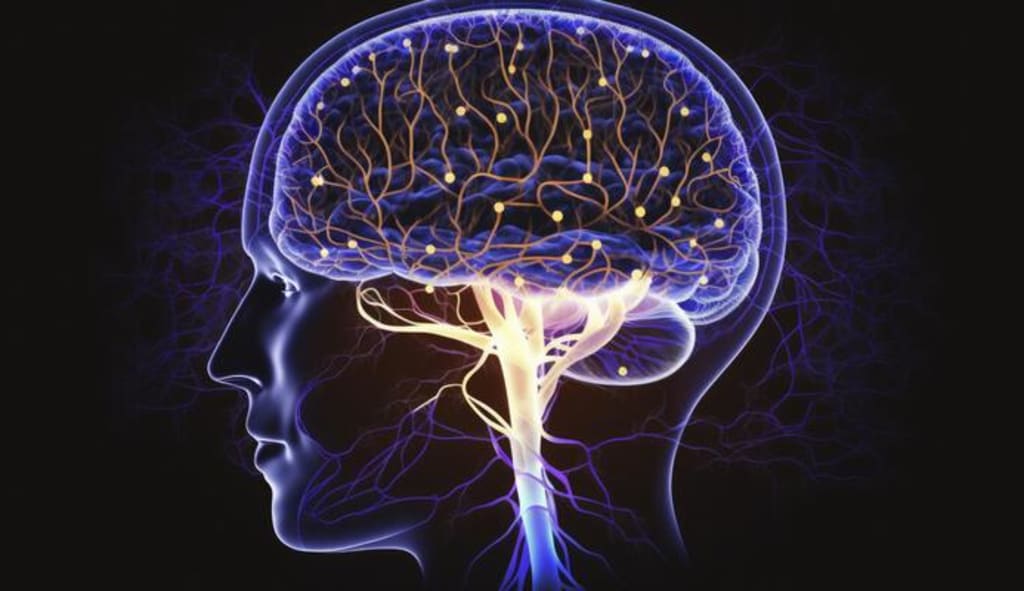
The brain's ability to anticipate future events is a central topic in current scientific research, uncovering internal mechanisms that allow humans to navigate time and respond proactively to environmental challenges.
A recent study, published by the Max Planck Institute for Empirical Aesthetics, investigated how specific brain rhythms can predict the occurrence of future events.
This work, developed in collaboration with the Ernst Strüngmann Institute for Neuroscience and Goethe University Frankfurt, provides groundbreaking insights into brain prediction.
The study provides details about how the brain uses alpha and beta rhythms to predict the timing of future events.
Brain waves in the alpha range, which oscillate between seven and twelve hertz, and beta waves, which span fifteen to thirty hertz, are critical in this predictive process.
As Matthias Grabenhorst of the Ernst Strüngmann Institute explained in the study, the intensity of these oscillations is directly related to the predictability of an event: the more predictable the event, the stronger the oscillations, thus allowing the brain to react more efficiently and quickly.

Using magnetoencephalography (MEG), researchers were able to locate three critical brain areas: the posterior parietal cortex, the posterior middle temporal gyrus, and the sensorimotor cortex.
The posterior parietal cortex acts as a key center for motor preparation and time management, while the posterior middle temporal gyrus is essential for the temporal processing of events.
The sensorimotor cortex, for its part, is directly involved in movements toward anticipated events.
The implications of these findings are vast and span diverse fields of application, from athletic performance to the treatment of neurological disorders.
The Max Planck Institute for Empirical Aesthetics concluded that brain rhythms could, in the future, be used to train the brain to improve attention and decision-making.

Furthermore, according to this study, this advanced understanding of oscillations could explain why disorders such as ADHD or Parkinson's affect response speed and time management in individuals who suffer from them.
Meanwhile, an article published by Frontiers explores the idea of the "predictive brain," a concept that advocates the importance of anticipation and expectation in cognitive and neural processes.
The brain not only reacts to what happens in its immediate environment, but is constantly generating hypotheses about what will happen next.
This approach is central to neural processing, where prediction errors play a crucial role in adaptation and the improvement of cognitive and behavioral abilities.
In addition, research conducted by the University of Cambridge highlights the critical role of the anterior lateral prefrontal cortex in estimating future success.
This brain area is responsible for evaluating both external and internal probabilities, thus determining which tasks an individual is most inclined to undertake.
This ability to predict is not only crucial for effective decision-making but is also an evolutionarily developed part of human cognition that guides our behavior toward achievable goals.
On a practical level, the discovery that the brain can be trained to improve its predictive ability offers promising opportunities for the development of mental optimization strategies.
In sports, this could mean significant advances in performance, as athletes could improve their reflexes and real-time decision-making. In neurotherapy, these techniques could be transformed into effective treatments for attention disorders and other cognitive dysfunctions.

Meanwhile, scientists continue to unravel the complexity of how the brain handles prediction, and these studies suggest that brain rhythms constitute a fundamental element in the neural wiring for anticipating time.
About the Creator
Omar Rastelli
I'm Argentine, from the northern province of Buenos Aires. I love books, computers, travel, and the friendship of the peoples of the world. I reside in "The Land of Enchantment" New Mexico, USA...
Keep reading
More stories from Omar Rastelli and writers in Journal and other communities.
A molecule has been discovered that could allow for early diagnosis of chronic kidney disease
Chronic kidney disease is the slow loss of kidney function over time. The main job of these organs is to remove waste and excess water from the body, according to MedlinePlus, a U.S. National Library of Medicine study.
By Omar Rastelli10 months ago in Journal
Author’s Advice
If you would’ve asked me 20 years ago did I know I’d become a writer and an author, I would’ve said “nope, ain’t happening”. As fate would have it I did become an author and I can honestly say I’m loving it so far. It really does feel good to be a writer. I’ve learned a lot on this journey and I feel like with even me being as new to this world as I am, there’s some wisdom I need to share with every other aspiring author.
By Joe Patterson5 days ago in Journal




Comments (1)
This study on the brain's ability to anticipate events is fascinating. It's amazing how specific brain rhythms help predict future happenings. I wonder how this knowledge could be applied in real - world scenarios, like improving decision - making in high - stress situations. Also, how might it change the way we train athletes to better anticipate their opponents' moves? The identification of those three brain areas is crucial. It makes me think about how disruptions in these regions could affect our ability to predict and react. Maybe there are ways to use this research to develop new therapies for people with neurological issues related to time perception.