
The Black Eagle
In the Sky, He Was a Legend—On the Ground, a Mystery

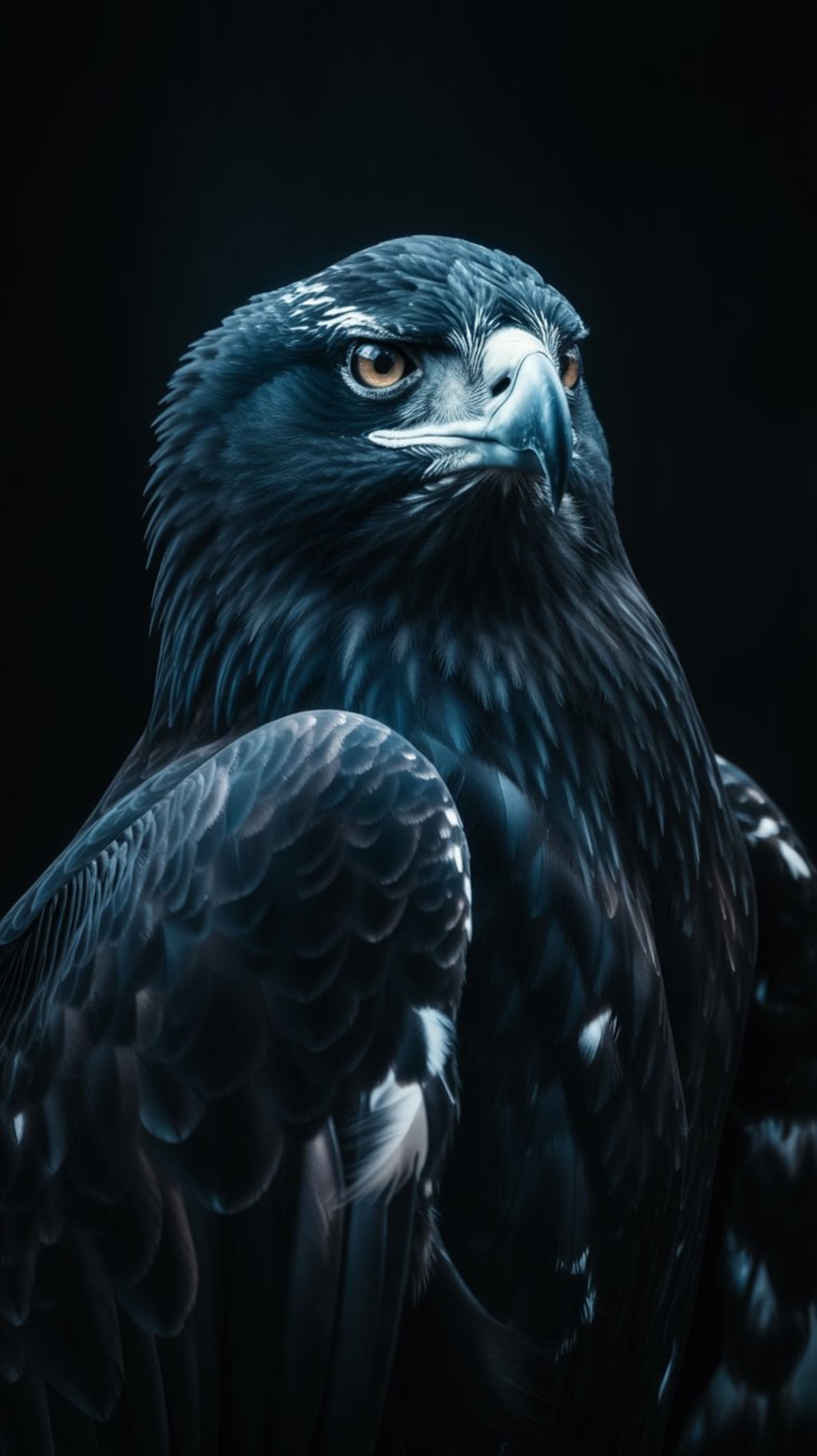
In the war-torn skies of Europe during the Great War, pilots were more than soldiers—they were myths in motion, carving trails of smoke through the heavens. And among them, no name evoked more awe or fear than The Black Eagle.
No one knew his real name. No one had seen his face. But his jet-black triplane, marked only by a single silver star on its wings, was the last thing many enemy pilots ever saw.
He was fast. Ruthless. Untouchable.
But his legend didn't begin in the sky.
It began on the ground—with a single photograph.
Eighteen-year-old Leo Hartmann wasn’t a soldier. He was a mechanic stationed at an airfield on the German-French border in 1917. His job was to fix wings, tighten bolts, and keep engines humming—far from the glory of battle. But Leo had a secret: he was obsessed with the Black Eagle.
Every pilot told a different story.
“He shot down six in one day.”
“No one ever saw him land.”
“They say he drinks only rainwater and never speaks.”
“Some say he’s not even real.”
Leo wasn’t sure either.
Until the day he saw him.
It was dusk. Leo was finishing up repairs on a scout plane when he heard the hum—low and deep like a growl from the clouds. He looked up and saw it: the black triplane slicing through the horizon, smooth and fast, engine singing like a violin.
The plane landed without a sound.
Leo ducked behind a barrel, watching. The pilot climbed out—tall, lean, dressed in all black. His face was hidden by goggles and a scarf. He moved with purpose but no rush, like he had nothing to prove.
He walked straight into the hangar and disappeared.
No one else saw.
The next day, Leo asked the commander.
“There’s no such plane registered here,” the officer barked. “Get your head out of the clouds.”
But that night, Leo went back to the hangar. The triplane was there, parked in shadow, almost blending with the darkness.
He approached slowly, fingers brushing the cool steel. A silver star gleamed faintly in the moonlight.
“You shouldn’t be here.”
Leo spun around.
The pilot stood behind him, motionless.
“I’m sorry,” Leo stammered. “I just… I’ve read about you.”
“I don’t exist,” the man said.
“But I saw you.”
“That was a mistake.”
Leo swallowed. “Please. Teach me. Let me help.”
The pilot was silent. Then, to Leo’s surprise, he handed him a wrench.
“Fix the oil leak. You’ve got twenty minutes.”
From that night on, Leo became the Black Eagle’s silent mechanic. He never learned the man’s real name—only that he came and went like a ghost. He never slept at the base. He flew without a wingman. His missions were unsanctioned, yet always successful.
And Leo noticed something else: the Eagle never shot to kill unless he had to. He would disable engines, clip wings, force enemies to land. His legend of ruthlessness was only half true.
“Why don’t you fly with the others?” Leo asked once.
The Black Eagle paused. “I was one of them. Once. Then they shot down the wrong man.”
Leo never asked more.
Weeks turned into months. The war worsened. The skies grew crowded with flame and steel. One day, a message came from command:
“New target: Allied ace Lucien Marlowe—The White Falcon.”
Leo had heard of him. A brilliant French pilot known for his daring mid-air maneuvers and snow-white plane. The only man whose legend rivaled the Black Eagle’s.
The officers hoped this showdown would turn the tide.
That night, Leo found the Black Eagle preparing to fly.
“You don’t have to go,” Leo said.
“I do,” the Eagle replied.
“But why?”
“Because only a ghost can kill a legend.”
The morning was cold and clear. Leo watched from the cliffside as the black triplane soared into the sky, heading east. Hours passed. The sky remained empty.
Then—two dots appeared, dancing in the clouds. One black. One white.
They circled, rose, dove, fired. Trails of smoke curled through the air like brushstrokes on a canvas. It was beautiful and terrifying.
Then—a flash.
The white plane spiraled down, smoke trailing behind.
The black one wobbled… then vanished into the clouds.
Leo waited.
But the Black Eagle never returned.
The base held its breath for days.
No word. No wreckage. Nothing.
Eventually, the war ended.
The world moved on.
But Leo didn’t.
Years later, Leo became a pilot himself. He flew for peace, for rescue, for exploration. But he never stopped searching. He followed whispers, chased rumors—of a black triplane seen over mountains, of a silent guardian in the skies.
One winter in the Alps, while flying a supply mission, Leo got caught in a snowstorm. Engines froze. Controls failed. He prepared for the worst.
Then—out of the white—
a black shape.
A triplane.
It flew beside him, wings steady.
Guiding.
Leo blinked tears from his eyes.
The plane led him through the clouds, down a narrow pass, to a flat stretch of snow.
He landed. Safe.
When he looked up, the black plane was gone.
But in the snow beside his wing, someone had drawn a star.
A silver star.
About the Creator
Keep reading
More stories from Muhammmad Zain Ul Hassan and writers in Journal and other communities.
Magic
Note from the Author: I want to let you know that this is an unusual story, and it has been written purely from whatever is in my unconscious mind, because before I start writing, I get into a flow state that reaches my unconsciousness. I also write in my subconscious mind, which is like a mid-flow state between the conscious and unconscious mind.
By Denise Larkin7 days ago in Fiction



Comments
There are no comments for this story
Be the first to respond and start the conversation.