
The Bench by the River
Some people pass through our lives. Others leave their soul behind.

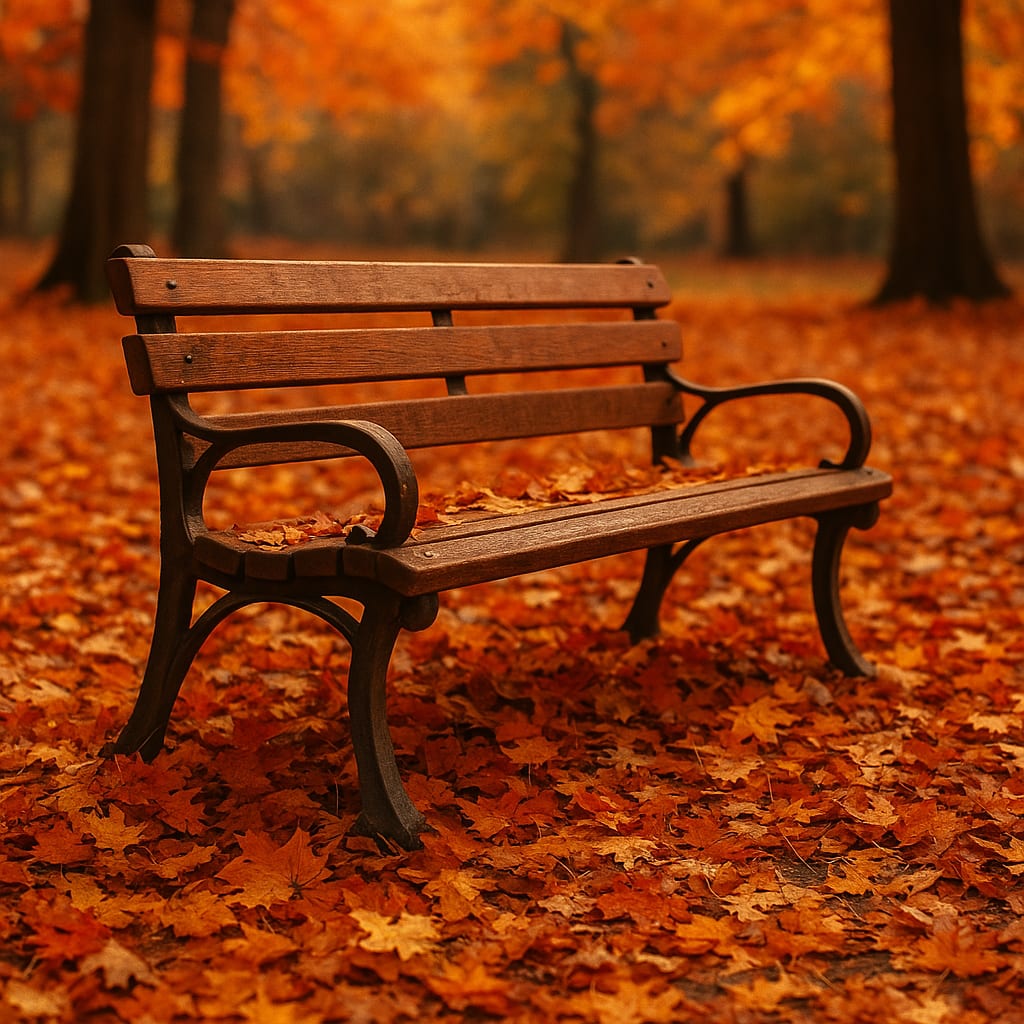
I still remember the bench.
Old, wooden, chipped at the edges — it sat quietly by the river that twisted like a sleeping dragon through the town. Nobody really noticed it, except for me. And her.
We met there every Sunday. It started as coincidence. I came to read, she came to draw. One day, our eyes met over the spine of my book and the edge of her sketchpad. She smiled. I nodded. That was enough.
The following week, I brought two coffees instead of one.
“Hope you like it black,” I said, awkwardly handing her the cup.
She grinned. “I only drink it this way. Anything else is cheating.”
We laughed. And just like that, we became something. Not friends. Not lovers. Just... something. Something calm and comforting. Something easy.
She’d draw the river, the trees, the clouds — all in pencil, no color. I’d read my books and ask her about her art.
“Why no color?” I asked once.
She looked at me, her hair blowing like wild threads in the wind.
“Because life already has too much of it. I like to feel it in grey first.”
I didn’t get it then. I do now.
Weeks passed like autumn leaves — slow at first, then all at once. The bench became our sacred space. A place untouched by the world’s noise. No phones. No news. Just stories and silence. She never told me her name. I never asked.
One day, she didn’t show up.
I waited. Maybe she was late.
Then next Sunday came. And the next.
Nothing.
The bench felt colder. Smaller.
I kept coming. I told myself I was just reading, like before. But my eyes would always drift to the path, hoping for the sound of light footsteps.
She never returned.
Two months later, I stopped visiting. The books piled up, untouched. I convinced myself it didn’t matter. It wasn’t love. It wasn’t heartbreak. It was just… unfinished.
And then, one night, I found an envelope on my doorstep. No name. Just a single line written on the front: “For the man who reads.”
Inside was a pencil sketch of me — sitting on the bench, head tilted down, lost in a book. It was perfect. Every line, every shadow. And at the bottom corner, her signature.
A year passed. Seasons changed their clothes. Leaves danced, snow fell, the river froze and melted again.
I returned to the bench one quiet Sunday morning, almost without thinking. The wind had a familiar whisper to it, like an old friend nudging me gently on the shoulder. I sat down, the wood colder than I remembered, but still… somehow warm.
There was someone already there.
A young girl, maybe ten, with the same wild dark hair and sketchbook resting on her lap. Her pencil moved with purpose, eyes sharp and focused. She didn’t even look up at me.
“Nice day,” I said quietly, unsure why I spoke.
She nodded without looking up. “It’s always nice by the river. Mama used to say that.”
I froze.
“What was her name?” I asked, heart thudding like war drums.
The girl finally looked up. “Eliza. Eliza Lorne. She used to draw here all the time.”
E.L.
My breath caught in my throat.
“I knew her,” I said, voice barely audible. “We used to sit here together. Every Sunday.”
The girl studied me carefully, then opened the back cover of her sketchbook. Tucked inside was a folded note. She pulled it out and offered it to me.
“She told me, if I ever saw a man reading here alone, I should give him this.”
With trembling hands, I unfolded the paper.
"To the man who reads,
If you're reading this, I’m probably gone. Not tragically. Not dramatically. Just... quietly, like everything else in my life. I was sick for a long time, but I didn’t want you to know. Sundays weren’t about sadness. They were about peace.
You gave me peace. In a life where I felt like I was always running, you let me sit still. You never pried. Never pressured. You let me be. And that was more love than I’ve ever known.
I never told you my name because I wanted to be remembered by feeling, not fact. But now, I want you to know me. And I want you to know her — my daughter, Mia. She has your patience. She sketches like I do. And maybe, one day, she’ll find someone who reads.
Don’t stop coming to the bench. Some people pass through our lives, others stay forever. I hope I stay with you. Even in grey.
— Eliza"
I sat there long after Mia had left, the note clutched in my hand, the river humming its soft lullaby beside me. The bench no longer felt cold. It felt like home again.
Now, I return every Sunday.
Sometimes, I read. Sometimes, I bring two coffees and set one down beside me. Sometimes, Mia joins me, sketching in silence like her mother did.
We don’t always talk.
But we always remember.
And the bench by the river?
It remembers, too.
About the Creator
Keep reading
More stories from writers in Journal and other communities.
The Blue Ridge Stalker
Tom had left the Ford down the way, its spark plugs finally exhausted and no mechanics for a dozen miles back through the foothills to Strossburg. No matter, he had worn his boots—almost as if he planned for this to happen. The puzzle he sought to solve emanated from the woods clinging to the slopes above; the valley behind held no mysteries.
By Stephen A. Roddewig4 days ago in Fiction



Comments
There are no comments for this story
Be the first to respond and start the conversation.